In the realm of industrial automation and control systems, proximity sensors stand as critical components for non-contact detection of objects. Their accuracy is paramount, directly influencing the efficiency, safety, and reliability of automated processes. This article delves into the technical aspects defining and affecting the accuracy of proximity sensors, providing insights for engineers and system designers.
Accuracy in proximity sensors refers to the sensor's ability to consistently and correctly detect the presence or absence of a target object at its specified sensing distance under defined conditions. It is not a single parameter but a combination of several interrelated factors, primarily including repeatability, hysteresis, temperature stability, and the influence of target characteristics.
Repeatability is often the most cited measure of precision. It denotes the sensor's capability to return to the same switching point when the target approaches repeatedly under identical environmental conditions. High-quality inductive or capacitive proximity sensors can achieve repeatability values within microns, which is crucial for precision assembly and positioning tasks. For example, in robotic pick-and-place operations, a repeatability error of even 0.1mm can lead to misalignment or dropped components.
Hysteresis is another vital factor. It is the difference between the switch-on point (when the target approaches) and the switch-off point (when the target recedes). A designed hysteresis prevents chattering or rapid on/off switching when a target is positioned near the sensor's threshold. While necessary for stable operation, excessive hysteresis can reduce the effective sensing range and impact system responsiveness. Engineers must select sensors with hysteresis values appropriate for the application's required precision and response speed.
Environmental conditions, especially temperature, significantly impact sensor accuracy. Temperature drift describes the change in the sensing characteristics due to ambient temperature fluctuations. Most sensors specify a temperature coefficient, indicating how much the sensing distance changes per degree Celsius. For instance, a sensor operating in an uncontrolled factory environment may experience performance shifts between day and night cycles. Modern sensors incorporate temperature compensation circuits to mitigate this effect, but understanding the specified operating temperature range is essential for maintaining accuracy.
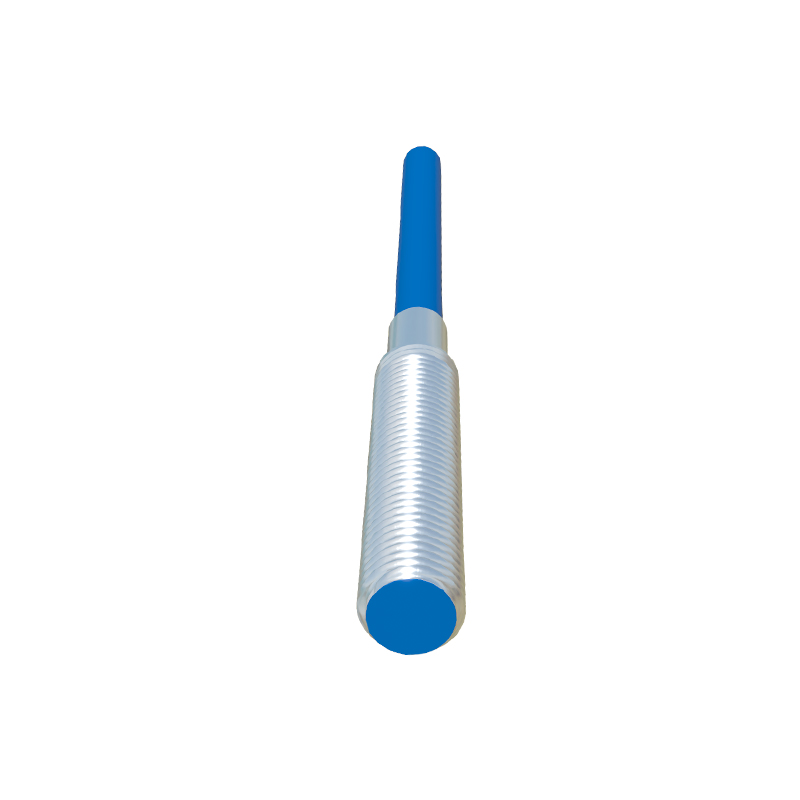
The target object itself is a major variable. For inductive sensors, accuracy depends on the target's material, size, shape, and surface condition. Standard sensing distances are typically defined for a mild steel square target of a specific size. Using a smaller target, a different metal like aluminum or copper (which have lower permeability), or a non-ferrous target will reduce the effective sensing distance and potentially affect repeatability. Capacitive sensors are influenced by the target's dielectric constant, while ultrasonic sensors can be affected by the target's sound absorption and surface texture.
Electrical noise and supply voltage variations are external factors that can degrade accuracy. Electrical noise from motors, frequency drives, or welding equipment can induce false triggering. Proper shielding, filtering, and stable power supplies are necessary countermeasures. Similarly, operating a sensor outside its specified voltage range can alter its switching characteristics.
To ensure optimal accuracy, a systematic approach is required. First, clearly define the application's precision requirements: what is the allowable tolerance for detection? Second, select the appropriate sensor technology (inductive, capacitive, photoelectric, ultrasonic) based on the target material and environmental conditions. Third, carefully review the manufacturer's datasheet, paying close attention to parameters like rated sensing distance (Sn), effective operating distance (Sr), repeatability, hysteresis, and temperature specifications. Do not assume the nominal sensing distance is the usable distance under all conditions. Fourth, consider installation factors. Flush-mountable sensors have reduced lateral sensing areas but are less susceptible to side interference, while non-flush sensors offer longer ranges. Ensure the sensor is mounted securely without vibration, and maintain the recommended clearance from other metal objects to prevent parasitic effects.
Finally, real-world calibration and testing under actual or simulated operating conditions are indispensable. Even the best datasheet specifications cannot account for every unique variable in a complex industrial setting. Periodic maintenance and recalibration may be necessary for long-term accuracy, especially in harsh environments.
In conclusion, the accuracy of a proximity sensor is a multifaceted attribute governed by its design, the application environment, and the target properties. A deep understanding of the underlying principles and a meticulous selection and installation process are the keys to leveraging these devices for precise, reliable, and efficient automation. As technology advances, with innovations like analog-output sensors providing distance-proportional signals and IO-Link enabled sensors offering detailed diagnostic data, the potential for achieving even higher levels of accuracy and system intelligence continues to grow.