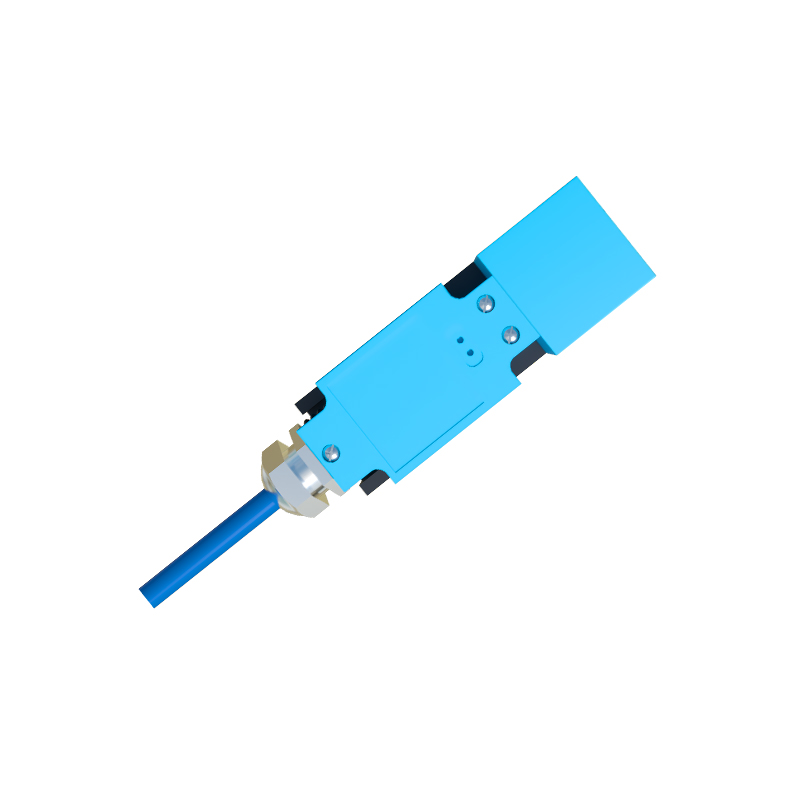
In the realm of industrial automation and control systems, proximity sensors are indispensable components for non-contact detection. Among the diverse range of models available, the two-wire FA18 series proximity switch sensor stands out for its reliability, simplicity, and robust performance in demanding environments. This article delves into the operational principles, key features, typical applications, and installation considerations of the FA18 two-wire inductive proximity sensor.
The fundamental working principle of the FA18 inductive proximity sensor is based on electromagnetic induction. The sensor generates a high-frequency oscillating electromagnetic field from its active face. When a metallic target (ferrous or non-ferrous, depending on the sensor variant) enters this detection field, eddy currents are induced on the target's surface. This causes a change in the oscillation amplitude within the sensor's internal LC oscillator circuit. The sensor's evaluation electronics detects this change and triggers a switching action. The "two-wire" designation is crucial; unlike three-wire or four-wire sensors that require separate power, output, and sometimes ground wires, the FA18 integrates the load directly in series with the power supply. This significantly simplifies wiring, reduces installation time, and minimizes potential points of failure.
A primary advantage of the FA18 two-wire design is its straightforward integration. It connects similarly to a conventional mechanical limit switch, making it an easy upgrade for existing systems. The sensor operates on a standard DC voltage range, typically 10-30V DC, and is designed with reverse polarity protection to prevent damage from incorrect wiring. Despite its simple two-wire setup, the FA18 series often incorporates advanced features. These include short-circuit and overload protection, ensuring longevity even in electrically noisy industrial settings. The housing is typically constructed from nickel-plated brass or stainless steel, offering high resistance to mechanical impacts, oils, and coolants, conforming to IP67 or higher ingress protection ratings.
The switching output of the FA18 is normally open (NO) or normally closed (NC), and it is vital to consider the residual current (leakage current) and voltage drop when the sensor is in the "on" state. This is a characteristic of all two-wire DC sensors. The residual current, though small (usually a few milliamperes), must flow through the load to keep the sensor active. Therefore, the connected load (e.g., a PLC input, relay coil, or indicator lamp) must have a minimum current requirement lower than this residual current to ensure proper switching. Conversely, the voltage drop across the sensor (typically 1.5V to 3V) reduces the voltage available to the load. System designers must account for this to ensure the load receives adequate voltage for reliable operation.
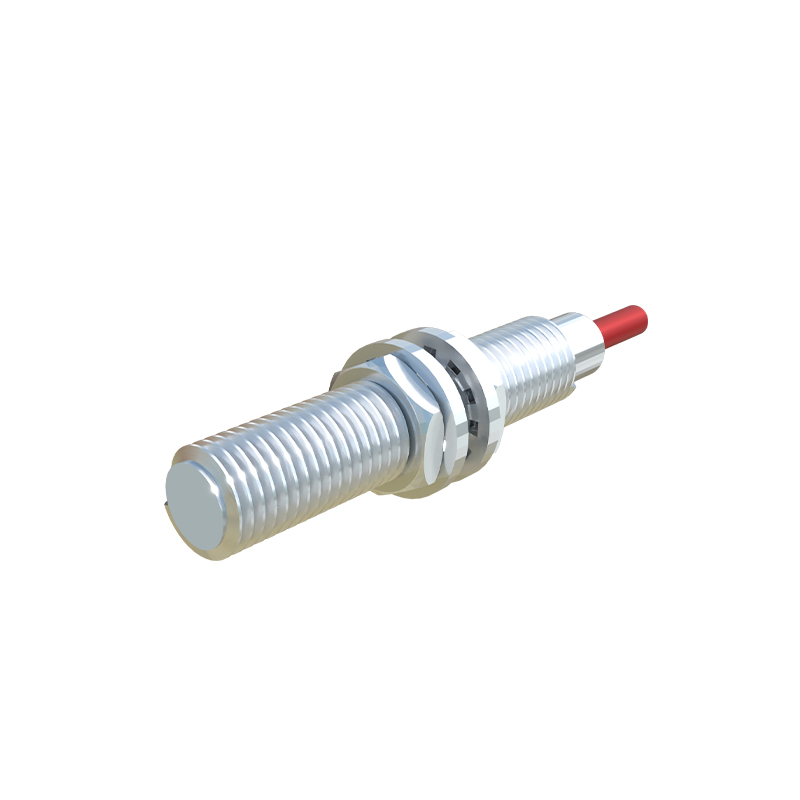
Typical applications for the FA18 two-wire proximity sensor are vast across manufacturing and processing industries. They are extensively used for position detection of machine parts, such as verifying the presence of a cylinder in a stamping press, detecting the end position of a linear actuator, or counting metallic objects on a conveyor belt. Their robust construction makes them suitable for harsh environments in automotive assembly lines, metalworking machinery, and material handling systems. The FA18 is also commonly employed for simple control tasks like bin level detection for metal parts or as a safety interlock to confirm a guard door is closed before machine initiation.
Installation and mounting require careful attention to maximize performance and avoid false triggers. The sensor must be mounted securely to prevent vibration from altering its position. It is critical to maintain the specified sensing distance, which is a nominal value under ideal conditions (usually a standard target). For inductive sensors like the FA18, the effective sensing distance can be reduced for non-ferrous metals like aluminum or copper. Furthermore, installers must ensure that no other metal objects are within the sensor's lateral or rear areas, as this can influence the magnetic field and detection characteristics. Adequate clearance around the sensor head, as specified in the datasheet, is mandatory.
In conclusion, the FA18 two-wire proximity switch sensor represents a perfect balance of simplicity, durability, and functionality. Its two-wire configuration offers significant installation savings and compatibility with classic control circuits, while its solid-state design provides millions of reliable switching cycles free from mechanical wear. For engineers and technicians seeking a cost-effective, robust solution for metallic object detection without the complexity of additional wiring, the FA18 series remains a cornerstone component in modern industrial automation toolkits. Always consult the manufacturer's specific datasheet for detailed electrical characteristics, sensing ranges, temperature ratings, and mounting instructions for the exact FA18 model in use.