In the realm of industrial automation, reliable and precise object detection is a cornerstone of efficient operation. Among the myriad of sensing technologies available, inductive proximity sensors stand out for their robustness, non-contact operation, and immunity to environmental factors like dust and moisture. The PR30-15DP model represents a specific, high-performance iteration within this category, designed to meet the rigorous demands of modern manufacturing and machinery. This article delves into the technical specifications, operational principles, application scenarios, and key advantages of the PR30-15DP inductive proximity sensor.
At its core, the PR30-15DP is a cylindrical, shielded (flush-mountable) inductive sensor with a nominal sensing distance of 15mm. The "PR30" typically denotes the housing diameter, which is 30mm, a standard size offering a solid mechanical footprint for stable mounting. The "DP" suffix commonly indicates a DC-powered, PNP (sourcing) output configuration with a normally open (NO) switching function. This configuration is widely preferred in many PLC (Programmable Logic Controller) systems for its compatibility. The sensor generates an oscillating electromagnetic field from its active face. When a metallic object (typically ferrous metals like steel and iron, though non-ferrous metals at a reduced sensing range) enters this field, eddy currents are induced in the target. This causes a change in the oscillation amplitude, which is detected by the sensor's internal circuitry, triggering a solid-state switch to change state.
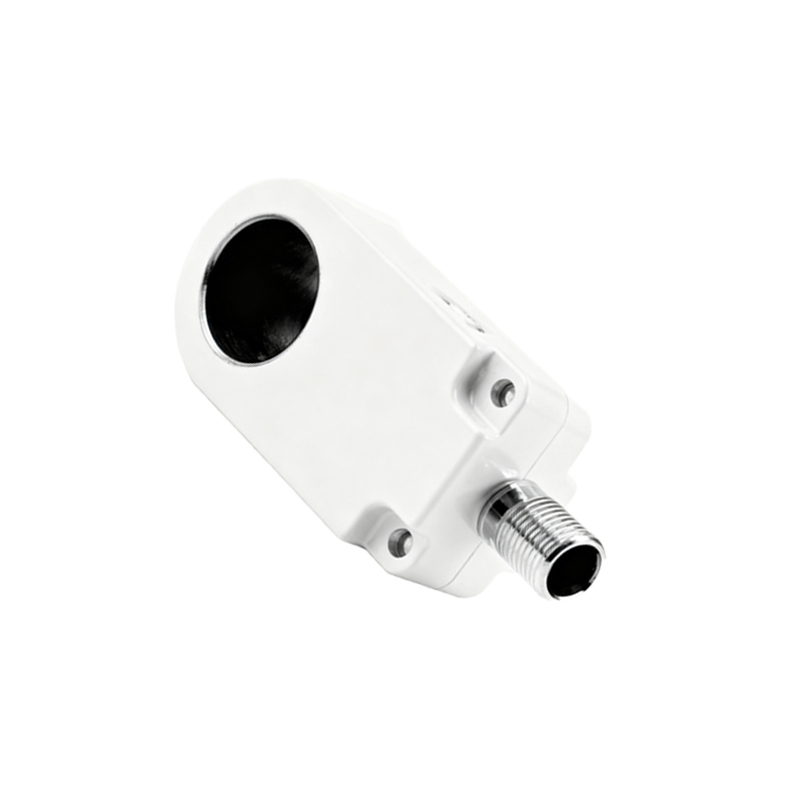
The construction of the PR30-15DP is geared for industrial durability. The housing is usually made of nickel-plated brass or stainless steel, providing excellent resistance to corrosion, oils, and coolants. The sensing face is often a robust ceramic or PBT compound, protecting the internal coil from physical damage. A key feature is its IP67 or higher ingress protection rating, meaning it is dust-tight and can withstand temporary immersion in water, making it suitable for harsh washdown environments commonly found in food processing or automotive plants. The operating voltage range is typically 10-30V DC, aligning with standard industrial control voltages. Its output is a 3-wire design (brown for +V, blue for 0V, black for signal output), simplifying wiring and installation.
Performance parameters are critical for selection. The PR30-15DP's 15mm sensing distance is its nominal value; practical installation requires considering a safety margin, often using 70-80% of this value to account for temperature fluctuations and supply voltage tolerances. The switching frequency, indicating how quickly it can detect objects passing by, is a vital metric for high-speed applications like counting on conveyor belts. This model typically offers a frequency in the range of several hundred Hz, sufficient for many material handling tasks. Another crucial specification is the hysteresis, a built-in differential between the switch-on and switch-off points that prevents output chatter when a target is at the exact sensing limit.
Application areas for the PR30-15DP are extensive. It is perfectly suited for position sensing of machine parts, such as verifying the presence of a cylinder in its end position, detecting the passage of metal components on an assembly line, or ensuring a robotic gripper has successfully picked up a metal workpiece. Its shielded design allows for flush mounting in metal brackets without false triggering, a significant advantage over unshielded models. This makes it ideal for embedding into machine structures where space is constrained. In automated packaging machinery, it can detect metal staples or foil seals. In automotive manufacturing, it monitors the position of pistons, gears, or other metallic components.
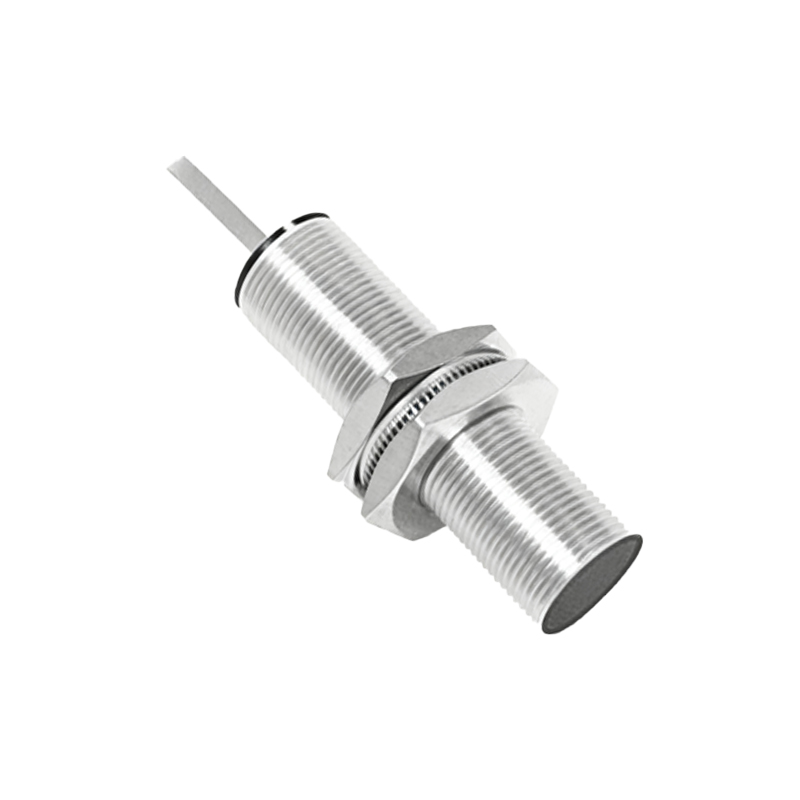
When compared to other sensing technologies like capacitive, ultrasonic, or photoelectric sensors, the inductive PR30-15DP offers distinct benefits. Its operation is unaffected by target color, transparency, or surface finish—it only reacts to metal. It is highly resistant to contaminants like dirt, chips, and liquids that could easily obscure an optical sensor's lens. There are no moving parts, leading to virtually infinite mechanical lifespan and high reliability. However, its limitation is clear: it cannot detect non-metallic objects. For such materials, alternative technologies must be employed.
Installation and maintenance are straightforward. Ensuring a clean metal target of sufficient size (usually specified as a standard target of iron) is paramount for consistent performance. The sensor should be mounted securely to avoid vibration-induced errors. Electrical connections must be correct, with attention to polarity for DC models. While largely maintenance-free, periodic checks for physical damage to the housing or sensing face, accumulation of metallic debris, and verification of the output signal under operational conditions are recommended as part of a preventive maintenance routine.
In conclusion, the PR30-15DP inductive proximity sensor is a workhorse component in industrial automation. Its robust construction, consistent performance with metallic targets, and ease of integration make it a go-to solution for engineers designing reliable