In the realm of industrial automation, proximity sensors are indispensable components for non-contact detection of objects. Among the diverse types available, the two-wire square proximity sensor stands out for its robust design and simplified wiring, making it a staple in control panels, machinery, and conveyor systems. Unlike their three-wire counterparts, these sensors integrate seamlessly into DC circuits with only two connection points, offering a compact and cost-effective solution for space-constrained applications.
The fundamental operating principle of a two-wire square proximity sensor is based on generating an electromagnetic field. Internally, an oscillator circuit creates a high-frequency field at the active face of the sensor. When a metallic target (ferrous or non-ferrous, depending on the sensor type) enters this detection field, it induces eddy currents. These currents cause a change in the oscillation amplitude, which is detected by a threshold circuit. This detection event triggers a change in the sensor's internal state. In a two-wire system, this state change is reflected directly as a variation in the current flowing through the same two wires used for power supply. Essentially, the sensor acts as a variable resistance or a switching element in series with the load.
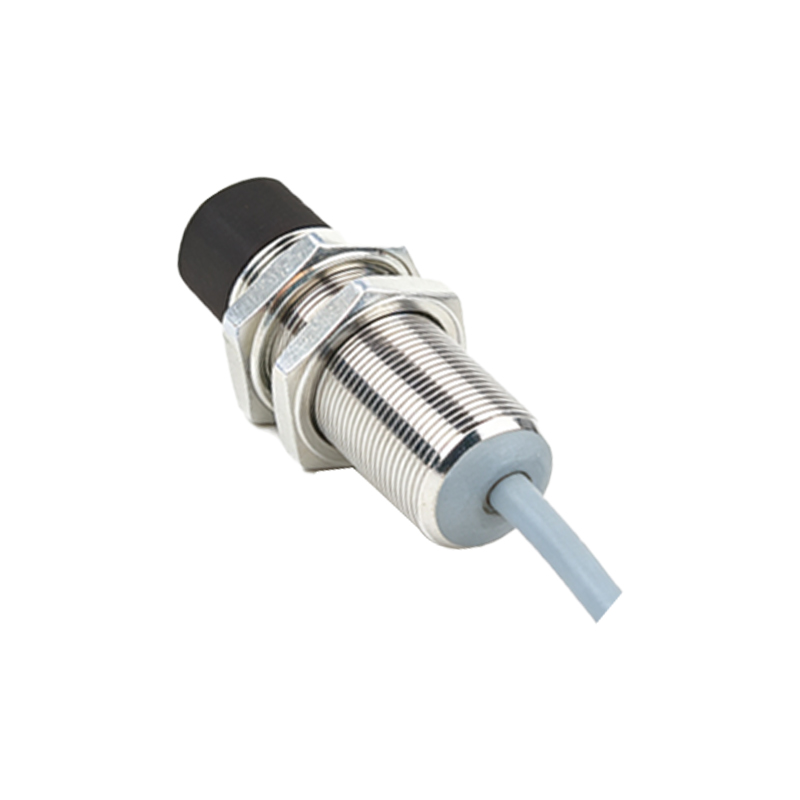
Wiring a two-wire sensor is notably straightforward. It connects in series with the load (e.g., a PLC input module, relay coil, or indicator lamp) and the power supply. One wire is connected to the positive DC voltage (typically 10-30V DC), and the other wire is connected to the load, which then returns to the negative side of the power supply. When no target is present, the sensor draws a small "leakage" or "off-state" current, insufficient to activate the load. Upon detecting a target, the internal switch closes (for a normally open configuration), allowing sufficient current to flow and energize the load. This design eliminates the need for a separate output wire, simplifying installation and reducing wiring errors.
The square housing of these sensors is a key feature. It provides a stable mounting platform, often allowing for adjustment or embedding into machined slots. The housing is typically constructed from rugged materials like nickel-plated brass or stainless steel, offering high resistance to mechanical impacts, cutting fluids, and washdowns common in industrial environments. This square form factor is particularly advantageous in control cabinets and tight spaces where consistent, flush mounting is required.
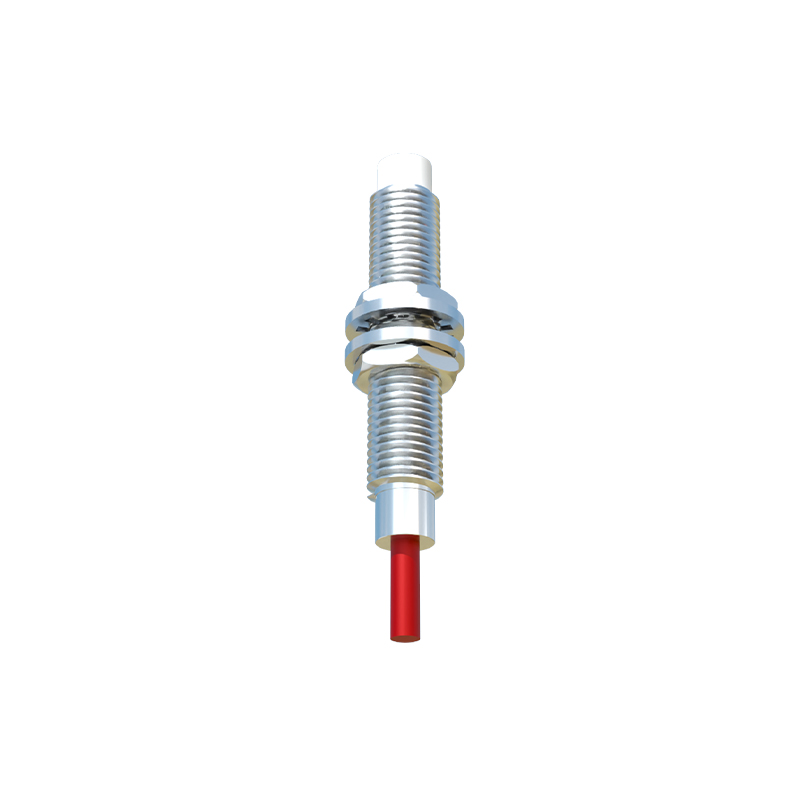
When selecting and applying a two-wire square proximity sensor, several critical parameters must be considered. First is the operating voltage range, commonly 10-30V DC. Ensuring a stable power supply within this range is crucial for reliable operation. Second, the load current rating is paramount. The sensor must handle the current required by the connected load in the "on" state, while the off-state leakage current must be low enough to prevent false triggering. Users must consult the datasheet for the maximum load current and minimum required load (or maximum allowable leakage current) specifications.
Another vital specification is the sensing distance, often rated as the "nominal sensing distance" (Sn). This distance can be affected by the target material, size, and approach angle. Standard targets are usually defined as mild steel squares of a specific thickness. For non-ferrous metals like aluminum or copper, the effective sensing distance is reduced, and correction factors must be applied. The square shape often allows for a more uniform sensing field compared to cylindrical sensors, but the effective sensing area is still defined by the sensor's face.
A significant advantage of the two-wire design is its inherent protection against incorrect polarity connection. Many modern two-wire sensors are equipped with reverse polarity protection, preventing damage if the wires are accidentally swapped. Furthermore, they often include short-circuit protection and overload protection, enhancing durability in harsh electrical environments. However, a key consideration is the voltage drop across the sensor. Unlike a three-wire sensor with a dedicated output transistor, the two-wire sensor's internal switching element causes a small voltage drop (typically 1.5V to 3V) when active. This "residual voltage" must be accounted for to ensure the load receives adequate voltage to operate.
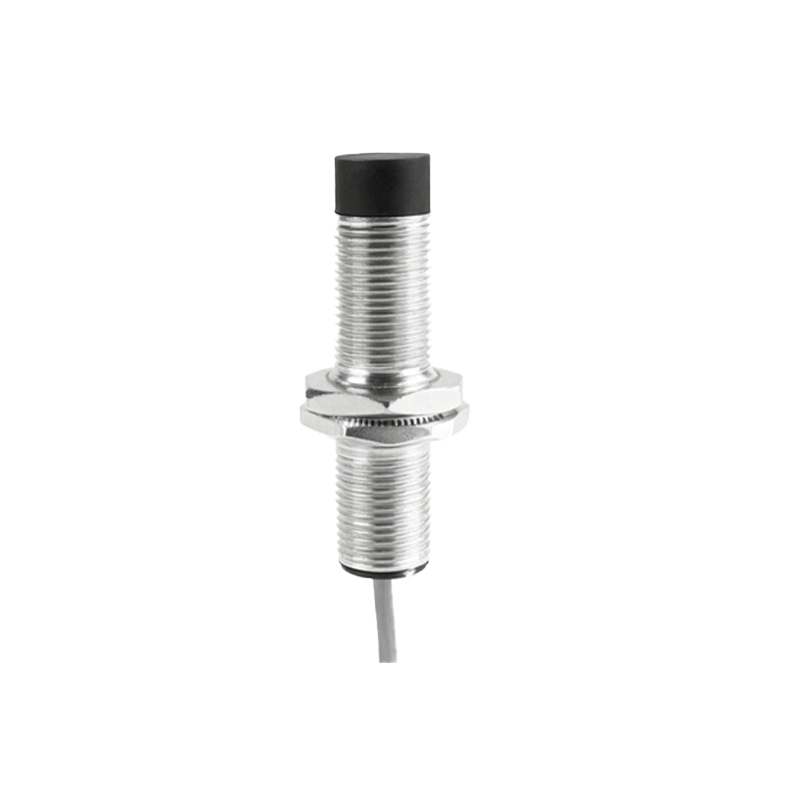
In practice, these sensors are deployed for countless tasks: detecting the presence of a metal part on a fixture, counting products on a conveyor, confirming the position of a robotic arm, or serving as a limit switch in automated guided vehicles. Their two-wire nature makes them ideal for direct replacement of mechanical limit switches, offering longer life and maintenance-free operation.
In conclusion, the two-wire square proximity sensor represents a perfect blend of simplicity, durability, and functionality. Its straightforward series connection, rugged square housing, and reliable solid-state switching make it a fundamental building block in modern industrial control systems. By carefully considering load requirements, voltage drop, and sensing characteristics, engineers and technicians can leverage these robust devices to create efficient, reliable, and cost-effective automation solutions.
SEO