In the rapidly evolving landscape of industrial automation, robotics, and smart devices, infrared (IR) proximity sensors have become indispensable components. Their ability to detect the presence, absence, or distance of objects without physical contact is fundamental. However, their reliance on infrared light makes them inherently susceptible to various forms of interference, which can degrade accuracy, cause false triggers, or lead to complete operational failure. For engineers and system designers, mastering anti-interference techniques is not optional; it is critical for ensuring reliability and precision in real-world applications.
The primary sources of interference for IR proximity sensors are multifaceted. Ambient light, particularly sunlight and incandescent lighting, contains significant infrared components that can saturate the sensor's photodiode receiver. This is the most common challenge, as sunlight's IR spectrum can be orders of magnitude stronger than the sensor's own emitted signal. Secondly, crosstalk from other IR sources, such as adjacent sensors in an array or unrelated IR remote controls, can create confusing signals. Thirdly, environmental factors like dust, fog, or oil films on the sensor lens can attenuate or scatter the emitted and reflected IR beams. Finally, electrical noise from power supplies or nearby high-frequency circuits can corrupt the sensitive analog signal from the receiver.
To combat these challenges, a multi-layered engineering approach is essential. The first line of defense lies in optical design. Using narrow-bandpass infrared filters mounted directly over the receiver photodiode is highly effective. These filters are tuned to the specific wavelength of the IR emitter (commonly 850nm or 940nm), dramatically reducing the intensity of ambient light at other wavelengths. For 940nm emitters, this is particularly advantageous as they operate in a region where sunlight has a relative dip in intensity. Furthermore, physical design elements like recessed lenses or shrouds can help block direct ambient light from striking the receiver at acute angles.
Signal modulation and synchronous detection represent the cornerstone of modern IR sensor anti-interference. Instead of emitting a constant beam of IR light, the sensor's LED is driven by a modulated signal, typically a square wave in the range of a few kilohertz to several hundred kilohertz. The receiver circuit is then designed to be sensitive only to signals oscillating at that precise modulation frequency. This technique, often implemented via a dedicated IC or microcontroller, allows the sensor to effectively ignore steady-state ambient light (DC noise) and random electrical noise. Only the reflected, modulated signal is amplified and processed, yielding a much cleaner and more reliable measurement.
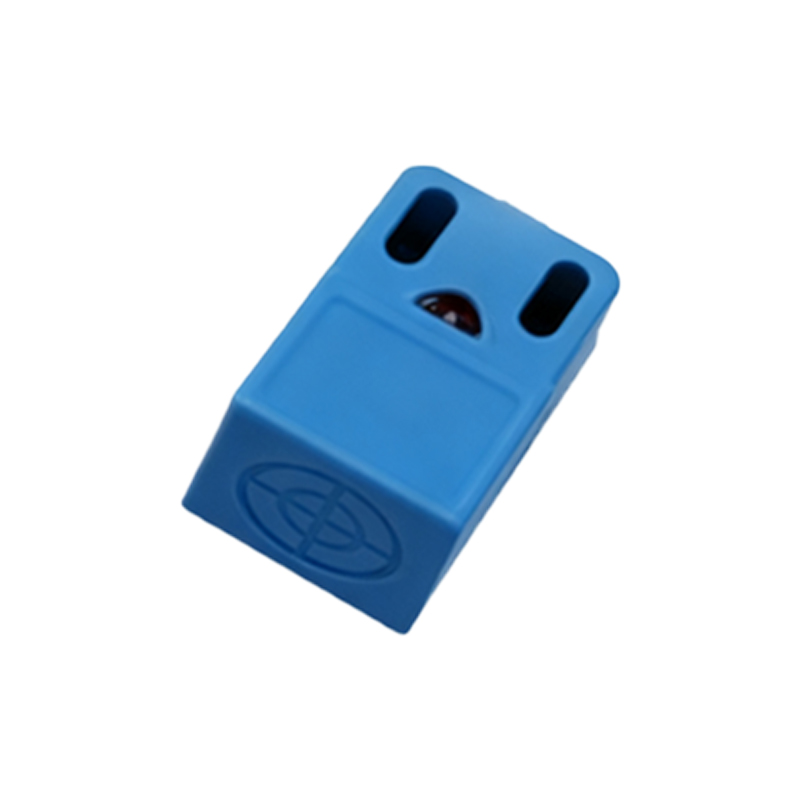
Advanced digital signal processing (DSP) algorithms further enhance robustness. Microcontrollers integrated with or connected to the sensor can implement filtering algorithms, such as moving average filters or median filters, to smooth out transient noise spikes in the distance reading. Threshold hysteresis can be programmed to prevent output chatter when a detected object is near the trigger point. For time-of-flight (ToF) based IR proximity sensors, sophisticated algorithms can distinguish between the true signal return and multipath reflections or background noise.
Electrical design practices are equally crucial. Implementing proper shielding for the sensor module and its connecting cables minimizes electromagnetic interference (EMI). Careful PCB layout, with short traces for analog signals, dedicated ground planes, and decoupling capacitors near the sensor IC, suppresses conducted noise. Using a stable, low-noise power supply regulator specifically for the sensor circuitry prevents voltage fluctuations from affecting performance.
System-level integration and calibration offer the final layer of optimization. In environments with predictable interference patterns, such as a machine that operates under consistent lighting, a one-time calibration routine can establish a baseline ambient IR level, which is then subtracted from subsequent readings. For applications using multiple sensors, staggering their modulation frequencies or operating them in a time-division multiplexed sequence prevents them from interfering with each other. Regular maintenance schedules to clean sensor lenses are a simple yet often overlooked practice to maintain optimal performance.
In conclusion, the reliable operation of infrared proximity sensors in complex environments is an achievable goal through a systematic application of anti-interference strategies. It requires a holistic view encompassing optical physics, analog circuit design, digital signal processing, and robust system integration. By leveraging modulated IR signals, optical filtering, intelligent processing, and sound electrical design, engineers can develop sensing solutions that maintain high accuracy and reliability, enabling smarter and more autonomous systems across countless industries. The pursuit of interference immunity is a continuous process, driving innovation in sensor technology forward.