In the demanding landscape of industrial automation, the quest for reliable, maintenance-free sensing solutions is perpetual. Among the myriad of sensor types, the M30 long-range proximity sensor stands out as a critical component for applications requiring robust non-contact detection at extended distances. Characterized by its standardized 30mm threaded cylindrical housing, this sensor variant is engineered to deliver consistent performance in harsh environments where precision and durability are paramount.
The fundamental operating principle of an M30 long-range proximity sensor typically involves an inductive, capacitive, or sometimes ultrasonic sensing mechanism. Inductive models, the most common for metallic target detection, generate an electromagnetic field. When a conductive metal object enters this field, eddy currents are induced, causing a change in the oscillator's amplitude. This change is detected by the sensor's circuitry, triggering a solid-state output switch. The "long-range" capability is achieved through optimized coil design, enhanced oscillator circuits, and sophisticated signal processing, allowing detection distances significantly greater than those of standard M30 sensors—often reaching 15mm, 20mm, or even 25mm for ferrous metals, compared to the typical 10mm or 15mm.
The advantages of deploying M30 long-range sensors are substantial. First and foremost is their ability to detect objects without physical contact, eliminating mechanical wear and tear and ensuring a long operational lifespan. This non-contact nature is crucial in applications involving fast-moving or fragile objects. The extended sensing range provides greater flexibility in machine design, allowing for more forgiving mounting tolerances and enabling detection where space constraints prevent closer installation. The robust M30 stainless steel or nickel-plated brass housing offers high resistance to mechanical impacts, vibrations, and industrial fluids like coolants and oils. Many models feature IP67, IP68, or IP69K ingress protection ratings, making them suitable for washdown environments in food and beverage or pharmaceutical industries.
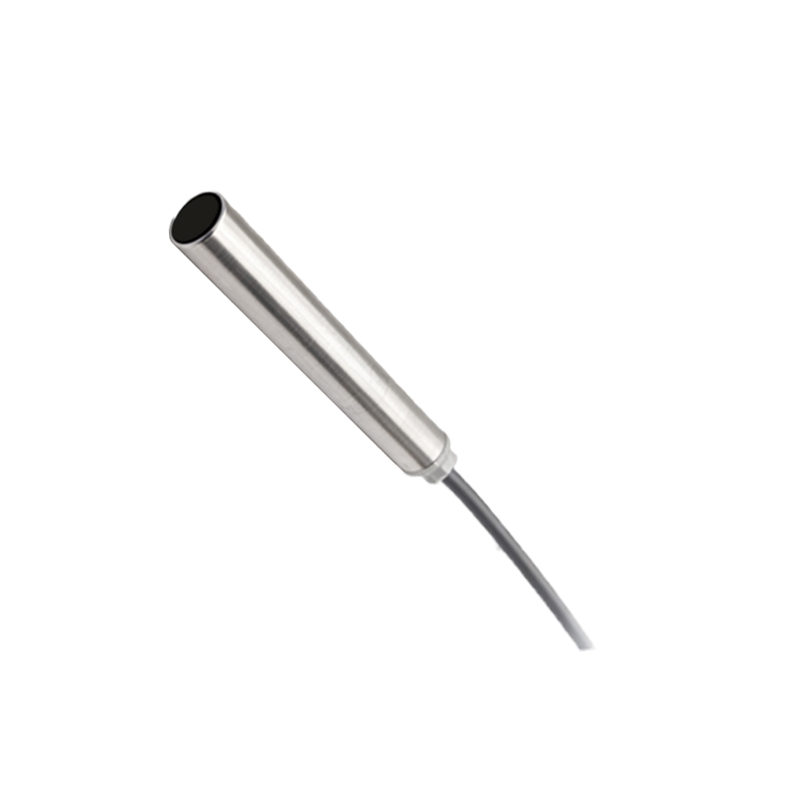
Typical applications span across diverse sectors. In automotive manufacturing, these sensors are used for pallet presence detection on conveyor lines, robot end-effector positioning, and verifying component placement in assembly fixtures—often needing to sense through layers of grime. In material handling and packaging, they monitor the fill level of bulk materials in metal containers or detect the presence of large metal bins on AGVs (Automated Guided Vehicles). In heavy machinery and steel mills, their extended range allows for safer monitoring of crane positions or hot metal billets from a distance, mitigating heat damage.
Selecting the appropriate M30 long-range sensor requires careful consideration of several parameters. The target material is primary; inductive sensors are specific to metals, with sensing ranges specified for mild steel. Correction factors must be applied for other metals like stainless steel, aluminum, or copper. The required sensing distance (Sn) should be chosen with a safety margin, typically 70-80% of the nominal range, to account for temperature fluctuations and supply voltage variations. Output configuration is another key decision: PNP (sourcing) or NPN (sinking) transistor outputs, NO (Normally Open) or NC (Normally Closed) logic, and 2-wire, 3-wire, or 4-wire (with dual independent outputs or IO-Link capability) designs. Modern sensors increasingly incorporate IO-Link communication, a point-to-point serial protocol, which transforms the simple sensor into an intelligent device capable of transmitting detailed diagnostic data, parameterization, and process values, enabling predictive maintenance and Industry 4.0 integration.
Installation and environmental factors are critical for optimal performance. The sensor should be mounted securely to minimize vibration. It is essential to respect the manufacturer's guidelines concerning flush or non-flush mounting, as non-flush models offer longer ranges but require a clear lateral area around the sensing face. The presence of other metal objects in the proximity (the "metallic background") can influence the effective sensing distance and must be considered during design. Electrical considerations include ensuring a stable DC power supply within the sensor's specified range and implementing proper protection against surge voltages, inductive load switching spikes, and short circuits, often using protective elements in the output circuit.
In conclusion, the M30 long-range proximity sensor is a testament to the evolution of industrial sensing technology. By offering extended detection capabilities within a rugged, standardized form factor, it solves complex automation challenges, enhances system reliability, and reduces maintenance downtime. As factories move towards greater connectivity and intelligence, these sensors, especially those with IO-Link, are poised to play an even more integral role in building resilient, data-driven, and efficient automated systems. Engineers and system integrators must leverage their understanding of operating principles, selection criteria, and application nuances to fully harness the potential of these powerful components.