In the rapidly evolving landscape of industrial automation and quality control, RGB digital laser sensors have emerged as a pivotal technology, offering unprecedented precision, versatility, and reliability. Unlike traditional monochromatic laser sensors, these advanced devices utilize red, green, and blue laser beams to capture comprehensive data about an object's surface characteristics, including color, texture, height, and dimensional profile. This multi-spectral approach enables them to perform complex inspection tasks that were previously impossible or required multiple sensor systems.
The core principle of an RGB digital laser sensor involves projecting three distinct laser lines—each corresponding to a primary color—onto a target surface. A high-resolution CMOS or CCD camera then captures the reflected light. Sophisticated onboard processors analyze the deformation, intensity, and chromatic information of each laser line. By comparing the data from the three wavelengths, the sensor can filter out ambient light interference, distinguish between materials with similar reflectivity but different colors, and detect subtle surface defects like scratches, discolorations, or contaminants. This tri-chromatic analysis provides a depth of information far beyond simple distance or presence detection.
Key applications span numerous sectors. In electronics manufacturing, RGB sensors are indispensable for verifying component placement, checking solder paste quality, and reading multi-colored markings on PCBs. The automotive industry relies on them for precise gap and flush measurement between body panels, inspecting paint quality and consistency, and ensuring correct assembly of interior components with varied textures and colors. In pharmaceutical packaging, they verify label accuracy, check seal integrity, and inspect pill color for quality assurance. Furthermore, in logistics and warehousing, these sensors facilitate robotic guidance and sorting of items based on both size and color codes.
The advantages of implementing RGB digital laser sensors are substantial. First and foremost is enhanced accuracy. The ability to use color as a measurement parameter reduces false readings caused by environmental factors or similar-looking objects. Secondly, they offer remarkable flexibility. A single RGB sensor can often replace two or three monochrome sensors, simplifying system design, reducing calibration time, and lowering overall costs. Their digital output, typically via Ethernet/IP, PROFINET, or EtherCAT, allows for seamless integration into Industry 4.0 and IoT frameworks, enabling real-time data analytics and predictive maintenance. High-speed processing capabilities also make them suitable for high-throughput production lines without sacrificing precision.
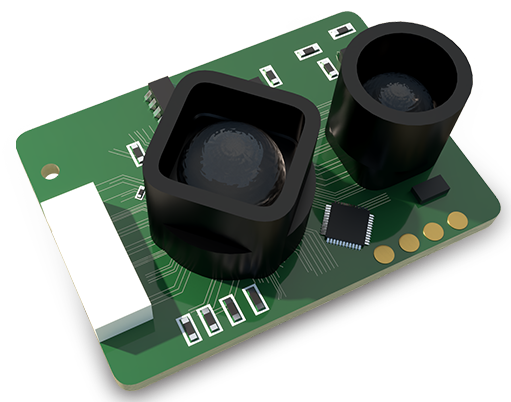
When selecting an RGB digital laser sensor, engineers must consider several technical specifications. Resolution, often down to the micron level, determines the smallest detectable feature. Measuring range and spot size define the operational envelope. The sampling rate must align with line speed. Robustness is critical; industrial-grade sensors feature IP67 or higher ratings to withstand dust, moisture, and vibration. Equally important is the software ecosystem—user-friendly configuration tools that allow for easy setup of measurement logic, tolerance thresholds, and data logging are essential for maximizing ROI.
Looking ahead, the integration of RGB laser sensing with artificial intelligence and machine learning algorithms represents the next frontier. Smart sensors will not only capture rich 3D and color data but will also learn to identify complex patterns and anomalies autonomously, further reducing human intervention and enhancing quality control processes. As industries continue to demand higher levels of automation and data-driven decision-making, RGB digital laser sensors will undoubtedly remain at the forefront, driving innovation and efficiency in precision measurement.
