Infrared proximity sensors are indispensable components in modern industrial automation, offering non-contact detection capabilities across diverse environments. These sensors operate by emitting infrared light and measuring the reflection from objects, enabling precise distance or presence detection. Based on their operational principles, design features, and application scenarios, infrared proximity sensors can be systematically classified into several key categories.
The first major classification is based on the modulation technique employed. Modulated Infrared Sensors use pulsed or frequency-modulated infrared signals to distinguish between ambient light and the reflected signal, significantly reducing interference from external light sources such as sunlight or artificial lighting. These sensors are ideal for outdoor applications or environments with variable lighting conditions. In contrast, Unmodulated Infrared Sensors emit continuous infrared waves and are simpler in design, making them cost-effective for indoor use where lighting is stable and controlled. However, they may be susceptible to false triggers in brightly lit areas.
Another critical classification revolves around the sensing method. Diffuse Reflective Sensors rely on the reflection of infrared light directly from the target object. They are compact and easy to install, suitable for detecting objects within short to medium ranges, typically up to a few meters. Common applications include conveyor belt systems, object counting, and robotic guidance. Retro-reflective Sensors, on the other hand, utilize a reflector to bounce the infrared beam back to the receiver. They offer longer detection ranges and higher accuracy, often used in packaging machinery, security systems, and automated doors where consistent alignment is maintained. Through-beam Sensors consist of separate emitter and receiver units placed opposite each other. The detection occurs when an object interrupts the infrared beam between them. This type provides the highest reliability and longest range, making it preferred for critical safety applications like machine guarding or high-speed production lines.
Infrared proximity sensors can also be categorized by their output type. Digital Output Sensors provide a simple on/off signal, indicating the presence or absence of an object. They are widely used in basic automation tasks, such as limit switching or part detection. Analog Output Sensors deliver a continuous signal proportional to the distance of the object, enabling precise measurement applications like level monitoring or thickness gauging. Additionally, some advanced sensors feature Programmable Outputs, allowing users to configure detection thresholds, output formats, or communication protocols (e.g., IO-Link) for integration into smart factory systems.
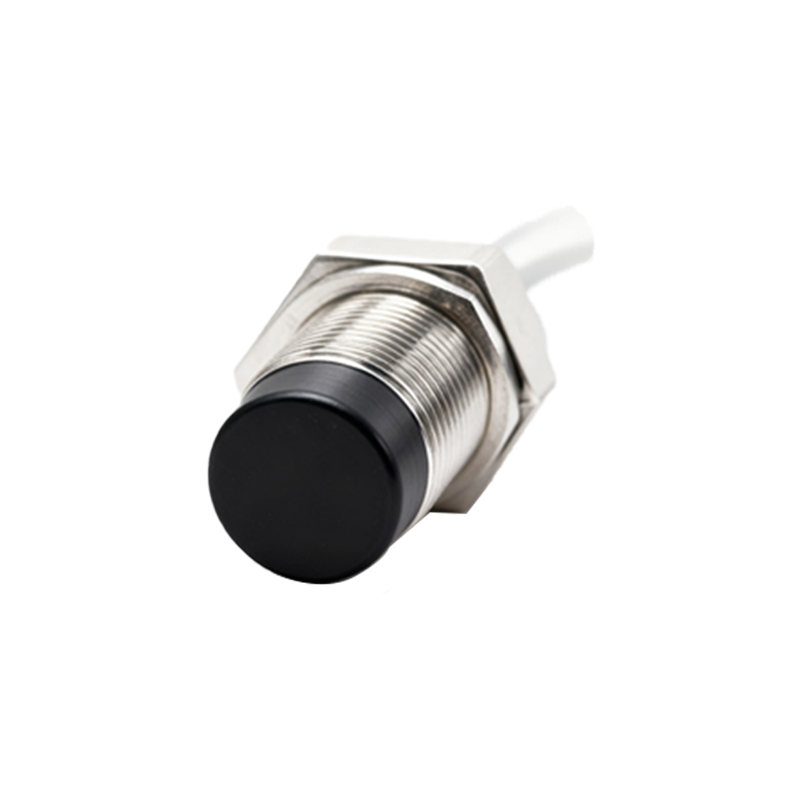
Environmental robustness forms another basis for classification. Standard Sensors are designed for general industrial use with moderate temperature, humidity, and dust levels. Ruggedized Sensors are built with enhanced housings (e.g., IP67 or IP69K ratings) to withstand harsh conditions, including extreme temperatures, water exposure, or corrosive atmospheres. These are essential in industries like mining, food processing, or automotive manufacturing. Furthermore, Miniature Sensors are developed for space-constrained applications, such as electronic devices or medical equipment, where size and weight are critical factors.
The selection of an infrared proximity sensor depends on specific application requirements, including detection range, response time, environmental challenges, and budget constraints. For instance, in automated warehousing, diffuse reflective sensors with digital outputs might be used for inventory tracking, while through-beam sensors ensure safety in robotic cell perimeters. In consumer electronics, miniature modulated sensors enable touchless interfaces in smartphones or appliances.
Emerging trends are shaping the evolution of infrared proximity sensors. The integration of Smart Sensors with embedded diagnostics and connectivity features supports Industry 4.0 initiatives, enabling predictive maintenance and data analytics. Additionally, advancements in Multi-spectral Infrared Technology allow sensors to operate in challenging conditions, such as detecting transparent or dark-colored objects that traditionally reflect less infrared light.
In summary, understanding the classification of infrared proximity sensors—by modulation, sensing method, output type, and environmental design—empowers engineers to optimize system performance. As industries increasingly adopt automation and IoT solutions, these sensors will continue to play a pivotal role in enhancing efficiency, safety, and innovation across sectors from manufacturing to healthcare.