In the realm of industrial automation, the reliable detection of objects is paramount. Two of the most prevalent and critical technologies enabling this are proximity sensors and photoelectric sensors. While their end goal is similar—to detect the presence or absence of an object without physical contact—their operating principles, strengths, and ideal applications differ significantly. Understanding these differences is crucial for engineers and technicians tasked with selecting the right sensor for a specific job, ensuring optimal system performance, reliability, and cost-effectiveness.
Proximity Sensors: Sensing Through Fields
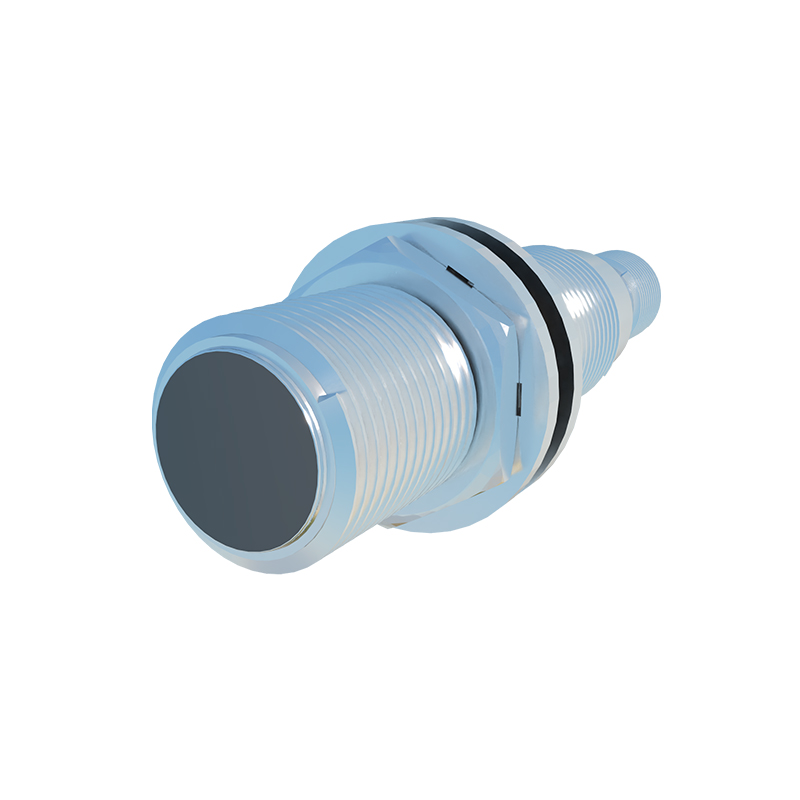
Proximity sensors, often termed inductive or capacitive proximity switches, operate by generating an electromagnetic or electrostatic field. The most common type is the inductive proximity sensor. It contains an oscillator circuit that creates a high-frequency electromagnetic field emanating from its sensing face. When a metallic object enters this field, eddy currents are induced on the object's surface. This causes a change in the oscillation amplitude, which is detected by the sensor's circuitry, triggering a solid-state output signal. Inductive sensors are exclusively for detecting metals, with their effective sensing range (the rated operating distance) varying based on the target metal's properties; for instance, steel is detected at the nominal range, while aluminum or copper may reduce it.

Capacitive proximity sensors, on the other hand, can detect both metallic and non-metallic materials (liquids, plastics, wood, granules). They function by generating an electrostatic field. Any object that enters this field alters the capacitance of the sensor's circuit, leading to a state change. This makes them ideal for applications like level detection in tanks (for liquids or powders) or detecting non-metallic objects on a conveyor.
Key advantages of proximity sensors include:
Robustness: They have no moving parts and are typically housed in solid metal or polymer bodies, making them highly resistant to vibration, dirt, oil, and water (often rated IP67 or higher).
High Switching Frequency: They can detect objects at very high speeds.
Insensitivity to Environmental Factors: Inductive sensors, in particular, are largely unaffected by ambient light, dust, smoke, or color of the target.
Their primary limitation is the restricted sensing range (typically from a few millimeters up to about 60mm for standard models) and material specificity (for inductive types).
Photoelectric Sensors: Sensing with Light
Photoelectric sensors utilize a beam of light, typically infrared, visible red, or laser, to detect objects. They consist of a light emitter (usually an LED) and a receiver. The detection occurs when the target object interrupts or reflects this light beam. There are three main operating modes:
1. Through-beam (Opposed): The emitter and receiver are separate units placed opposite each other. An object is detected when it breaks the light beam. This mode offers the longest sensing distances and highest reliability, as it is less affected by the object's surface properties, color, or angle.
2. Retro-reflective: The emitter and receiver are housed in the same unit. A reflector (corner-cube prism) is placed opposite the sensor. The sensor detects an object when it interrupts the light beam reflected back from the reflector. Sensing distances are shorter than through-beam but longer than diffuse mode.
3. Diffuse (Proximity): The emitter and receiver are in the same housing. The sensor detects light reflected directly off the target object. Sensing distance depends heavily on the object's size, color, and surface texture (light, shiny objects are detected from farther away than dark, matte ones). This is the most common and compact configuration.
Advantages of photoelectric sensors include:
Long Sensing Ranges: Through-beam sensors can detect objects over distances of tens of meters.
Versatility in Target Material: They can detect virtually any solid object, regardless of material—metal, plastic, wood, glass, etc.
Ability to Detect Small Objects: Precise laser-based sensors can detect very small parts or precise edges.
Their main drawbacks are potential susceptibility to environmental interferences such as heavy dust, fog, strong ambient light, and highly reflective backgrounds, which may cause false triggers. They also require relatively clean environments compared to rugged proximity sensors.
Selection Criteria: Making the Right Choice
Choosing between a proximity and photoelectric sensor hinges on several application-specific factors:
Target Material: For metals only, especially in harsh environments, an inductive proximity sensor is often the best choice. For non-metallics, liquids, or any material, a photoelectric or capacitive sensor is necessary.
Sensing Distance: For long-range detection (>100mm), photoelectric is the only option. For short-range, embedded detection, proximity sensors excel.
Environmental Conditions: Oily, dirty, or wet environments favor sealed proximity sensors. Clean