Proximity sensors are widely used in industrial automation, robotics, and safety systems to detect the presence or absence of objects without physical contact. However, a common challenge faced by engineers and technicians is the limited sensing distance of these devices. When a proximity sensor cannot detect objects at the desired range, it can lead to operational inefficiencies, system failures, or safety hazards. This article explores practical methods to extend the sensing distance of proximity sensors, ensuring reliable performance in demanding applications.
Understanding the factors that influence sensing distance is crucial. Proximity sensors operate based on principles such as electromagnetic induction, capacitance, or ultrasonic waves. The rated sensing distance specified by manufacturers is typically measured under ideal conditions—using a standard target material, at room temperature, and with minimal environmental interference. In real-world scenarios, factors like target material composition, size, shape, temperature fluctuations, and electromagnetic noise can significantly reduce the effective sensing range. For instance, inductive sensors detect metallic objects more effectively than non-metallic ones, while capacitive sensors are sensitive to a broader range of materials but may be affected by humidity or dust.
One effective approach to extending sensing distance is selecting the right sensor type for the application. Inductive proximity sensors are ideal for detecting metals, with sensing distances varying based on the target's material and size. For example, steel targets can be detected at the sensor's rated distance, while aluminum or copper may require a reduction factor. Capacitive sensors, on the other hand, can detect both metallic and non-metallic objects but often have shorter ranges. Ultrasonic sensors offer longer sensing distances, suitable for applications requiring detection up to several meters, though they may be influenced by air temperature or acoustic interference. By matching the sensor to the specific target and environment, users can optimize performance.
Another key strategy involves optimizing sensor installation and alignment. Proper mounting ensures that the sensor's sensing face is perpendicular to the target's approach direction, maximizing detection capability. Avoiding obstacles or reflective surfaces near the sensor can prevent false triggers or reduced range. For inductive sensors, using a target material with high magnetic permeability, such as mild steel, can enhance sensing distance. Additionally, adjusting the sensor's sensitivity settings, if available, allows fine-tuning for extended range without compromising reliability. Many modern sensors feature potentiometers or digital interfaces for this purpose, enabling customization based on application needs.
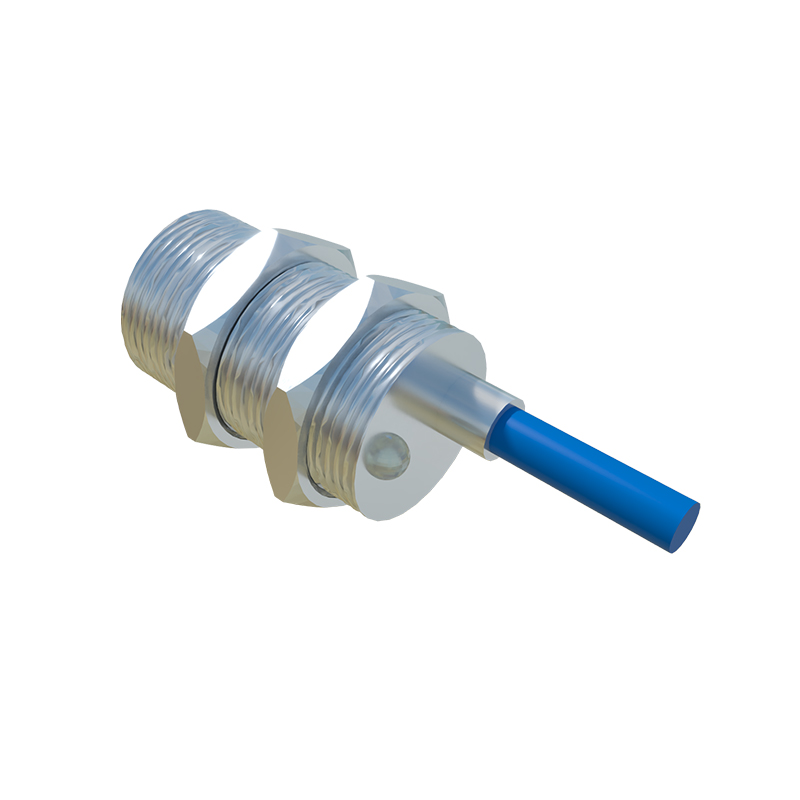
Environmental factors must also be addressed to maintain extended sensing distances. Electrical noise from motors, power lines, or other sensors can interfere with signal integrity, leading to reduced range or erratic behavior. Shielding cables, using twisted-pair wiring, and installing filters can mitigate electromagnetic interference. Temperature extremes can affect sensor components; selecting sensors with wide operating temperature ranges or adding protective enclosures ensures consistent performance. For outdoor or harsh environments, choosing sensors with high ingress protection (IP) ratings prevents damage from dust, moisture, or vibrations.
In cases where standard sensors cannot meet distance requirements, auxiliary devices can be employed. Amplifiers or signal conditioners boost the sensor's output, allowing detection at greater distances. Reflectors or repeaters can redirect sensing fields, effectively extending range in complex setups. For example, in conveyor systems, retro-reflective ultrasonic sensors use a reflector to bounce signals, enabling longer detection paths. Regular maintenance, including cleaning sensor faces and checking connections, prevents degradation over time. Calibration against known targets ensures accuracy, especially after environmental changes or system modifications.
Ultimately, extending the sensing distance of proximity sensors requires a holistic approach—combining appropriate sensor selection, precise installation, environmental control, and technological enhancements. By implementing these methods, users can overcome distance limitations, improve system efficiency, and reduce downtime. As automation evolves, advancements in sensor technology, such as smart sensors with self-diagnostic features, will further simplify distance optimization, supporting more robust and adaptable industrial solutions.