Laser sensors are a cornerstone of modern measurement and detection technology, offering unparalleled precision, speed, and reliability. Their applications span from industrial automation and robotics to autonomous vehicles, consumer electronics, and scientific research. Understanding the various classifications of laser sensors is essential for selecting the right technology for a specific task. This article provides a comprehensive overview of the primary classification methods for laser sensors, focusing on their operating principles and typical applications.
One of the most fundamental ways to classify laser sensors is by their measurement principle. The three dominant categories are triangulation sensors, time-of-flight (ToF) sensors, and interferometric sensors.
Triangulation sensors operate on a simple geometric principle. A laser diode projects a visible or infrared spot onto a target object. The reflected light is captured by a receiver lens at a known angle relative to the emitter. The position of the reflected spot on a photodetector array (like a CCD or CMOS sensor) shifts depending on the distance to the target. By calculating this shift, the sensor's electronics can determine the exact distance. These sensors excel in high-precision, short to medium-range applications. Common uses include profile scanning, thickness measurement of materials, and part inspection on assembly lines where micron-level accuracy is required.
Time-of-Flight (ToF) sensors measure distance by calculating the time it takes for a laser pulse to travel to a target and back. A pulsed laser emits short bursts of light, and a high-speed photodetector receives the reflection. Since the speed of light is constant, the round-trip time is directly proportional to the distance. ToF sensors are ideal for long-range measurements and 3D imaging. They are the technology behind many LiDAR (Light Detection and Ranging) systems used in autonomous vehicles for creating real-time 3D maps of the environment. They are also widely used in robotics for navigation, in logistics for volume measurement, and in gesture recognition systems.
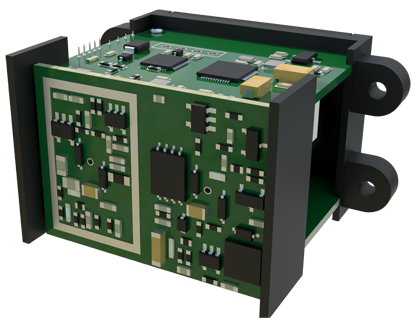
Interferometric sensors represent the pinnacle of precision, capable of measuring displacements at the nanometer scale. They work on the principle of light wave interference. The laser beam is split into a reference beam and a measurement beam. The measurement beam reflects off the target, recombines with the reference beam, and creates an interference pattern. Any minute movement of the target changes this pattern, allowing for extremely precise measurement of distance, vibration, or surface characteristics. These sensors are predominantly used in scientific laboratories, semiconductor manufacturing for wafer alignment, and precision machining.
Beyond measurement principle, laser sensors can also be classified by the type of laser source used. The most common types are Helium-Neon (HeNe) gas lasers, diode lasers, and fiber lasers. HeNe lasers, emitting a characteristic red light at 632.8 nm, were historically common for alignment and interferometry due to their excellent coherence and low beam divergence. Today, semiconductor diode lasers are ubiquitous due to their small size, low cost, efficiency, and reliability. They are the standard source for most consumer and industrial laser sensors. Fiber lasers, where the active gain medium is an optical fiber, offer high power and exceptional beam quality, making them suitable for demanding industrial sensing and LiDAR applications in harsh environments.
Another critical classification is based on the output or data format. This distinguishes between 1D, 2D, and 3D sensors. A simple point sensor or proximity sensor provides a single-point measurement (1D). A line laser scanner, often using triangulation, projects a line onto a surface and uses a camera to capture the profile, generating a 2D cross-sectional measurement. 3D sensors, such as LiDAR units or area scanners, capture full three-dimensional point clouds of an object or scene, either by scanning a point/line over an area or using a flash ToF principle.
Finally, classification by application environment is crucial for practical selection. Standard industrial sensors are built for clean, controlled factory settings. Conversely, ruggedized or hardened laser sensors are designed with robust housings (often with high IP ratings) to withstand dust, moisture, extreme temperatures, and mechanical shock, making them suitable for outdoor use, mining, or heavy machinery.
In conclusion, the world of laser sensors is diverse and highly specialized. From the geometric precision of triangulation to the long-range capability of ToF and the nanometric accuracy of interferometry, each classification serves a distinct purpose. The choice of sensor depends on a careful analysis of required range, precision, speed, environmental conditions, and cost. As technology advances, these classifications continue to evolve, with new hybrid systems and miniaturized designs pushing the boundaries of what is possible in sensing and measurement.