In the evolving landscape of human-machine interaction, the concept of using proximity sensors to represent letters emerges as a fascinating synthesis of tangible sensing and abstract symbolism. This is not merely a technical exercise but a profound exploration of how spatial awareness, a fundamental capability of machines, can be harnessed to encode and convey the foundational elements of written language.
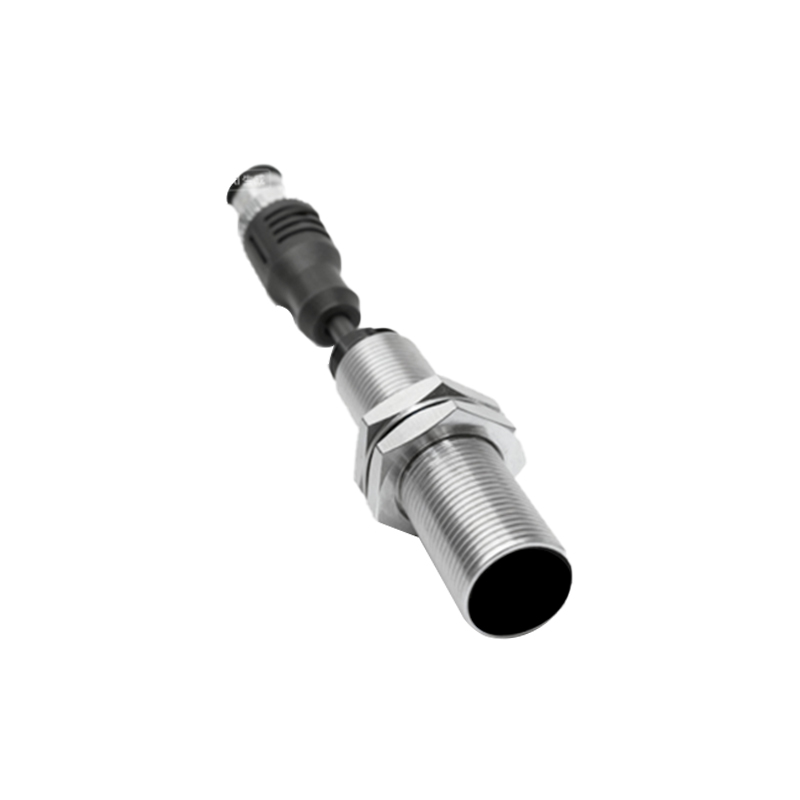
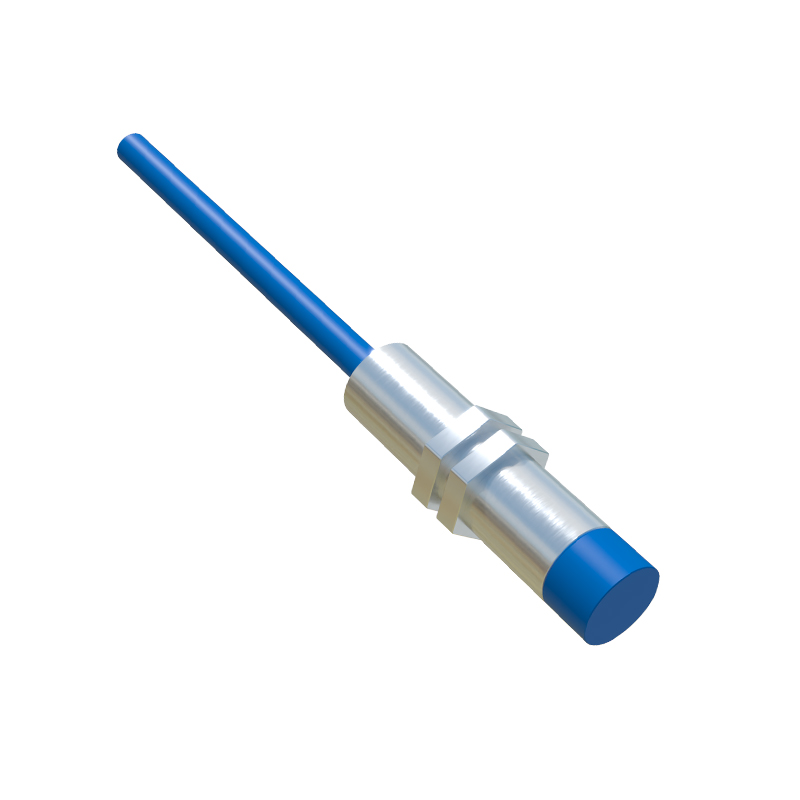
At its core, a proximity sensor is a device that detects the presence or absence of a nearby object, or measures the distance to that object, without any physical contact. Common types include inductive, capacitive, ultrasonic, and infrared sensors, each operating on distinct physical principles. Their primary function is binary or analog in nature: something is near or far; an object is at a specific distance. The leap to representing alphabetic characters requires a layer of symbolic mapping—a set of rules that translates sensor states or spatial patterns into linguistic symbols.
One straightforward method is binary encoding. Consider a simple array of five proximity sensors arranged in a line. The state of each sensor—triggered (1) or not triggered (0)—can form a binary pattern. Using a standard encoding like ASCII or a custom mapping, these patterns can correspond to specific letters. For instance, a pattern of 1-0-0-0-1 might be mapped to the letter 'A'. This approach directly borrows from digital logic, where sequences of bits represent information. The "proximity" becomes the physical actuator for generating the binary digit.

A more dynamic and perhaps more intuitive approach involves gesture or spatial pattern recognition. A single proximity sensor, particularly one capable of measuring a range of distances (an analog sensor), can be used to trace shapes. By moving an object, like a hand, through a defined spatial zone monitored by the sensor, one can trace the form of a letter. The sensor's continuous output—a voltage or digital value corresponding to distance—creates a temporal waveform. Sophisticated software algorithms, often involving machine learning for pattern matching, can then analyze this waveform to recognize the intended letter shape, such as a 'C' or an 'M'. This transforms the sensor into a one-dimensional drawing tool, where depth represents the canvas.
Applications for this convergence of technology and symbolism are diverse and impactful. In accessibility technology, individuals with motor impairments could use subtle, controlled movements within a sensor's field to spell out words, offering a non-contact alternative to traditional switches or eye-tracking. In industrial settings, maintenance personnel wearing augmented reality glasses might "draw" letters in the air with a gloved hand to input commands or annotations without touching a dirty or hazardous interface. For immersive entertainment and education, this concept enables magical, gesture-based interactions where users literally "write in the air" to control devices or solve puzzles, making the abstract process of encoding and decoding letters a tangible, spatial experience.
The technical implementation hinges on the sensor's precision, the robustness of the pattern recognition logic, and the design of the user interaction model. Challenges include mitigating environmental noise (other objects triggering the sensor), defining clear spatial boundaries for gesture input, and ensuring low latency for a responsive experience. The choice between a binary array and an analog gesture system depends on the required speed, accuracy, and user training involved.
Fundamentally, using proximity sensors to represent letters reframes our understanding of communication. It decouples writing from its traditional substrates—clay, paper, screens—and anchors it in the ephemeral, invisible field of space around us. A letter is no longer just an ink mark or a pixel arrangement; it becomes a specific configuration of presence and absence, a choreographed dance through measured space. It highlights that information is not bound to a medium but is a pattern that can be manifested through various physical phenomena—in this case, the interruption or modulation of an electromagnetic or acoustic field.
This exploration sits at the intersection of embedded systems, human-computer interaction (HCI), and linguistics. It demonstrates how a simple, ubiquitous industrial component can be repurposed as a rich channel for symbolic expression. As the Internet of Things (IoT) and ambient intelligence environments proliferate, such seamless, context-aware input methods will become increasingly valuable. Proximity sensors, embedded in walls, furniture, and wearables, could create an invisible lattice of interaction points, turning the very space we inhabit into a potential interface for language.
In conclusion, the representation of letters by proximity sensors is a compelling proof-of-concept. It illustrates a fundamental principle of computing and communication: the translation between the continuous, analog world of physical phenomena and the discrete, symbolic world of human language. By bridging the gap between sensing distance and signifying meaning, it opens doors to more natural, intuitive, and accessible forms of digital interaction, where communication is as fluid and spatial as a gesture in the air.