Array laser sensors represent a significant leap forward in industrial sensing technology, combining the principles of laser triangulation with advanced array-based detection to deliver unparalleled performance in demanding applications. Unlike traditional single-point laser sensors, an array laser sensor projects a line or a pattern of laser light onto a target surface. A high-resolution CMOS or CCD array captures the deformation or displacement of this line. Sophisticated onboard processors then analyze this captured image to extract precise dimensional data, such as height, width, step height, edge detection, and even complex 3D profiles. This fundamental shift from point to line measurement enables dramatically faster inspection speeds and comprehensive surface analysis in a single scan.
The core advantages of array laser sensors are multifaceted. First and foremost is speed. By capturing an entire line of data simultaneously, these sensors can perform inspections at rates far exceeding those of point sensors that must be physically scanned across a target. This makes them ideal for high-speed production lines in electronics, automotive, and pharmaceutical manufacturing. Secondly, they offer exceptional precision and resolution, capable of detecting micron-level variations in surface topography, weld seam quality, or component coplanarity. The array-based design also provides inherent robustness against variations in surface color, reflectivity, or texture, as the system analyzes the entire line profile rather than the intensity of a single reflected spot.
In practical industrial settings, the applications are vast. In automotive assembly, array laser sensors are deployed for precise gap and flush measurement between body panels, ensuring quality and aesthetic consistency. In electronics manufacturing, they verify the coplanarity of Ball Grid Array (BGA) solder balls, inspect for warpage on printed circuit boards (PCBs), and measure component placement accuracy. The packaging industry utilizes them for real-time monitoring of fill levels, seal integrity checks, and label positioning. Furthermore, in logistics and warehousing, these sensors facilitate precise parcel dimensioning for automated sorting and storage systems.
Integration into modern automation frameworks is seamless. Array laser sensors typically feature industrial communication protocols like EtherCAT, PROFINET, Ethernet/IP, and IO-Link, allowing for easy connectivity with Programmable Logic Controllers (PLCs) and industrial PCs. The accompanying software suites enable intuitive configuration of measurement parameters, real-time data visualization, and generation of pass/fail outputs. This integration is crucial for Industry 4.0 and smart factory initiatives, where sensor data feeds into larger systems for predictive maintenance, statistical process control (SPC), and overall equipment effectiveness (OEE) tracking.
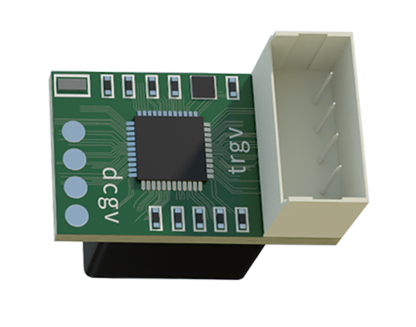
When selecting an array laser sensor, engineers must consider several key specifications. Measurement range and stand-off distance define the operational envelope. Resolution and repeatability determine the smallest detectable feature. Scanning frequency, often measured in kHz, dictates the maximum conveyor speed for reliable inspection. The choice of laser wavelength (typically red or blue) is critical for material compatibility; blue lasers, for instance, offer superior performance on organic materials and hot surfaces due to their shorter wavelength. Environmental ratings for dust and water ingress (IP codes) and resistance to vibration are also paramount for harsh industrial environments.
Looking ahead, the evolution of array laser sensor technology is intertwined with advancements in processing power and artificial intelligence. Future sensors will incorporate more edge computing capabilities, performing complex defect classification and anomaly detection directly at the sensor level. This will reduce latency and data bandwidth requirements for central systems. Enhanced multi-line and pattern projection techniques will enable even faster full-field 3D scanning, blurring the lines between traditional profile sensors and high-end 3D vision systems. As manufacturing demands for higher speed, greater precision, and more intelligent quality control continue to escalate, array laser sensors will undoubtedly remain at the forefront, providing the critical data needed to drive efficiency, ensure quality, and enable the factories of the future.
