In the realm of precision measurement and industrial automation, coaxial laser displacement sensors have become indispensable tools. Their ability to deliver high-accuracy, non-contact measurements makes them vital for applications ranging from quality control and robotics to semiconductor inspection and automotive assembly. Unlike traditional triangulation-based sensors, a coaxial laser displacement sensor employs a unique optical design where the emitted laser beam and the reflected light from the target share the same central axis. This fundamental design principle is the cornerstone of its superior performance characteristics.
The core performance metrics of a coaxial laser displacement sensor can be evaluated through several key parameters: accuracy, resolution, linearity, repeatability, and measurement speed. Accuracy refers to the closeness of the measured value to the true value of the target's position. It is influenced by factors such as the sensor's internal calibration, the stability of its light source, and environmental conditions. High-end coaxial sensors can achieve sub-micron accuracy, which is crucial for applications like measuring wafer thickness or precision machined components. Resolution, often confused with accuracy, is the smallest detectable change in displacement the sensor can report. It is a function of the sensor's detector sensitivity and signal processing electronics. For detecting minute surface vibrations or ultra-fine steps, a high resolution is paramount.
Linearity is a measure of how consistently the sensor's output corresponds to the actual displacement across its entire measurement range. A sensor with excellent linearity will have a minimal deviation from a perfect straight line on its calibration curve. This ensures reliable measurements regardless of whether the target is near the beginning or the end of the sensing range. Repeatability, on the other hand, indicates the sensor's ability to produce the same measurement result under unchanged conditions when repeatedly measuring the same point. This is a critical metric for automated production lines where consistency over thousands of cycles is required. High repeatability is a hallmark of robust sensor design and stable internal components.
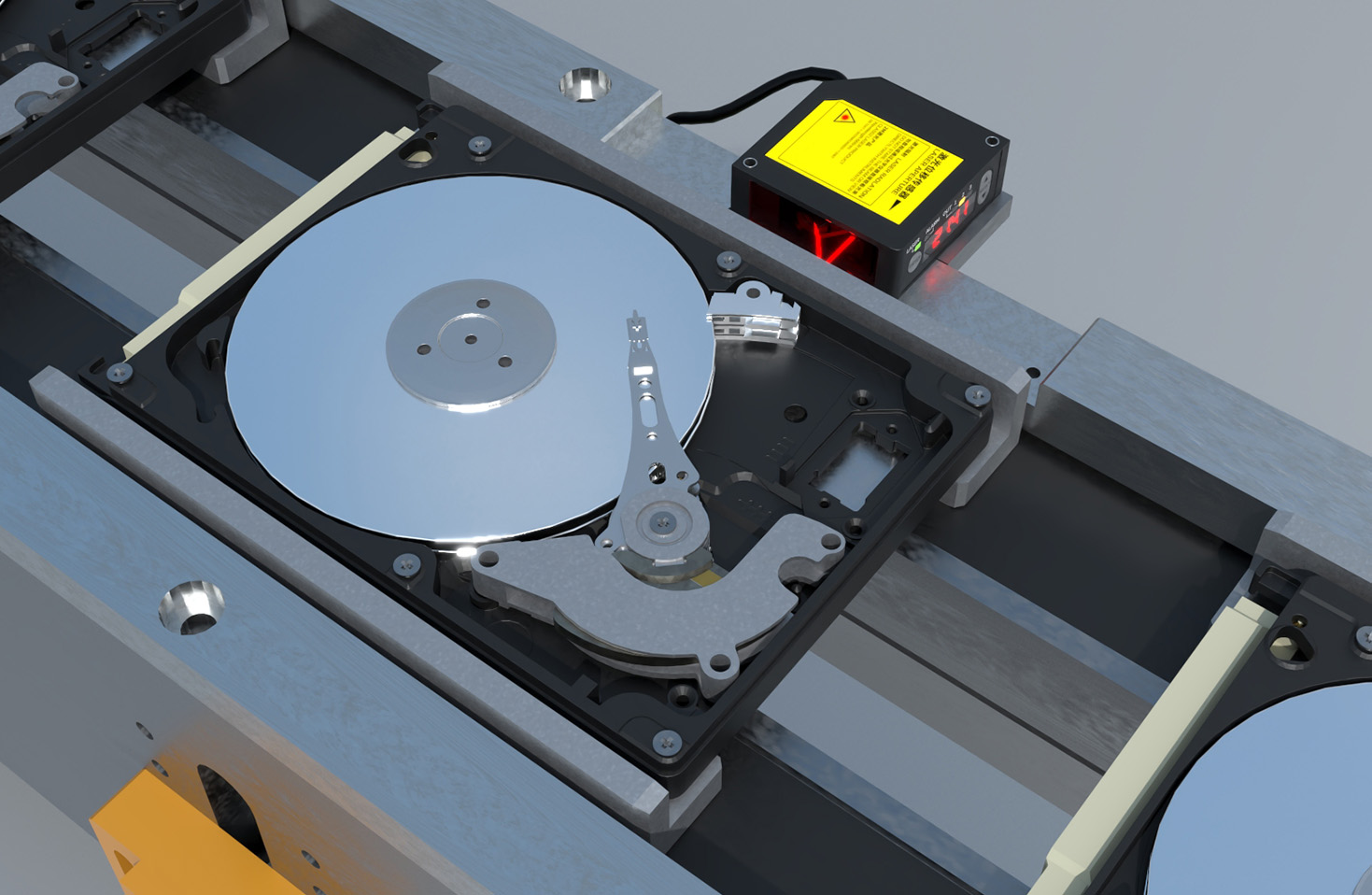
The coaxial design itself bestows significant advantages that directly enhance these performance metrics. By having the emitter and receiver on the same axis, these sensors are largely immune to the shadowing effects and measurement errors that can plague triangulation sensors when dealing with complex geometries, steep edges, or holes. The measurement spot remains consistent, and the sensor maintains a clear optical path even if the target surface tilts or has varying reflectivity. This makes them exceptionally suitable for measuring shiny, mirror-like, or translucent materials where scattered light from triangulation sensors would cause significant noise and error.
Another critical performance aspect is the stand-off distance and measurement range. The stand-off is the fixed working distance from the sensor head to the target, while the measurement range is the span within which accurate measurements can be taken. Coaxial sensors often have a relatively large stand-off with a moderate measurement range, providing flexibility in installation while protecting the sensor from process debris. The choice of laser wavelength (commonly red or blue) also impacts performance. Blue lasers, with their shorter wavelength, scatter less on rough surfaces and can achieve higher resolution on certain materials, making them preferable for applications involving organic materials, rubber, or dark, low-reflectivity surfaces.
Environmental robustness is a practical performance consideration. Industrial settings can be harsh, with vibrations, temperature fluctuations, and ambient light interference. A high-performance coaxial sensor will feature rugged housing, stable thermal compensation circuits, and optical filters to reject ambient light, ensuring reliable operation in demanding conditions. Furthermore, the output interface and data rate are part of the system performance. Modern sensors offer high-speed digital outputs (like EtherCAT or Ethernet/IP) alongside analog voltages, enabling seamless integration into fast-paced automation systems for real-time process control.
In conclusion, the performance of a coaxial laser displacement sensor is a multifaceted concept defined by its precision, stability, and robustness. Its coaxial optical path is the key differentiator, solving common challenges associated with surface finish and geometry. When selecting a sensor for a specific application, engineers must carefully balance these performance parameters—accuracy, speed, range, and environmental tolerance—against the technical requirements and cost constraints. Understanding these fundamentals ensures the implementation of a measurement solution that enhances quality, efficiency, and reliability in modern manufacturing and research.