In the realm of industrial automation and precision measurement, laser sensors are indispensable tools, prized for their accuracy, speed, and non-contact operation. However, engineers and technicians frequently encounter a perplexing and disruptive phenomenon known as "black invalidation" or "black target error." This issue manifests when a laser sensor fails to reliably detect or measure objects with very dark, matte black surfaces, or when its performance degrades significantly under such conditions. Understanding the root causes and implementing effective countermeasures is crucial for maintaining system integrity and uptime.
The core principle behind most laser sensors, particularly diffuse reflection types, involves emitting a laser beam and measuring the intensity of the light reflected back to the receiver. The sensor's electronics then calculate distance, presence, or other parameters based on this signal. The fundamental challenge with black surfaces lies in their material properties. A perfectly matte black surface has extremely low reflectivity, often absorbing over 90% of the incident light across a wide spectrum, including the common red or infrared wavelengths used in industrial sensors. This results in a return signal that is too weak for the receiver to distinguish from ambient noise or to meet the minimum threshold for a valid detection. Essentially, the object becomes "invisible" to the standard sensor.
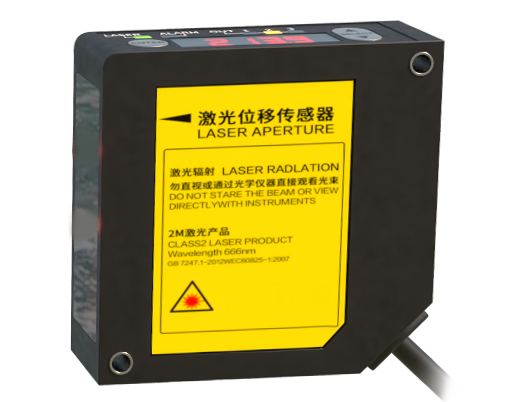
Several key factors exacerbate black invalidation. First is the material's absorption coefficient. Pure black plastics, rubber, carbon composites, and certain coated metals are typical culprits. Second, surface texture plays a role; a rough, matte finish scatters the minimal reflected light even further, weakening the coherent signal return. Third, environmental conditions like dust, oil mist, or high ambient light can introduce optical noise that further drowns out the already feeble reflection from a black target. Finally, the inherent specifications of the sensor itself—such as laser power, receiver sensitivity, and signal processing algorithms—define its baseline capability against low-reflectivity surfaces.
Addressing black invalidation requires a multi-faceted approach, starting with sensor selection. For applications involving known black targets, engineers should proactively specify sensors designed for "low-reflectivity" or "black surface" detection. These models often feature:
1. Increased Laser Power: A stronger emitted beam generates a marginally stronger return signal, even from highly absorptive surfaces.
2. Enhanced Receiver Sensitivity: Utilizing more sensitive photoelectric elements (e.g., avalanche photodiodes) can amplify weak return signals.
3. Background Suppression (BGS) Technology: This advanced optics-based method allows the sensor to detect an object only within a precisely defined sensing window, effectively ignoring the reflectivity of the background and focusing on the target's position. True Background Suppression (BGS) is generally more effective than standard diffuse reflection sensors for black objects.
4. Retro-reflective Models with Polarization Filter: For applications where a reflector can be used opposite the sensor, a polarized retro-reflective sensor can be excellent. The filter helps the sensor ignore reflections from shiny surfaces, and the retro-reflector returns a very strong, consistent signal largely independent of the target's color.
5. Through-beam Sensors: The most reliable solution for the most challenging black materials. By physically separating the emitter and receiver, detection depends on the interruption of the beam rather than the reflection from the target's surface, completely eliminating the color/reflectivity dependency.
Beyond sensor choice, application tuning is vital. Reducing the sensing distance can improve signal strength. Ensuring a clean optical lens free of contamination is essential. Minimizing ambient light interference with physical shrouds or by using sensors with modulated laser light (which ignores constant ambient light) also helps. In some cases, a simple and cost-effective field fix involves applying a small piece of high-reflectivity tape (like white or retro-reflective tape) to the black target at the detection point, though this is not always feasible.
For system integrators, thorough testing during the design phase is non-negotiable. This includes testing with actual production samples under real-world environmental conditions—not just in a clean lab. Programmable Logic Controller (PLC) logic can sometimes incorporate timers or multi-sensor voting logic to filter out sporadic detection failures, but this treats the symptom, not the cause.
In conclusion, black invalidation is a well-understood optical limitation rooted in the physics of light absorption. It is not a sensor defect but a mismatch between standard sensor technology and specific material properties. By comprehending the underlying mechanisms—low reflectivity and signal-to-noise ratio—engineers can make informed decisions. Proactively selecting specialized low-reflectivity sensors, through-beam configurations, or leveraging background suppression technology will prevent downtime and ensure robust, reliable operation in applications involving carbon black, dark plastics, tires, or any other challenging non-reflective surfaces. The key is to treat the detection of black surfaces as a distinct engineering requirement from the outset, ensuring the selected sensing technology is matched to the application's material reality.