In the intricate world of industrial automation and machinery, the ability to detect the presence or absence of an object without physical contact is fundamental. Among the various technologies that enable this, metal proximity sensors stand out for their reliability, durability, and precision in harsh environments. These sensors are specifically designed to detect metallic objects, making them indispensable in manufacturing, automotive, packaging, and material handling systems.
At their core, metal proximity sensors operate on the principle of electromagnetic induction. The sensor generates an oscillating electromagnetic field from its active face. When a metallic object enters this field, eddy currents are induced on the surface of the metal. These currents cause a change in the oscillation amplitude within the sensor's coil. An internal circuit detects this change and triggers a switching signal, indicating the object's presence. This non-contact method offers significant advantages, including no mechanical wear, high switching frequency, and insensitivity to dirt, dust, and moisture.
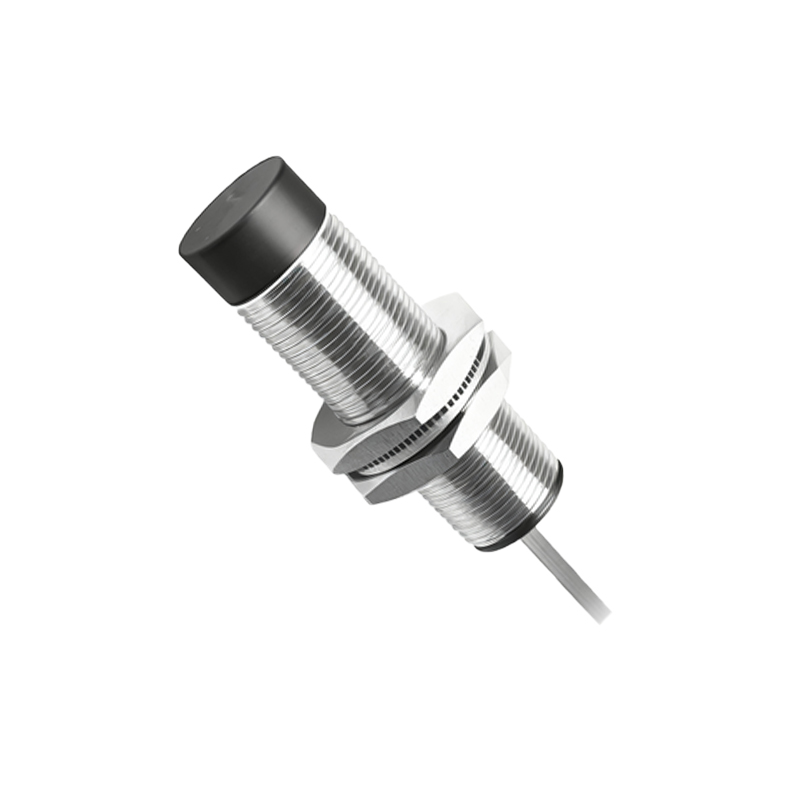
Several primary types of metal proximity sensors are available, each with distinct characteristics. Inductive proximity sensors are the most common, effective for detecting all metals, though with varying sensing distances depending on the metal's properties. Ferrous metal sensors, often utilizing a magnet and reed switch or a coil, are specifically tuned for iron and steel, offering longer ranges for these materials. All-metal sensors provide a more consistent sensing distance regardless of the target metal type, such as aluminum, brass, or steel, but typically at a shorter range. High-temperature variants are built with specialized materials and designs to withstand extreme thermal conditions near furnaces or foundries.
The applications for these sensors are vast and critical. On assembly lines, they count metal parts, verify component placement, and monitor position. In robotic arms, they provide precise end-of-arm tooling positioning. They are crucial for rotational speed monitoring by detecting gear teeth or bolts. Safety systems employ them as part of interlock mechanisms on guards and doors. In automotive manufacturing, they control robotic welding and part transfer with millisecond precision. Their robust nature also makes them ideal for use in metalworking, where coolant and metal chips are prevalent.
Selecting the right metal proximity sensor requires careful consideration of several key parameters. The sensing distance, or nominal range, is paramount and must account for the specific target metal; for instance, aluminum may reduce the effective range by up to 60% compared to mild steel. The sensor's housing material, such as nickel-plated brass, stainless steel, or PBT plastic, must be chosen based on the environmental exposure to chemicals, impacts, or washdowns. The electrical output, whether NPN (sinking) or PNP (sourcing), must be compatible with the control system (PLC). Other factors include the switching frequency, required mounting style (flush, non-flush, or cylindrical), connection type (cable or connector), and protection rating (IP67 or IP69K for harsh conditions).
Installation and maintenance are straightforward but vital for optimal performance. Sensors should be mounted securely to minimize vibration effects. It is essential to maintain the recommended clearance from surrounding metal structures to prevent false triggering—a guideline known as the "mounting distance." While these sensors are largely maintenance-free, periodic checks for physical damage, buildup of metallic debris on the sensing face, and verification of the output signal ensure long-term reliability.
In conclusion, metal proximity sensors are a cornerstone of modern industrial sensing. Their non-contact operation, tailored response to metallic targets, and rugged construction provide solutions for countless detection challenges. From ensuring the precise positioning of an engine block to safeguarding personnel around heavy machinery, these silent sentinels play a pivotal role in enhancing efficiency, productivity, and safety. Understanding their operating principles, types, and selection criteria empowers engineers and technicians to integrate the most effective sensing solution into their automated systems.