In the realm of industrial automation, laser marking machines have become indispensable for permanent, high-quality coding on various materials, from metals and plastics to ceramics and glass. At the heart of these sophisticated systems lie specialized sensors, which play a critical role in ensuring marking precision, process reliability, and operational efficiency. Unlike standard photoelectric or proximity sensors, sensors designed explicitly for laser marking applications must meet unique challenges, including high-speed detection, precise positioning, and resilience in harsh industrial environments.
The primary function of a sensor in a laser marking system is to detect the presence, position, and sometimes the surface characteristics of the target object. This detection triggers the laser to fire at the exact correct moment and location, ensuring the mark—be it a serial number, barcode, logo, or data matrix code—is applied accurately. Without precise sensor input, even the most advanced laser source can produce misaligned, blurred, or incomplete marks, leading to product rejection, line downtime, and increased waste.
Several key sensor technologies are employed in laser marking machines. Contrast Sensors are widely used for detecting marks or features on surfaces by evaluating the contrast between the target and its background. They are excellent for applications where the mark itself needs verification or where the product has printed labels or varying colors. Laser Displacement Sensors offer non-contact, high-accuracy distance measurement. They are crucial for applications where the working distance between the laser head and the target surface varies, such as on curved or uneven products. By providing real-time height data, they allow the laser's focal point to be dynamically adjusted, maintaining optimal marking quality.

Vision Sensors and Cameras represent a more advanced category, often integrated into smart marking systems. These sensors can not only detect presence but also perform complex tasks like optical character verification (OCV), pattern matching, and precise coordinate finding. They guide the laser to the exact pre-defined area on a part, essential for intricate markings on electronic components or medical devices. Furthermore, Fiber Optic Sensors are valued in compact spaces or environments with extreme temperatures or significant electromagnetic interference, thanks to their small sensing heads and immunity to noise.
The integration of these sensors goes beyond simple triggering. Modern laser marking systems utilize sensor feedback in closed-loop control systems. For instance, a sensor can detect a misaligned product on a conveyor and either signal the laser to adjust its marking path or command a reject mechanism to remove the faulty item. This level of integration enhances Overall Equipment Effectiveness (OEE) by minimizing errors and maximizing throughput.
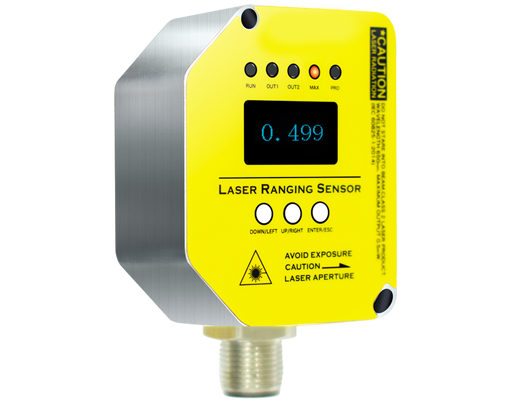
Selecting the right sensor requires careful consideration of application parameters. Key factors include:
* Marking Speed: High-speed production lines demand sensors with extremely fast response times to keep pace.
* Target Material: The sensor must reliably detect surfaces that may be reflective, transparent, dark, or textured.

* Environmental Conditions: Factors like ambient light, dust, coolant mist, and vibration can affect sensor performance, necessitating models with high ingress protection (IP) ratings and robust designs.
* Communication Protocol: Seamless integration with the laser marker's PLC or controller is vital, driving the need for sensors supporting standard industrial networks like IO-Link, PROFINET, or EtherNet/IP.
The evolution of Industry 4.0 and the Industrial Internet of Things (IIoT) is pushing sensor technology further. Smart sensors with self-diagnostic capabilities, predictive maintenance features, and direct data logging are becoming more prevalent. They provide valuable operational data that can be analyzed to optimize marking processes, reduce energy consumption, and schedule maintenance proactively, thereby reducing total cost of ownership.
In conclusion, specialized sensors are the unsung heroes of laser marking technology. They provide the critical "eyes" for the system, transforming a powerful but blind laser into a precise and intelligent tool. As marking requirements grow more complex—smaller marks, higher speeds, and more varied materials—the role of advanced sensor technology will only become more central. Investing in the right sensor solution is not merely an accessory cost but a fundamental decision for achieving superior mark quality, operational resilience, and long-term productivity in modern manufacturing.