In industrial automation and control systems, proximity switch sensors are indispensable components for non-contact detection of objects. Among various configurations, 36V DC industrial proximity switches stand out due to their balance of safety, reliability, and compatibility with standard industrial power supplies. This article delves into the technical aspects, selection criteria, and application best practices for 36V proximity sensors, tailored for electrical engineers and system designers.
Proximity sensors operate by emitting an electromagnetic field or a beam of electromagnetic radiation and detecting changes in the field or return signal. The 36V DC variant is particularly prevalent in factory automation, material handling, and machinery safety systems. Its voltage rating offers a significant advantage: it is low enough to be considered safe in many environments (often classified as Safety Extra-Low Voltage, SELV, in certain contexts), yet high enough to minimize voltage drop over long cable runs, ensuring stable operation in expansive industrial setups.
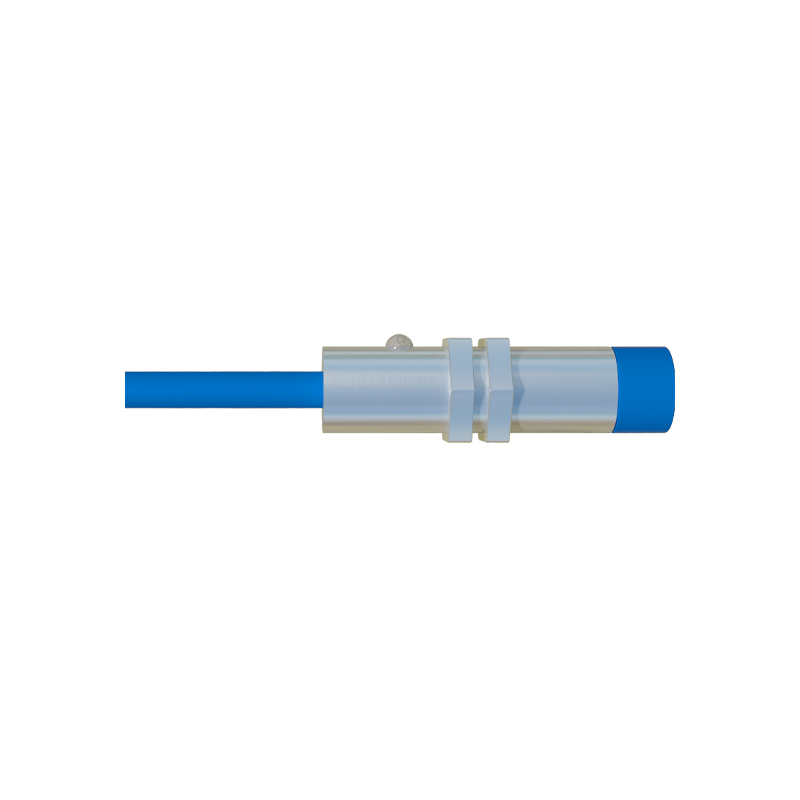
There are three primary types of 36V industrial proximity switches: inductive, capacitive, and photoelectric. Inductive sensors are the workhorses for detecting metallic objects. They generate an oscillating electromagnetic field. When a ferrous or non-ferrous metal enters this field, it induces eddy currents, causing a change in oscillation amplitude that triggers the switch. These sensors are ideal for position sensing of machine parts, counting metal objects on conveyors, or as limit switches.
Capacitive proximity sensors can detect both metallic and non-metallic materials, such as plastics, liquids, powders, and glass. They function by measuring changes in capacitance between the sensor's active surface and the target object. This makes them suitable for level detection in tanks, material presence verification in packaging lines, or detecting filled containers regardless of material.
Photoelectric sensors use light beams (typically infrared, visible red, or laser) to detect objects. The 36V versions are robust against electrical noise and can sense objects at greater distances. They come in through-beam, retro-reflective, and diffuse-reflective modes. Applications include precise positioning, break detection in transparent films, and object counting on high-speed lines.
When selecting a 36V proximity sensor, engineers must consider several key parameters. Sensing distance, or the nominal range at which the sensor can reliably detect a standard target, is crucial. Always account for a safety margin, typically 10-20%, to compensate for environmental factors like temperature fluctuations or material variations. The housing material is another critical factor; stainless steel or nickel-plated brass housings offer excellent resistance to chemicals, oils, and physical impacts common in harsh industrial environments.
Output configuration is equally important. Most 36V sensors offer transistor outputs (NPN sinking or PNP sourcing) to interface with Programmable Logic Controllers (PLCs). The choice between NPN and PNP depends on the control system's input card configuration. Some models also provide analog outputs (4-20mA or 0-10V) for distance-proportional signaling or relay outputs for directly switching higher-power loads.
Installation and wiring require careful attention. Ensure proper shielding and separation from high-voltage power lines to prevent electromagnetic interference (EMI). For inductive sensors, remember that different metals have different correction factors; for instance, the sensing range for stainless steel is often reduced compared to mild steel. Always follow the manufacturer's guidelines for flush or non-flush mounting, as this significantly affects the sensor's effective sensing range.
Maintenance of 36V proximity switches is generally minimal but vital for long-term reliability. Regularly clean the sensing face from accumulated dust, grease, or metal chips. Periodically verify the switching function and check for any physical damage to the cable or connector. In environments with severe vibration, use sensors with robust mechanical construction and secure cabling.
The evolution of Industry 4.0 and IIoT (Industrial Internet of Things) is influencing proximity sensor technology. Modern 36V sensors may come with IO-Link communication capability, enabling advanced diagnostics, parameterization, and integration into smart factory networks. This allows for predictive maintenance, remote monitoring of sensor health, and dynamic adjustment of sensing parameters without physical access.
In conclusion, 36V DC industrial proximity switches are versatile, reliable components that form the sensory backbone of modern automation. By understanding their operating principles, carefully matching specifications to application needs, and adhering to proper installation practices, engineers can design robust, efficient, and safe control systems that enhance productivity and operational safety.