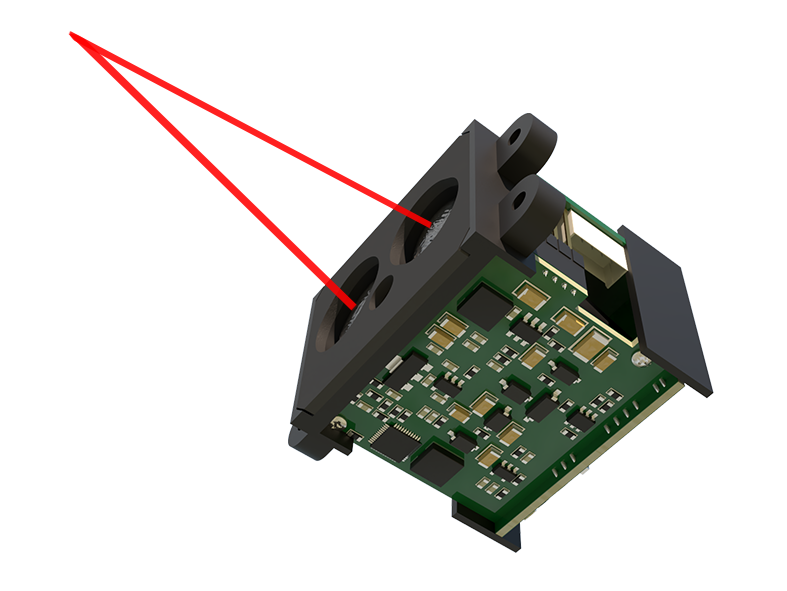
Laser dot matrix sensors represent a significant advancement in industrial sensing technology, offering high precision and reliability for various automation and quality control tasks. Unlike traditional single-point laser sensors, these devices project a matrix or array of laser dots onto a target surface. This pattern enables the simultaneous measurement of multiple points, allowing for the capture of detailed surface profiles, height variations, and three-dimensional contours in real-time. The core principle involves the emission of laser light, typically from a Class 2 laser source for safety, which is diffracted or split through specialized optical elements to create the dot matrix. A high-resolution CMOS or CCD camera then captures the reflected pattern. By analyzing the deformation, displacement, or intensity changes of the dots in the captured image, sophisticated onboard processors or connected systems can calculate precise distance, detect surface defects, measure dimensions, or identify object presence and orientation.
The advantages of laser dot matrix sensors are manifold in industrial settings. Their primary strength lies in non-contact measurement, which eliminates mechanical wear and prevents damage to sensitive surfaces. The ability to gather data from an entire area at once dramatically increases inspection speed compared to line-scanning or single-point methods, making them ideal for high-throughput production lines. Common applications include robotic guidance for bin picking and assembly, where the sensor provides rich 3D data for precise part localization. They are extensively used in electronics manufacturing for solder paste inspection (SPI), checking component coplanarity, and verifying connector alignment. In automotive assembly, they ensure proper gap and flushness between body panels. Furthermore, these sensors excel in logistics for parcel dimensioning and volume measurement, as well as in metalworking for weld seam tracking and surface flaw detection.
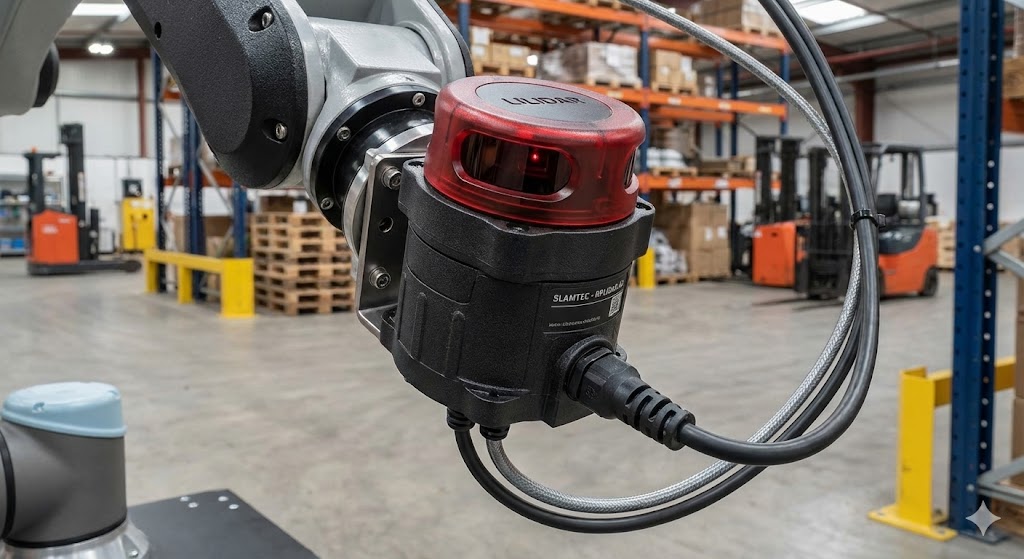
When selecting and implementing a laser dot matrix sensor, several technical parameters require careful consideration. The working distance, field of view (FOV), and depth of field must align with the application's physical constraints. Resolution, often specified in micrometers per pixel, determines the smallest detectable feature. The density and number of projected dots influence the level of detail in the captured profile. Environmental robustness is critical; industrial sensors are housed in rugged enclosures with high IP ratings (e.g., IP67) to withstand dust, moisture, and vibration. Integration is facilitated through standard industrial communication protocols like Ethernet/IP, PROFINET, or TCP/IP, allowing seamless data transfer to PLCs, robots, and SCADA systems. Proper installation involves calibrating the sensor to its specific working environment to account for ambient light and reflective surface properties, ensuring measurement accuracy.
Looking ahead, the evolution of laser dot matrix sensors is closely tied to advancements in processing power and artificial intelligence. Future iterations will feature even faster frame rates and higher dot densities, enabling the inspection of moving objects at unprecedented speeds. The integration of embedded AI and machine learning algorithms will allow sensors to perform complex classification tasks—such as distinguishing between acceptable and defective parts—directly at the edge, reducing latency and reliance on central computing resources. This trend towards smarter, more autonomous sensors will further solidify their role as indispensable tools in the transition to Industry 4.0 and smart factories, driving efficiencies in automation, quality assurance, and predictive maintenance across the global industrial landscape.