In the intricate world of industrial automation, proximity sensors stand as silent sentinels, enabling precise, non-contact detection of objects. The reliability and performance of these critical components are fundamentally tied to their source: the original manufacturers. These specialized companies are not merely suppliers; they are innovation hubs and quality guarantors, shaping the capabilities of modern machinery.
Original manufacturers, or OEMs (Original Equipment Manufacturers), in the proximity sensor domain engage in comprehensive research, design, and engineering. They develop the core technologies—whether inductive, capacitive, ultrasonic, or photoelectric—that define a sensor's detection range, response speed, and environmental resilience. Companies like Pepperl+Fuchs, Siemens, Omron, and Balluff have built their reputations on this foundation of in-house expertise. Their engineering teams work directly with the physics of sensing, refining oscillator circuits, optimizing coil designs for inductive models, and developing advanced algorithms for noise immunity and temperature compensation. This deep-level control over the product lifecycle, from semiconductor fabrication to final assembly, ensures consistency and traceability that generic or cloned products cannot match.
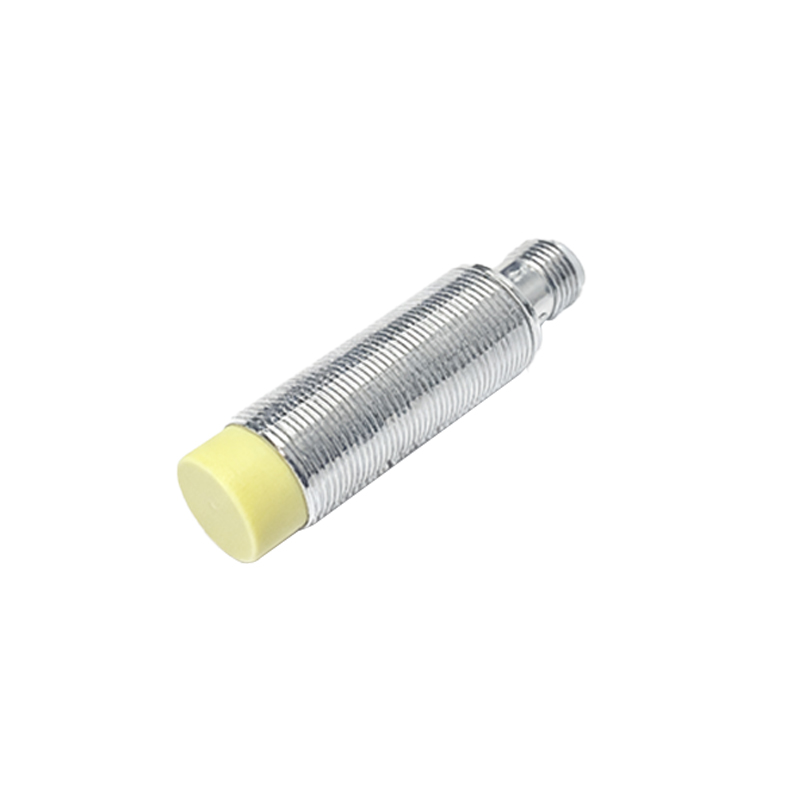
The value proposition of sourcing from an original manufacturer extends beyond the sensor unit itself. It encompasses rigorous testing protocols that simulate harsh industrial environments—extreme temperatures, humidity, vibration, and exposure to chemicals or washdowns. OEMs provide detailed, validated technical specifications and datasheets. These documents are not approximations; they are contractual performance guarantees. For system integrators and end-users, this data is indispensable for designing safe, efficient, and compliant automated systems. Furthermore, original manufacturers offer critical application support. Their technical specialists assist in selecting the correct sensor model for specific materials (e.g., detecting ferrous vs. non-ferrous metals), mounting constraints, and output requirements (PNP/NPN, analog, IO-Link).
A key trend driven by leading OEMs is the integration of smart features and Industry 4.0 connectivity. Modern proximity sensors from top-tier manufacturers are increasingly equipped with IO-Link communication, a standardized protocol that transforms a simple binary switch into a rich data source. Through IO-Link, sensors can transmit not just a detection signal, but also diagnostic data like operating temperature, signal strength, and remaining operational life. This predictive maintenance capability, enabled by the manufacturer's embedded intelligence, prevents unplanned downtime—a paramount concern in automated production. The cybersecurity of these connected devices is also a primary responsibility of the OEM, requiring secure firmware and hardware design from the ground up.
Choosing an authorized distributor or directly partnering with an original manufacturer mitigates significant risks. The market is flooded with counterfeit or "compatible" sensors that may appear identical externally but use substandard components. These imitations often fail prematurely, have inconsistent sensing ranges, or lack proper shielding, causing electromagnetic interference that disrupts entire control systems. The cost of a line shutdown due to a failed sensor dwarfs the initial savings from a non-original part. Genuine OEM parts come with full warranties and access to firmware updates, ensuring long-term system integrity.
In conclusion, proximity sensor original manufacturers are indispensable partners in industrial automation. They provide not just components, but engineered solutions backed by science, stringent quality control, and comprehensive support. Their continuous innovation in sensing accuracy, durability, and digital intelligence directly fuels advancements in manufacturing, packaging, automotive, and material handling. For any serious automation project, investing in genuine OEM sensors is an investment in system reliability, safety, and overall operational excellence. It is a strategic decision that upholds the very backbone of efficient industrial production.