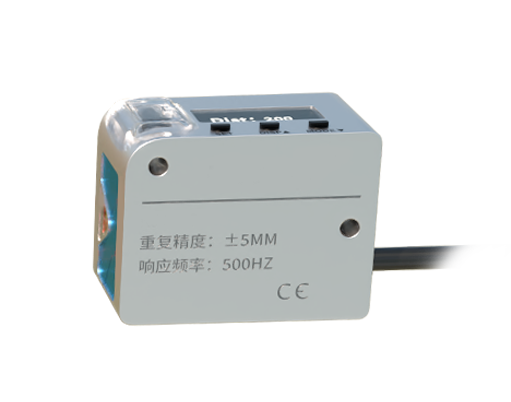
In the rapidly evolving landscape of industrial automation, the demand for high-precision, reliable, and versatile sensing technology has never been greater. Among the most significant advancements in this field is the development and deployment of Matrix Zone Laser Sensors. These sophisticated devices represent a paradigm shift from traditional single-point or line laser sensors, offering a two-dimensional matrix or array of measurement points. This capability unlocks unprecedented levels of detail and contextual awareness for a wide range of applications, from robotic guidance and quality inspection to logistics and security.
At its core, a Matrix Zone Laser Sensor operates on the principle of time-of-flight (ToF) or structured light projection. Unlike a standard laser sensor that measures distance to a single point, these units project a grid or pattern of laser points onto a target surface. A high-speed CMOS or CCD camera then captures the reflected pattern. By analyzing the deformation, displacement, or intensity variation of each point within this matrix, the sensor's onboard processor can construct a detailed depth map or profile of the entire zone. This results in a rich dataset containing not just distance, but also surface contour, orientation, presence, and even the identification of objects within the defined field of view.
The technical advantages of this matrix approach are profound. Firstly, it provides area-based measurement, eliminating the blind spots inherent in single-point systems. For instance, in bin-picking operations, a robot equipped with a matrix sensor can perceive the complete, disordered contents of a container, accurately determining the position and orientation of each part for reliable grasping. Secondly, it enables simultaneous multi-object detection and tracking. On a conveyor belt, the sensor can monitor the position, size, and spacing of multiple packages in real-time, facilitating sorting and collision avoidance. Thirdly, it offers superior performance in challenging environments. Advanced algorithms can filter out ambient light interference and compensate for varying surface reflectivities across the matrix, ensuring stable operation.

Key specifications that define the performance of a Matrix Zone Laser Sensor include the resolution of the point matrix (e.g., 320x240 points), the measurement range (from a few centimeters to several meters), the field of view (horizontal and vertical angles), the scanning frequency or frame rate (critical for high-speed processes), and the accuracy/repeatability of individual point measurements. Communication interfaces like Ethernet/IP, PROFINET, EtherCAT, and TCP/IP are standard, allowing for seamless integration into modern industrial networks and PLC systems.
Application scenarios are diverse and impactful. In automotive manufacturing, these sensors perform precise 3D gap and flush measurement on vehicle bodies, ensuring perfect panel alignment. In electronics assembly, they verify the coplanarity of component leads on PCBs or inspect solder paste volume. In logistics, they are used for palletizing and depalletizing, volume measurement for freight, and automated guided vehicle (AGV) navigation. Furthermore, in safety applications, they can define complex, three-dimensional warning and protection zones around hazardous machinery, offering a more flexible and reliable solution than traditional light curtains.

When selecting a Matrix Zone Laser Sensor, engineers must carefully consider the specific requirements of their application. Factors such as the required level of detail (point cloud density), operating distance, environmental conditions (dust, moisture, temperature), the speed of the target process, and the necessary data processing capabilities are paramount. The choice between a ToF-based sensor (better for longer ranges) and a structured light sensor (often higher accuracy at shorter ranges) is also a critical decision.
Looking ahead, the integration of Matrix Zone Laser Sensors with artificial intelligence and edge computing is set to further amplify their capabilities. On-device AI can enable immediate classification of defects, recognition of complex shapes, and predictive analytics, reducing the load on central control systems and enabling faster, more autonomous decision-making. As machine vision systems strive for greater contextual understanding, the rich, three-dimensional data provided by matrix laser sensors will be indispensable.
In conclusion, Matrix Zone Laser Sensors are not merely an incremental improvement but a foundational technology enabling the next generation of smart factories and automated systems. By providing comprehensive, high-fidelity spatial data, they empower machines to perceive their environment with a level of sophistication that closely mirrors human vision, driving efficiencies, enhancing quality control, and unlocking new possibilities in automation across virtually every industrial sector.