In the realm of industrial automation and safety systems, infrared safety laser sensors have emerged as a cornerstone technology. These sophisticated devices operate by emitting an invisible infrared laser beam to detect the presence, absence, or position of objects within a defined area. Their primary function is to safeguard personnel and equipment by initiating a safety shutdown or alert when a breach in the protective field is detected. Unlike traditional mechanical guards or visible-light sensors, infrared laser sensors offer non-contact, high-precision, and highly reliable monitoring, making them indispensable in modern manufacturing, robotics, and material handling environments.
The fundamental operating principle hinges on the modulation and reception of infrared light. A transmitter unit projects a pulsed or continuous infrared laser beam towards a receiver. When the beam path is unobstructed, the receiver confirms a "clear" state. Any interruption of this beam by an object triggers an immediate output signal to the connected safety controller, such as a Programmable Logic Controller (PLC) or a dedicated safety relay. This rapid response is critical for applications involving robotic cells, press brakes, automated guided vehicles (AGVs), and conveyor systems, where even a millisecond delay can result in severe injury or equipment damage.

Modern infrared safety laser sensors are often configured in a through-beam arrangement, where the transmitter and receiver are separate units, providing long-range detection and high immunity to environmental factors like ambient light or dust. Alternatively, retro-reflective models use a single unit that emits light and receives its reflection from a dedicated reflector, simplifying installation. Advanced versions incorporate background suppression technology and precise background evaluation, allowing them to ignore distant objects or structural backgrounds and focus only on intrusions within a specific, programmable safety zone. This capability is vital for complex applications where multiple machines operate in proximity.
The integration of these sensors into Safety Instrumented Systems (SIS) is governed by stringent international standards, most notably IEC 61496 and ISO 13849. These standards define Performance Levels (PL) and Safety Integrity Levels (SIL) that the sensors must achieve. A key feature of compliant safety laser scanners is the built-in self-monitoring and redundancy. They continuously perform diagnostic checks on internal components, such as the laser diode, receiver optics, and processing circuitry. Dual-channel output circuits and cross-monitoring are standard to prevent failures from leading to a dangerous state. This design ensures that if a fault is detected, the system defaults to a safe condition, typically by de-energizing the safety outputs.
Applications for infrared safety laser sensors are vast and growing. In automotive manufacturing, they create invisible protective fields around welding robots and assembly lines. In logistics, they safeguard the loading zones of high-speed sorting systems and perimeter areas around AGV fleets. Furthermore, their ability to define two-dimensional or even three-dimensional warning and stopping fields makes them perfect for collaborative robot (cobot) workspaces, where humans and robots share tasks. The sensor can define a larger warning zone that slows the robot down and a smaller stopping zone that brings it to a complete halt, enabling safe and efficient collaboration.
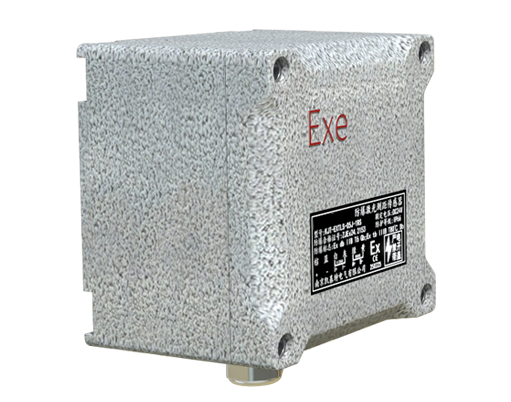
Recent technological advancements have pushed the boundaries of what these sensors can achieve. The development of multi-beam systems and area scanners with high-resolution field mapping allows for the protection of complex, irregularly shaped zones. Enhanced connectivity through Industrial Ethernet protocols like PROFINET, EtherNet/IP, and OPC UA facilitates seamless integration into Industry 4.0 and smart factory ecosystems. This enables not only safety functions but also predictive maintenance analytics, as sensor data can be used to monitor performance trends and predict potential failures before they occur.
Selecting the right infrared safety laser sensor requires careful consideration of several factors: the required protective field distance and resolution, the environmental conditions (temperature, humidity, particulate matter), the necessary safety performance level (PLr), and the integration requirements with existing control architecture. Proper installation, alignment, and regular functional testing are paramount to maintaining system integrity. It is also crucial to conduct a comprehensive risk assessment for the specific application to determine the correct configuration and redundancy needs.
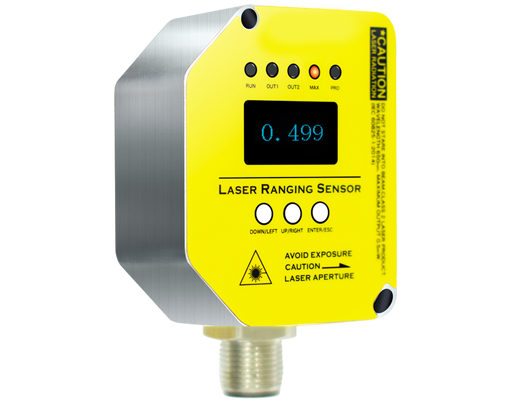
In conclusion, infrared safety laser sensors represent a critical fusion of optical precision, electronic reliability, and functional safety engineering. They provide a flexible, robust, and intelligent solution for modern industrial safety challenges. As automation continues to evolve towards greater complexity and human-machine interaction, the role of these sensors will only become more central, driving innovations that enhance both productivity and worker protection without compromise.