Glass proximity sensors are critical components in modern automation, touch interfaces, and safety systems. Their ability to detect the presence or absence of glass or transparent objects without physical contact makes them indispensable in applications ranging from automotive windows and elevator doors to industrial machinery and consumer electronics. However, ensuring these sensors perform reliably under various conditions requires systematic testing and validation. This article outlines key methodologies and best practices for evaluating the performance of glass proximity sensors, focusing on accuracy, repeatability, environmental resilience, and integration stability.
The first step in performance testing involves verifying the sensor's basic detection capabilities. This includes measuring the sensing range, which is the maximum distance at which the sensor can reliably detect a standard glass object. Engineers typically use calibrated glass samples of specified thickness and composition to conduct this test. The sensor should be mounted in a fixture that allows precise distance adjustment, and measurements should be taken under controlled ambient light conditions to minimize interference. Data on the activation and deactivation points must be recorded to determine hysteresis, a critical parameter that affects response consistency.
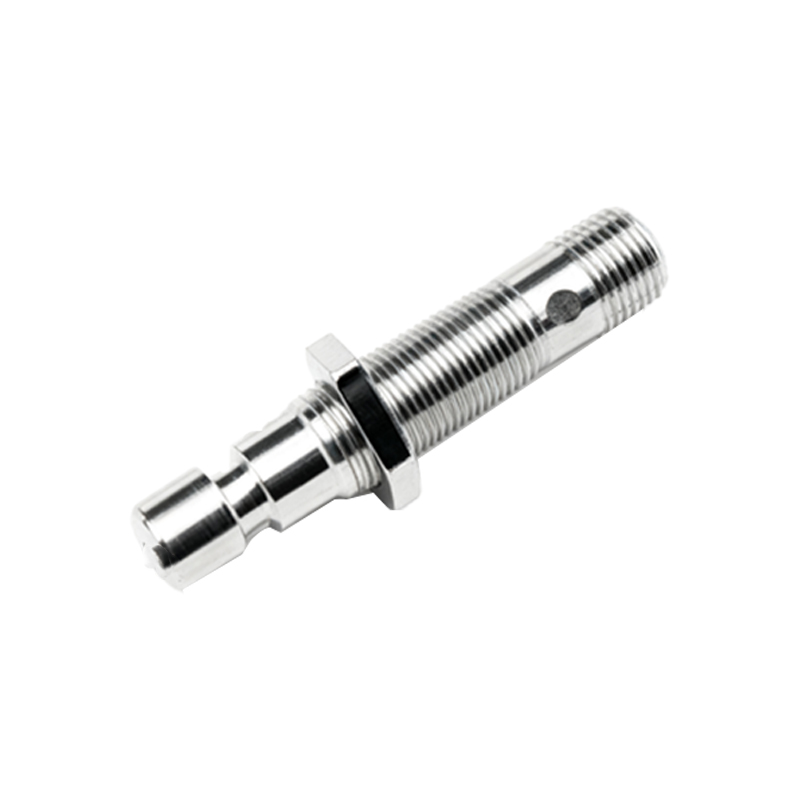
Repeatability and accuracy are paramount for industrial applications. To assess these, multiple detection cycles should be performed under identical conditions. A high-quality glass proximity sensor must demonstrate minimal deviation in detection distance across hundreds or thousands of cycles. Statistical tools such as standard deviation and mean value analysis help quantify performance consistency. Additionally, accuracy testing should account for different glass types—such as tempered, laminated, or coated glass—as surface properties and light transmittance can influence sensor behavior. Engineers often create a test matrix that includes various glass materials and thicknesses to ensure broad compatibility.
Environmental factors significantly impact sensor performance. Temperature variations, humidity, dust, and ambient light can all affect detection reliability. Comprehensive environmental testing involves placing the sensor in a climate chamber and subjecting it to extreme temperatures (e.g., -40°C to +85°C) while monitoring its output. Humidity resistance tests check for condensation effects, which may cause false triggers or signal degradation. Similarly, exposure to direct sunlight or artificial lighting should be evaluated to ensure the sensor's immunity to optical noise. For sensors used in outdoor or harsh settings, ingress protection (IP) ratings related to dust and water should be validated through standardized tests like IP65 or IP67.
Electrical and signal integrity tests are equally important. This includes verifying the sensor's output signal stability under varying supply voltages and load conditions. Engineers measure response time—the delay between target detection and signal output—to ensure it meets application requirements, especially in high-speed automation. Noise immunity tests, such as injecting electromagnetic interference (EMI) or checking for cross-talk in multi-sensor setups, help identify potential failure modes. Furthermore, long-term endurance testing over extended periods (e.g., 1,000 hours) can reveal wear-and-tear issues or gradual performance drift.
Integration validation ensures the sensor functions correctly within the final system. This involves testing mechanical mounting stability, alignment with glass surfaces, and communication with control units like PLCs or microcontrollers. Software aspects, such as configuration parameters and diagnostic features, should also be verified. Field testing in real-world conditions provides valuable insights that lab tests might miss, such as vibrations, unpredictable obstructions, or user interaction patterns.
In summary, rigorous testing of glass proximity sensors encompasses functional, environmental, electrical, and integration aspects. By adopting a structured validation framework, engineers can guarantee that these sensors deliver reliable, accurate, and durable performance, ultimately enhancing system safety and efficiency. Regular updates to test protocols based on technological advancements and industry standards—such as IEC 60947-5-2 for proximity devices—are recommended to maintain high-quality benchmarks.