In the global landscape of industrial automation and machinery, the term "proximity sensor for export" refers to a specific category of non-contact sensing devices designed, manufactured, and certified for international trade and use. These sensors are fundamental components in countless applications, from automotive assembly lines and packaging machinery to robotic systems and material handling equipment. Unlike standard domestic sensors, export-grade proximity sensors are engineered to meet a complex matrix of international standards, regional electrical codes, and specific end-user requirements across different continents.
At its core, a proximity sensor is a device that detects the presence or absence of an object within its sensing range without physical contact. It does this by emitting an electromagnetic field or a beam of electromagnetic radiation (like infrared light) and looking for changes in the field or return signal. The primary types used for industrial export are inductive, capacitive, and photoelectric sensors. Inductive sensors detect metallic objects, capacitive sensors can detect both metallic and non-metallic materials (like liquids, plastics, or wood), and photoelectric sensors use light beams to detect objects at greater distances.
The designation "for export" imposes critical additional layers of specification. First and foremost is compliance with international electrical safety and electromagnetic compatibility (EMC) standards. Key certifications include the CE marking (Conformité Européenne) for the European Economic Area, which indicates conformity with health, safety, and environmental protection standards. For the North American market, certifications from Underwriters Laboratories (UL) or the Canadian Standards Association (CSA) are often mandatory. Other crucial marks include the UKCA for the United Kingdom, the EAC for the Eurasian Customs Union, and various IEC (International Electrotechnical Commission) standards that form the basis for many national regulations.

Furthermore, export sensors must be built to withstand diverse and often harsh environmental conditions encountered during shipping and in their final installation. This entails robust ingress protection (IP) ratings, such as IP67 or IP69K, which guarantee resistance to dust and high-pressure water jets—common in food processing or washdown environments. Housing materials, typically nickel-plated brass, stainless steel, or high-grade PBT plastic, are selected for corrosion resistance and durability. Operating temperature ranges are also specified more broadly, ensuring functionality from freezing cold storage facilities to hot manufacturing plants worldwide.
Electrical characteristics are another vital consideration. Export proximity sensors are commonly available in a wide range of supply voltages (e.g., 10-30V DC, 20-250V AC) to accommodate different regional power grids. Output configurations (PNP/NPN, NO/NC) are clearly defined to match the prevailing control system architectures in the target market, such as the preference for PNP (sourcing) sensors in Europe and NPN (sinking) in some Asian regions. Connectivity is also standardized, with M8, M12, or M23 quick-disconnect connectors being the global norm for easy installation and maintenance.
From an application engineering perspective, selecting the right export proximity sensor involves careful analysis. Engineers must define the target object material, required sensing distance (which should be less than the sensor's rated nominal range to account for tolerances and environmental factors), mounting constraints, and the required output signal to interface with a programmable logic controller (PLC) or other control unit. The ability to resist interference from adjacent sensors, weld field immunity (for sensors near welding equipment), and chemical resistance are frequently evaluated.
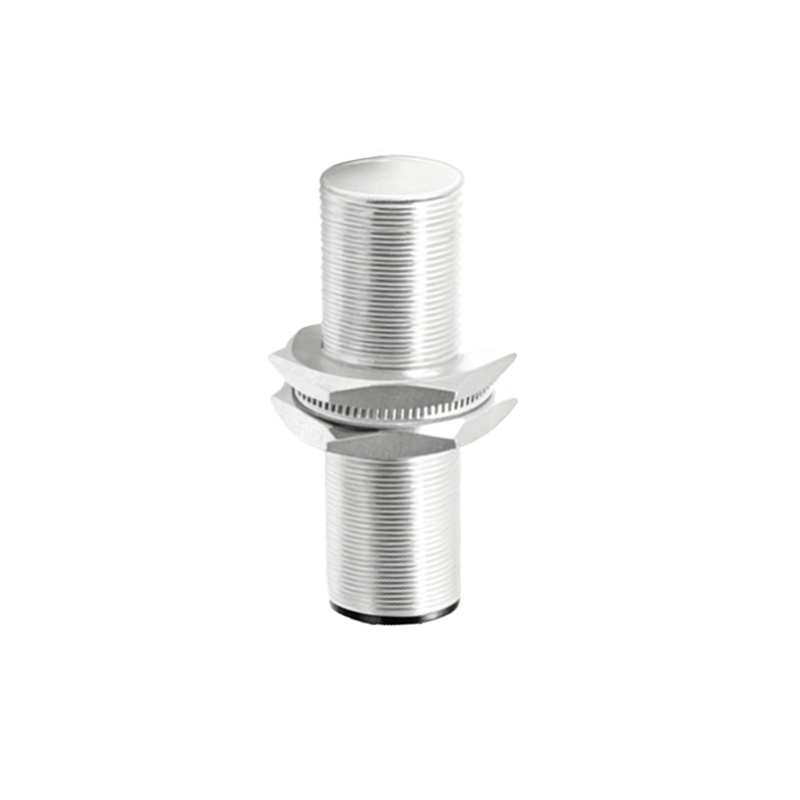
In summary, a proximity sensor for export is far more than a simple detection switch. It is a precision instrument, rigorously tested and certified for global operation. Its design incorporates universal mounting dimensions, versatile electrical parameters, and exceptional environmental robustness to ensure reliable performance and safety in virtually any industrial setting on the planet. For OEMs building machinery for international sales and system integrators working on global projects, specifying and sourcing these certified components is not just a technical detail—it is a critical business imperative that ensures market access, operational reliability, and regulatory compliance.