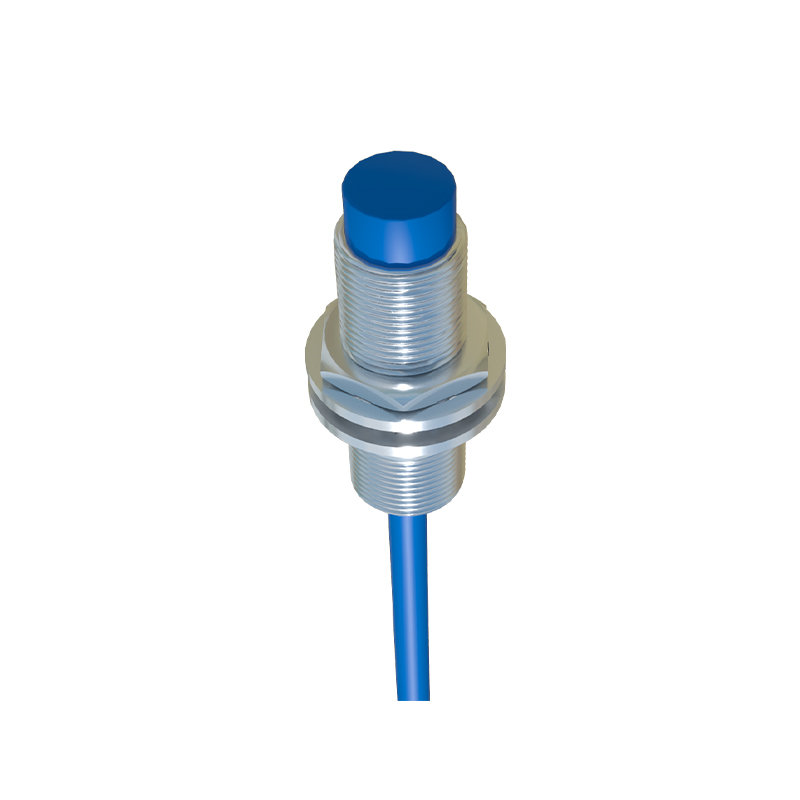
Proximity sensor switches are fundamental components in modern industrial automation, providing non-contact detection of metallic or, in some cases, non-metallic objects. A critical parameter defining their performance and application suitability is the detection distance, often referred to as the nominal sensing range or Sn. This distance is not a fixed, absolute value but a carefully specified characteristic under defined standard conditions. Understanding its nuances is essential for proper sensor selection, system design, and reliable operation.
The rated or nominal detection distance (Sn) is the theoretical sensing range specified by the manufacturer under ideal, standardized conditions. These conditions typically involve a standard target—a square of mild steel (Fe 360) with a side length equal to the sensor's face diameter or 3 times Sn, whichever is greater—positioned axially to the sensing face. The target is moved toward the sensor at a defined speed (usually slow) under a controlled temperature of 23°C (±5°C). The point at which the sensor's output consistently switches is recorded as the operating point. The nominal distance Sn is derived from this, often representing a statistical mean or guaranteed minimum value.
It is crucial to recognize that real-world application factors can significantly alter the effective sensing range. These influencing factors include:
Target Material: Inductive sensors, the most common type for metal detection, are primarily tuned for mild steel. For other metals, a correction or reduction factor must be applied. For example, stainless steel (AISI 304) typically reduces the sensing range to about 70-90% of Sn, while aluminum and copper can reduce it to 30-50% or less due to lower permeability and higher conductivity. Capacitive sensors, used for non-metallics, are affected by the target's dielectric constant.
Target Size and Shape: A target smaller than the standard specified size will reduce the effective detection distance. The reduction is proportional; a target half the standard area will not achieve the full Sn. The shape also matters, as curved or irregular surfaces may present a smaller effective cross-section to the sensor's field.
Mounting Conditions: Proximity sensors generate an electromagnetic or electrostatic field. Embedding a sensor in a metal mounting fixture (flush mounting) can contain this field, slightly reducing Sn but offering excellent immunity to lateral interference. Non-flush mounting (with a free zone around the sensing face) allows a longer range but makes the sensor more susceptible to accidental triggering by adjacent metal.
Temperature Variations: All sensors have temperature drift specifications. Extreme ambient or process temperatures can cause the detection point to shift, typically reducing Sn at high temperatures and potentially increasing it slightly at very low temperatures. Consulting the sensor's data sheet for temperature coefficients is vital for high-precision or harsh environments.
Supply Voltage Tolerance: While modern sensors have good voltage compensation, operating at the extremes of the specified voltage range can marginally affect the switching characteristics.
Sensor Face Condition: Accumulation of dirt, metal shavings, grease, or ice on the active sensing face acts as a physical barrier and can attenuate the sensing field, leading to a reduced or unstable detection distance. Regular maintenance and selecting sensors with appropriate IP ratings for the environment are necessary countermeasures.
For system designers and maintenance engineers, practical considerations are paramount. A common rule of thumb is to derate the nominal sensing distance. In dynamic applications, it is advisable to use only 60-80% of the published Sn to account for mechanical tolerances, target variations, and environmental factors, ensuring a reliable safety margin and avoiding false triggers or missed detections. When replacing a sensor, one should never assume an identical model from a different brand will behave exactly the same, even if the Sn rating is similar. Always verify the technical data and, if possible, test under actual conditions.
Furthermore, the concept of repeat accuracy is intertwined with detection distance. This parameter defines how consistently the sensor switches at the same point when the target approaches repeatedly under identical conditions. High repeat accuracy is often more critical than a long nominal range for precision positioning tasks, such as in robotics or CNC tool changers.
In conclusion, the detection distance of a proximity sensor switch is a deceptively simple specification that hides a layer of complexity. Successful implementation requires moving beyond the catalog number and Sn value to a deeper understanding of the influencing factors, application environment, and necessary safety margins. By carefully considering the target properties, mounting, and operational conditions, engineers can leverage these versatile devices to build robust, reliable, and efficient automated systems. Always prioritize consulting the manufacturer's detailed technical documentation over generic guidelines for critical applications.