In the realm of industrial automation and control systems, the reliability and precision of sensing components are paramount. Among these critical components, the BERO-3RG inductive proximity switch stands out as a robust and versatile solution for non-contact object detection. Manufactured to exacting standards, this sensor exemplifies the engineering excellence required for demanding environments, from automotive assembly lines to material handling systems and packaging machinery.
The BERO-3RG is fundamentally an inductive proximity sensor. Its operating principle is based on the generation of an electromagnetic field by an oscillator circuit within the sensor head. When a metallic object enters this active field, eddy currents are induced on the surface of the target. This causes a change in the oscillation amplitude, which is detected by the sensor's evaluation circuit. This change triggers a solid-state switching signal without any physical contact, ensuring a long operational life free from mechanical wear. A key specification of the BERO-3RG series is its nominal sensing range, typically denoted by a suffix like "3RG7." This range is precisely calibrated for ferrous metals (e.g., steel). For non-ferrous metals like aluminum or copper, the effective sensing distance is reduced, a critical factor engineers must account for during system design and installation.
The housing of the BERO-3RG is typically constructed from nickel-plated brass or high-grade stainless steel, offering exceptional resistance to oils, coolants, and mild chemical splashes. This rugged design conforms to high Ingress Protection (IP) ratings, such as IP67, meaning it is dust-tight and can withstand temporary immersion in water. This makes it suitable for washdown areas in food and beverage processing or other harsh conditions. Electrically, the sensor is available in various output configurations to interface seamlessly with Programmable Logic Controllers (PLCs) and other control units. Common versions include DC 3-wire types with NPN (sinking) or PNP (sourcing) transistor outputs, as well as AC/DC 2-wire versions. The output state is typically normally open (NO) or normally closed (NC), providing flexibility for different logic control requirements.
One of the defining features of the BERO-3RG is its integrated LED status indicator. This LED provides immediate visual confirmation of the sensor's operational state—whether it is powered on or has detected a target. This feature is invaluable for quick commissioning, troubleshooting, and routine maintenance, minimizing machine downtime. Furthermore, many models in this series offer short-circuit and overload protection, as well as reverse polarity protection for DC models, safeguarding both the sensor and the connected control circuitry from accidental wiring errors or voltage spikes.
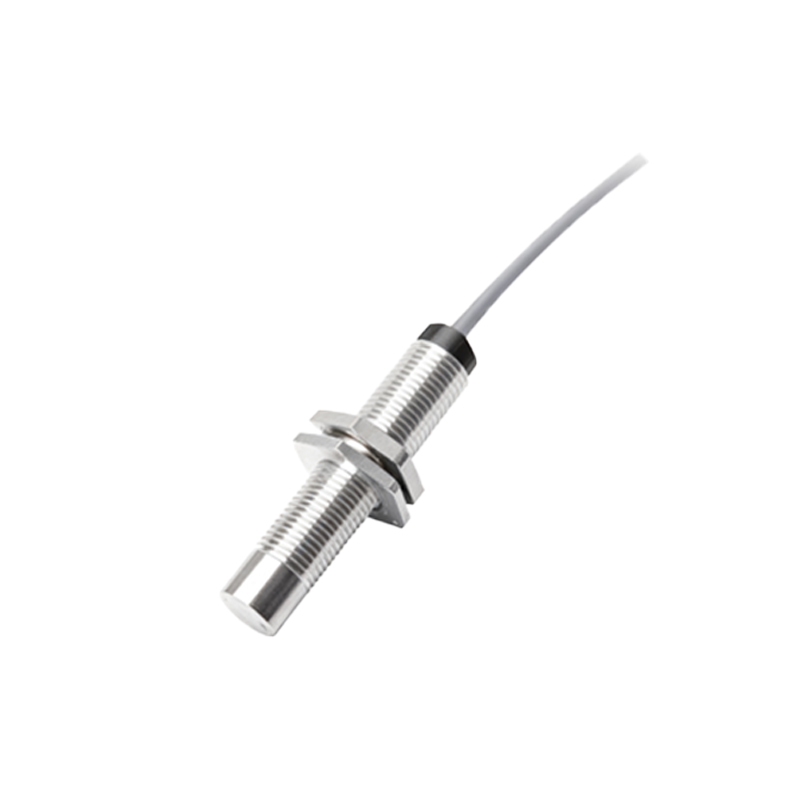
The application spectrum for the BERO-3RG is vast. A primary use is position sensing: verifying the presence or absence of a metal part on a conveyor, confirming the end position of a cylinder, or detecting the passage of a gear tooth. In robotic work cells, these sensors are indispensable for ensuring grippers have correctly picked up a component before the next motion sequence begins. They are also widely used for counting metallic objects, monitoring rotational speed by detecting bolts or keys on a shaft, and as a safety interlock to confirm guard doors are securely closed before machine activation.
Installation and alignment are straightforward but require attention to detail. The sensor must be mounted securely to avoid vibration-induced false signals. Engineers must also observe the specified mounting flush conditions; most barrel-style inductive sensors require a certain clearance from surrounding metal to ensure the sensing field is not distorted, which could alter the effective switching point. For sensing small or thin targets, selecting a model with a reduced nominal range or a factor of 1 (standard sensing distance) is often necessary to guarantee reliable detection.
In summary, the BERO-3RG inductive proximity switch represents a mature, highly reliable technology that forms the backbone of countless automated systems. Its non-contact operation, environmental resilience, and clear diagnostic feedback make it a preferred choice for engineers seeking to enhance system uptime, safety, and precision. When specifying a sensor for metal detection tasks, the BERO-3RG series offers a proven combination of performance and durability that continues to meet the evolving challenges of modern industrial automation.