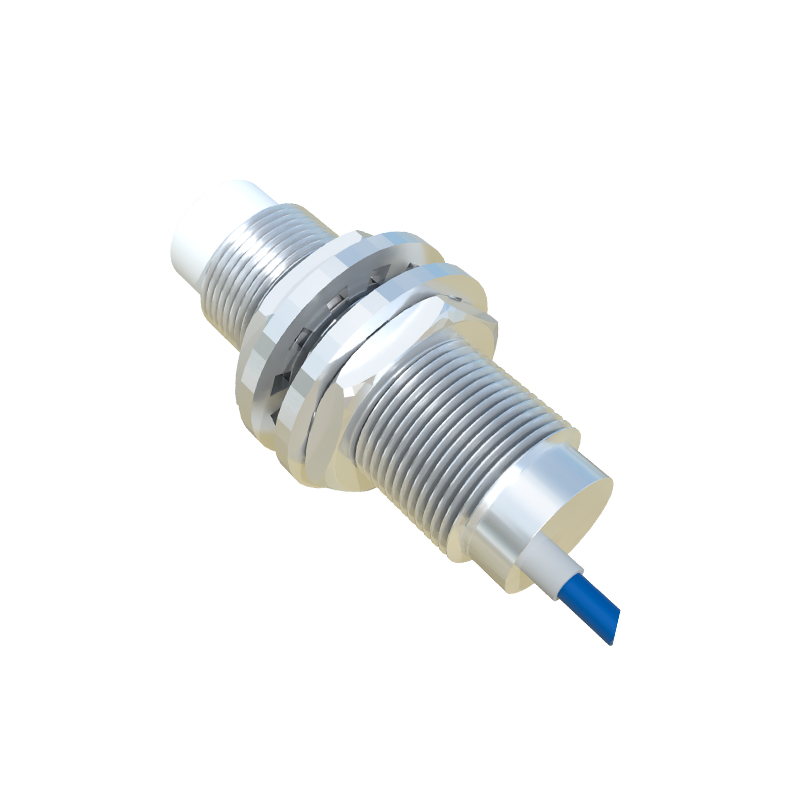
In the realm of industrial automation and machine control, proximity sensors are indispensable components for non-contact object detection. Among the various types, the diffuse reflective proximity sensor, particularly in a 3-wire PNP configuration, stands out for its versatility and reliability in numerous applications. This article delves into the operational principles, wiring methodology, key advantages, and practical considerations for implementing these sensors effectively.
A diffuse reflective proximity sensor operates on a straightforward principle. It contains both an infrared or visible light emitter (typically an LED) and a photodetector (such as a phototransistor) housed within a single unit. The emitter continuously projects a light beam. When an object enters the sensor's detection field, it reflects a portion of this emitted light back towards the sensor. The photodetector receives this reflected light, and once the intensity surpasses a pre-set threshold, the sensor's internal circuitry triggers a state change in its output signal. Unlike through-beam or retro-reflective sensors, it does not require a separate reflector; it detects the object directly based on the diffuse reflection from the object's surface. This makes it ideal for detecting objects with non-shiny, matte finishes.
The "3-Wire PNP" designation specifies the electrical interface. "3-Wire" indicates the sensor requires three connections: a positive supply voltage (typically +12V to +24V DC, often labeled as Brown wire), a negative supply or ground (0V, often labeled as Blue wire), and a signal output wire (often labeled as Black wire). "PNP" describes the switching logic of the output transistor. In a PNP (Sourcing) sensor, the output wire acts as a switched positive voltage source. In the idle state (no object detected), the output is effectively disconnected (open circuit). When an object is detected, the internal PNP transistor switches ON, connecting the output wire to the positive supply voltage (+V). This sources current from the sensor's output to the load (e.g., a PLC input, relay coil). The load is connected between the sensor's output (Black) and the ground (0V).
Proper wiring is critical for reliable operation. The standard color code (Brown: +V, Blue: 0V, Black: Output) is widely adopted but must always be verified against the specific sensor's datasheet. To wire a 3-wire PNP sensor: Connect the Brown wire to the positive terminal of the DC power supply. Connect the Blue wire to the negative terminal (0V) of the supply. Connect the Black (output) wire to one terminal of your load device (e.g., PLC digital input module). Finally, connect the other terminal of the load device back to the 0V (negative) of the power supply. This completes the circuit. When the sensor activates, current flows from +V, through the sensor's internal PNP transistor, out the Black wire, through the load, and back to 0V.
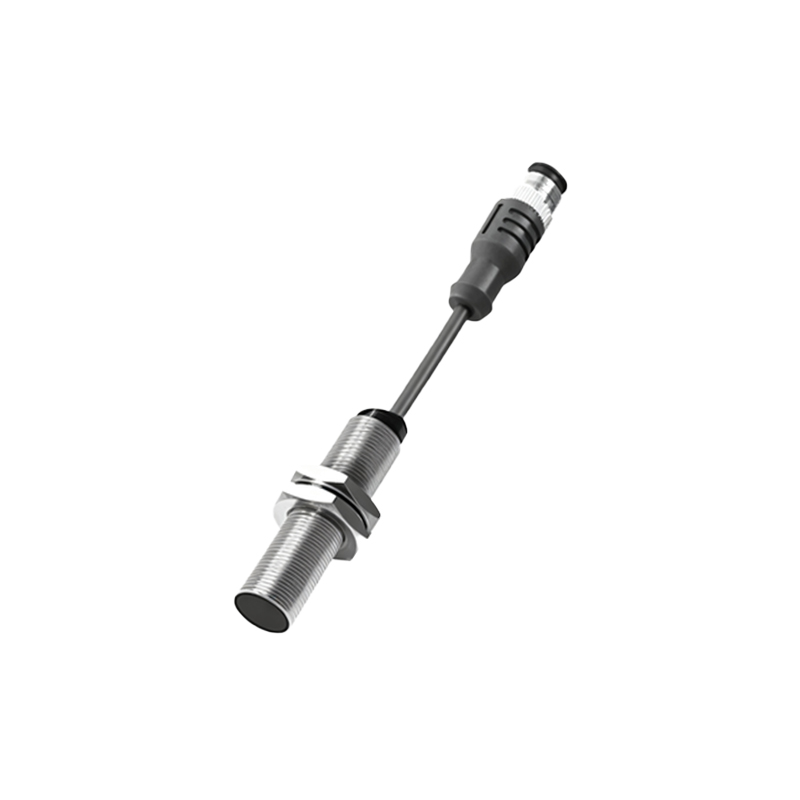
The choice of a 3-wire PNP diffuse sensor offers several distinct advantages. Firstly, its simple, self-contained design eliminates the need for alignment with a separate receiver or reflector, simplifying installation and reducing hardware costs. It is excellent for detecting objects at short to medium ranges, typically from a few millimeters up to several hundred millimeters, depending on the model and object properties. The PNP (sourcing) output is commonly preferred in many European and global standards and is often directly compatible with programmable logic controller (PLC) sinking input modules. Furthermore, these sensors are generally robust, resistant to environmental factors like dust or mild splashes (with appropriate IP ratings), and require minimal maintenance.
However, several application factors must be carefully considered. The sensing distance is highly dependent on the object's size, color, and surface texture. Light-colored, matte objects reflect more light and can be detected at a greater distance than dark, shiny, or absorbent objects. The sensor's background and ambient light conditions are also crucial. Highly reflective backgrounds or intense ambient light can cause false triggers. Many modern sensors feature background suppression technology or adjustable sensitivity to mitigate these effects. Additionally, the operational environment must be assessed; for harsh conditions involving oils, coolants, or heavy washdowns, sensors with corresponding IP67, IP68, or IP69K ratings should be selected.
In practice, 3-wire PNP diffuse sensors are ubiquitous. They are used for part presence/absence verification on conveyor lines, box counting in packaging machinery, level detection in bins or hoppers, and as non-contact limit switches in automated assembly equipment. Their reliability and straightforward interface make them a fundamental building block in modern control systems.
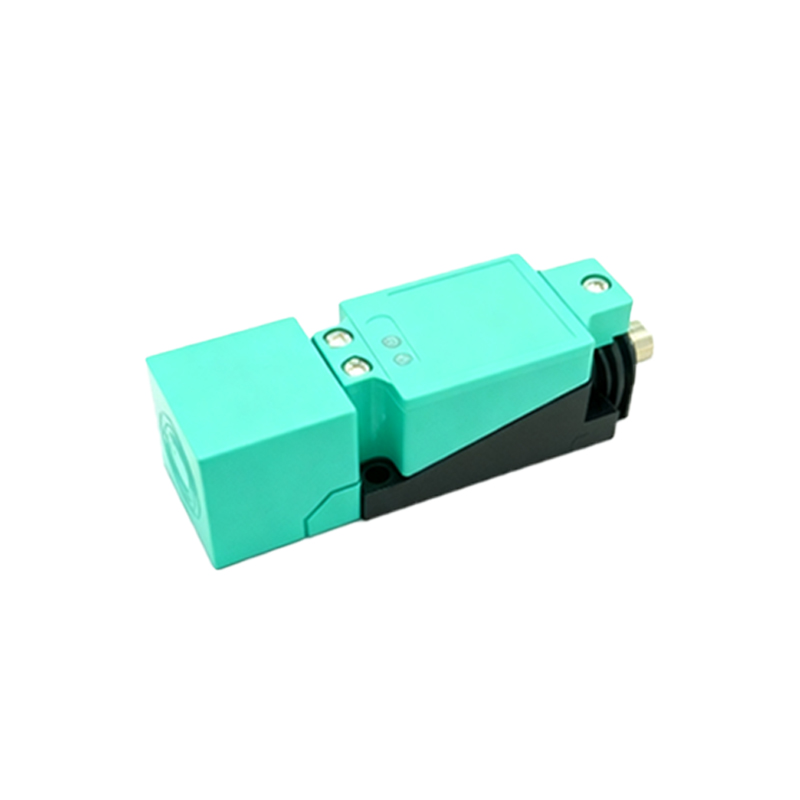
In conclusion, the 3-wire PNP diffuse reflective proximity sensor is a powerful and flexible solution for non-contact detection tasks. Understanding its operating principle, correct