In the realm of industrial automation and security systems, proximity sensors play a crucial role in detecting the presence of objects or individuals without physical contact. Among various types, human proximity sensors are particularly valuable for applications such as automatic lighting, touchless switches, and safety interlocks. This article delves into the design and operation of a simple, cost-effective human proximity sensor circuit using readily available electronic components. The circuit primarily leverages the principle of capacitive sensing, which detects changes in capacitance caused by the human body's dielectric properties.
The core of the circuit is a high-frequency oscillator built around a 555 timer IC configured in astable mode. This oscillator generates a continuous square wave signal at a frequency typically ranging from 100 kHz to 1 MHz. The output of this oscillator is connected to a sensing electrode, which can be a simple metal plate or a conductive foil. When no human is near the electrode, the circuit operates at its baseline capacitance, maintaining a steady oscillation. However, when a person approaches the sensing electrode, the human body introduces an additional capacitance to the system due to its conductive nature. This alters the total capacitance in the oscillator's RC network, causing a measurable shift in the oscillation frequency or amplitude.
To detect this change, the circuit incorporates a demodulation and amplification stage. The signal from the oscillator is fed into a peak detector or a filter circuit to convert the frequency variation into a DC voltage change. This DC signal is then amplified using an operational amplifier (op-amp) such as the LM358, which boosts the subtle voltage shift to a more usable level. The amplified output is compared against a preset threshold voltage using a comparator circuit. When the voltage exceeds the threshold—indicating human proximity—the comparator triggers its output, which can drive a relay, an LED indicator, or a microcontroller input for further processing.
Component selection is critical for stability and sensitivity. For the oscillator, use a ceramic or film capacitor with low tolerance and a stable resistor to minimize drift. The sensing electrode should have a surface area appropriate for the desired detection range; typically, a plate of 10x10 cm can detect a person within 10-30 cm. Shielding the circuit from electromagnetic interference (EMI) is essential to prevent false triggers. This can be achieved by enclosing the oscillator in a metal box and using coaxial cables for connections to the electrode. Power supply regulation, such as a 7805 voltage regulator, ensures consistent performance by providing a stable 5V DC, reducing noise-induced errors.
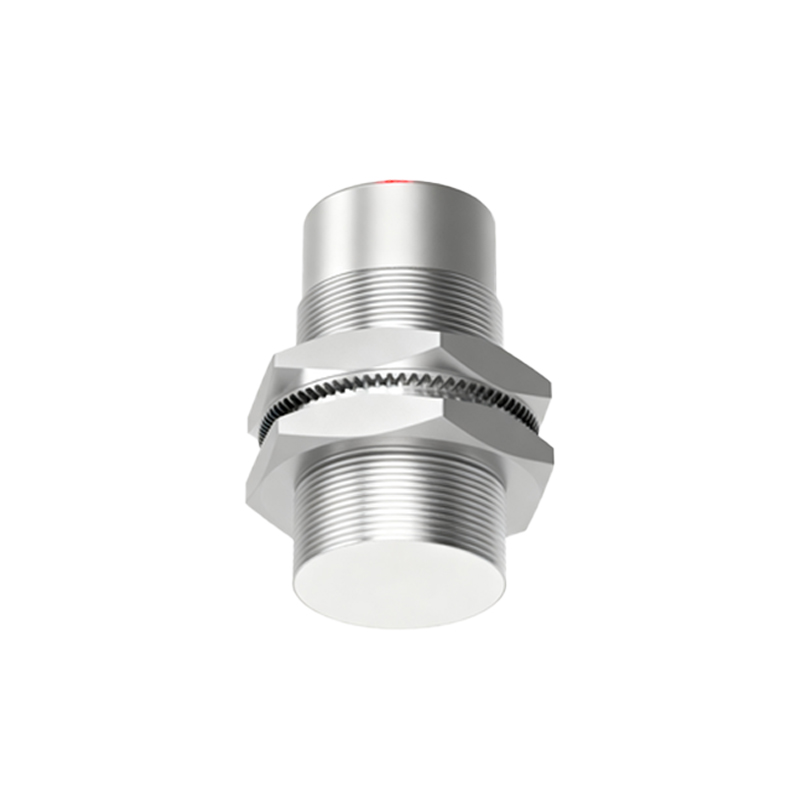
Calibration involves adjusting the threshold potentiometer to set the detection range. In a quiet environment (no nearby objects), tune the circuit so that the output remains inactive. Then, bring a hand close to the electrode and adjust until the output triggers reliably at the desired distance. It's important to note that environmental factors like humidity and temperature can affect capacitance, so periodic recalibration may be necessary in dynamic settings. For enhanced reliability, consider adding a hysteresis loop to the comparator using positive feedback resistors, which prevents output chattering when the sensed signal is near the threshold.
Applications of this simple proximity sensor circuit are diverse. In home automation, it can be integrated into bathroom fixtures for hands-free operation or as an energy-saving device to control lights and fans. In industrial contexts, it serves as a safety sensor to halt machinery when a worker enters a hazardous zone. The low-cost design, using components totaling under $10, makes it accessible for DIY enthusiasts and prototyping. For advanced functionality, the output can interface with Arduino or Raspberry Pi to enable logging, wireless communication, or integration into IoT systems.
In summary, this human proximity sensor circuit offers a practical balance of simplicity, affordability, and effectiveness. By understanding its working principle—capacitive sensing through oscillator perturbation—engineers and hobbyists can customize it for specific needs. While commercial sensors offer higher precision, this DIY approach provides valuable insights into sensor fundamentals and encourages innovation in proximity-based solutions. Always adhere to safety standards, especially when deploying in high-voltage or industrial environments, to ensure reliable and secure operation.