Inductive proximity sensors are ubiquitous in industrial automation, offering non-contact detection of metallic objects. Among the various configurations, the 3-wire sensor stands as the most common and versatile solution for modern control systems. This article delves into the operational principles, wiring methodologies, key specifications, and practical application considerations for 3-wire inductive proximity switches, providing essential knowledge for electrical design, installation, and maintenance.
Fundamentally, an inductive proximity sensor generates an electromagnetic field via a coiled oscillator circuit located at its sensing face. When a ferrous or non-ferrous metallic target enters this field, eddy currents are induced on the target's surface. This causes a change in the oscillation amplitude within the sensor, which is detected by a threshold circuit. This detection event triggers a change in the state of the sensor's solid-state output switch. The "3-wire" designation refers to the essential connections required: a positive supply voltage (typically labeled brown or +V), a negative or common ground (typically blue or 0V), and a switched output wire (typically black, white, or sometimes another color depending on output type).
The core distinction in 3-wire sensors lies in their output type and wiring configuration relative to the load. There are two primary types: NPN (sinking) and PNP (sourcing). An NPN output sensor switches the negative side (0V) to the load. In this configuration, the load is connected between the sensor's output wire and the positive supply (+V). When activated, the NPN transistor inside the sensor closes the circuit to ground, allowing current to flow from +V, through the load, and into the sensor's output to ground. Conversely, a PNP output sensor switches the positive side (+V) to the load. Here, the load is connected between the sensor's output and ground (0V). Upon activation, the PNP transistor provides the positive voltage to the load, completing the circuit to ground. The choice between NPN and PNP is critical and is often dictated by regional conventions (PNP is common in Europe, NPN in some Asian markets) and the requirements of the programmable logic controller (PLC) or control device input module.
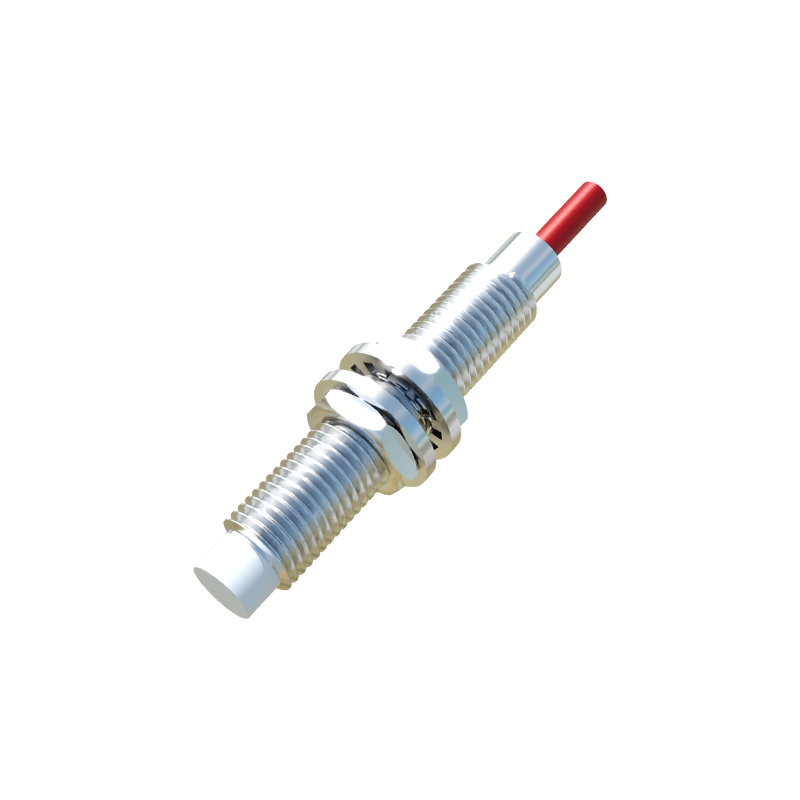
Another crucial specification is the output function: normally open (NO) or normally closed (NC). A normally open (NO) sensor's output circuit is open (off) when no target is present and closes (on) when a target is detected. A normally closed (NC) sensor operates inversely. Engineers must carefully select the correct combination of output type (NPN/PNP) and function (NO/NC) to ensure the control logic operates as intended. Incorrect selection can lead to unsafe "fail-on" conditions or system malfunctions.
Wiring a 3-wire sensor is straightforward but demands attention to detail. Always consult the manufacturer's datasheet for the specific color code, as variations exist. The standard IEC color code (Brown: +V, Blue: 0V, Black: Output) is widely adopted. Key installation practices include ensuring a stable DC power supply within the sensor's rated voltage range (commonly 10-30V DC), implementing proper shielding and routing of cables away from high-voltage power lines to prevent electrical noise interference, and respecting the specified sensing distance. It is vital to note that the sensing distance is rated for a standard mild steel target; other metals like aluminum, brass, or stainless steel have reduction factors that effectively decrease the usable sensing range.
When integrating these sensors into a control system, several performance parameters must be evaluated. The switching frequency defines how quickly the sensor can detect objects passing by. Hysteresis is a built-in characteristic that prevents output chatter when a target is at the exact sensing point; it creates a small difference between the switch-on and switch-off points. Protection ratings, such as IP67 or IP69K, indicate the sensor's resilience against dust and water ingress, which is paramount for harsh industrial environments. Additionally, short-circuit, overload, and reverse polarity protection are highly desirable features that enhance reliability and prevent damage from common wiring errors.
In application, 3-wire inductive sensors excel in tasks like position detection, end-of-travel limit sensing, counting metallic parts on a conveyor, and confirming the presence of a machine component. Their solid-state design ensures a long operational life with no mechanical wear from physical contact. For engineers, mastering the selection and application of 3-wire inductive proximity sensors—paying close attention to the trifecta of supply voltage, output type (NPN/PNP), and output function (NO/NC)—is fundamental to designing robust, reliable, and safe industrial automation systems. Proper understanding mitigates downtime and ensures seamless communication between sensors and the broader control architecture.