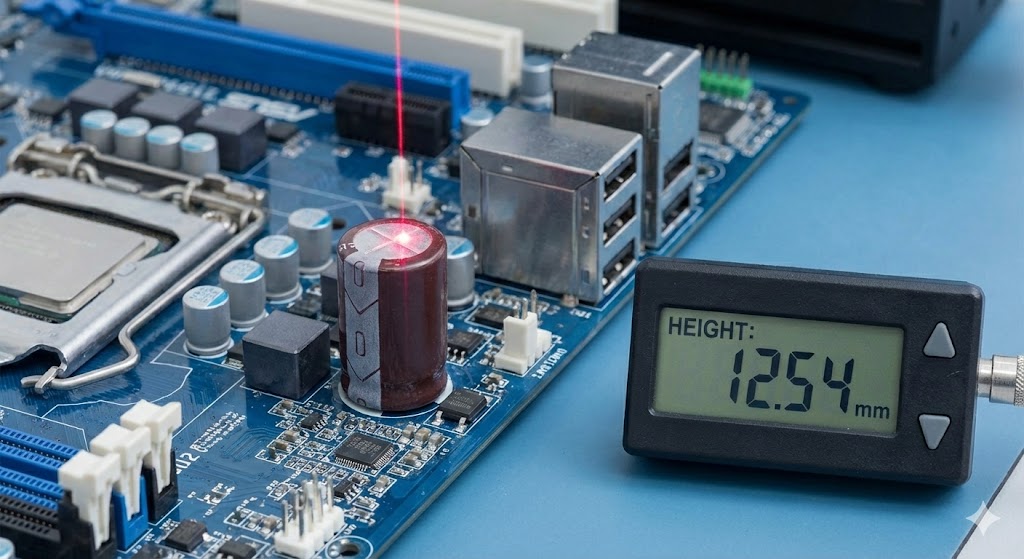
Laser sensors are integral components in modern industrial automation, offering high-precision measurement capabilities for distance, position, and object detection. Understanding how to effectively read data from these sensors is crucial for engineers working in fields like robotics, manufacturing, and quality control. This guide provides a detailed overview of the process, covering key principles, communication protocols, and practical implementation steps.
Laser sensors operate by emitting a laser beam toward a target and analyzing the reflected light. The time-of-flight (ToF) or triangulation method is commonly used to calculate distance based on the beam's return time or angle. Data output typically includes analog signals (e.g., 0-10V or 4-20mA) or digital signals via interfaces like RS-232, RS-485, Ethernet, or industrial protocols such as Modbus or PROFINET. To read this data, engineers must first configure the sensor settings, including measurement range, response time, and output format, using manufacturer-specific software or hardware interfaces.
For analog output, data reading involves connecting the sensor to a data acquisition (DAQ) system or programmable logic controller (PLC). The analog signal is converted into digital values, which can be processed and monitored in real-time. Calibration is essential to ensure accuracy, as environmental factors like temperature or ambient light may affect readings. Digital interfaces, on the other hand, require establishing communication parameters like baud rate and data bits. Engineers often use serial communication libraries in programming languages (e.g., Python's PySerial or C++ for embedded systems) to send commands and receive data packets. For instance, a simple command might request distance values, with the sensor responding in a predefined data structure.
In industrial networks, integrating laser sensors with PLCs or SCADA systems enables centralized data monitoring. Protocols like Modbus TCP allow multiple sensors to transmit data over Ethernet, facilitating scalable solutions for large-scale applications. Engineers should implement error-checking mechanisms, such as checksums or parity bits, to ensure data integrity. Additionally, filtering algorithms (e.g., moving averages) can smooth out noise in readings, enhancing reliability in dynamic environments.

Practical examples include using laser sensors for conveyor belt monitoring, where real-time distance data detects object presence or size variations. In robotic arms, sensors provide feedback for precise positioning, with data read via Ethernet/IP and processed in control algorithms. Troubleshooting common issues, like signal interference or misalignment, involves verifying connections, updating firmware, or adjusting sensor orientation.
Ultimately, mastering laser sensor data reading empowers engineers to optimize automation systems, improve efficiency, and reduce downtime. By leveraging appropriate tools and protocols, accurate data acquisition becomes a cornerstone of advanced industrial operations.