In the rapidly evolving landscape of industrial automation, consumer electronics, and IoT devices, the demand for intelligent, energy-efficient sensing solutions has never been higher. Among these, low-power proximity sensors stand out as critical components, enabling touchless interfaces, presence detection, and object avoidance. However, off-the-shelf sensors often fall short when faced with unique application constraints—be it extreme power budgets, unconventional form factors, challenging environmental conditions, or specific detection profiles. This is where the strategic advantage of custom low-power proximity sensor design becomes paramount. Customization is not merely a luxury but an engineering necessity to achieve optimal system performance, longevity, and cost-effectiveness.
The core challenge in low-power design lies in balancing sensitivity, range, response time, and power consumption. Standard sensors operate on fixed parameters, which can lead to significant energy waste. For instance, a sensor designed for a 50cm range will consume power accordingly, even if the application only requires 10cm. A custom approach allows engineers to tailor the sensing technology—whether infrared (IR), ultrasonic, capacitive, or laser-based—to the exact needs. By optimizing the driver circuitry, pulse frequency, and duty cycle, power draw can be reduced to microamp or even nanoamp levels during idle states. Advanced techniques like wake-on-approach, where the sensor activates a main system only upon detection, are integral to custom designs, dramatically extending battery life in portable or wireless applications.
Material selection and packaging are equally crucial in a custom project. For harsh environments involving dust, moisture, or temperature fluctuations, the sensor housing, lens material (for optical types), and sealants must be specified to meet IP ratings or industry standards like NEMA. A proximity sensor in an automotive application, for example, must withstand thermal cycling and vibration, while a medical device sensor may require biocompatible materials. Custom mechanical design ensures the sensor integrates seamlessly into the final product's aesthetics and architecture, avoiding the compromises of adapting a standard module.
Furthermore, the sensing algorithm and output signal are prime candidates for customization. A standard sensor might provide a simple digital on/off signal. In contrast, a custom-designed sensor can incorporate analog output proportional to distance, I2C/SPI digital communication for precise data reporting, or even embedded preprocessing to filter out ambient noise (like sunlight for IR sensors). This reduces the computational load on the main microcontroller, contributing to overall system power savings. For complex scenarios, such as differentiating between human presence and inanimate objects, custom firmware incorporating multi-threshold detection or time-of-flight (ToF) calculations can be developed.
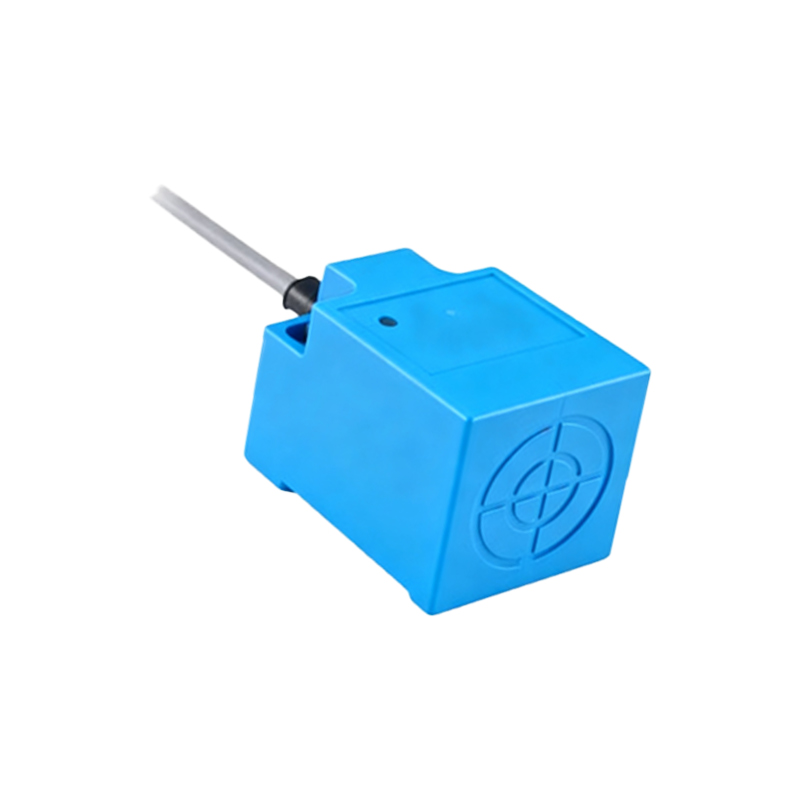
The development cycle for a custom low-power proximity sensor follows a rigorous, collaborative process. It begins with a deep dive into the application requirements: target object properties (size, reflectivity, material), required detection range and field of view, power budget (average and peak current), operating voltage, response speed, and interface needs. Prototyping follows, using evaluation kits and custom PCBs to test different emitter-detector pairs and circuit layouts. Iterative testing refines the design, focusing on minimizing crosstalk, optimizing signal-to-noise ratio, and ensuring stable performance across the specified temperature range. Finally, production involves selecting the right manufacturing partner capable of consistent quality control, especially for calibrating sensitivity, which is vital for performance uniformity.
In conclusion, the journey toward a custom low-power proximity sensor is an investment in precision and efficiency. While the initial development phase may require more resources than purchasing a standard component, the long-term benefits are substantial. These include unparalleled system integration, minimized total cost of ownership through reduced energy and maintenance needs, and a definitive competitive edge by enabling features impossible with generic sensors. As the world moves towards more connected and intelligent devices, the ability to engineer sensing solutions from the ground up will continue to be a key differentiator for innovative products across all sectors.