In industrial automation and control systems, proximity switch sensors play a critical role in detecting the presence or absence of objects without physical contact. Among the various configurations available, three-wire proximity sensors are widely adopted due to their reliability and ease of integration. This article delves into the fundamentals, working principles, wiring methods, and practical applications of three-wire proximity sensors, tailored for electrical engineers and industry professionals.
Three-wire proximity sensors typically consist of three distinct wires: one for power supply (usually labeled as brown or red), one for ground (blue or black), and one for the output signal (black or white). These sensors operate on the principle of electromagnetic induction, capacitive sensing, or magnetic fields, depending on the type—inductive, capacitive, or magnetic proximity sensors. Inductive sensors, for instance, generate an oscillating electromagnetic field and detect changes when a metallic object enters the field, triggering the output. The three-wire design allows for a clear separation of power and signal lines, reducing interference and enhancing stability in noisy industrial environments.

Wiring a three-wire proximity sensor requires attention to detail to ensure optimal performance. The power wire connects to a DC voltage source, commonly 12-24V DC, while the ground wire links to the common ground of the system. The output wire interfaces with a PLC (Programmable Logic Controller), relay, or other control devices. Engineers must verify the sensor's specifications, such as NPN (sinking) or PNP (sourcing) output configurations, to match the control circuit. Incorrect wiring can lead to malfunctions or damage, so following manufacturer guidelines is essential. For example, in an NPN setup, the output switches the ground connection, whereas in PNP, it switches the positive voltage.
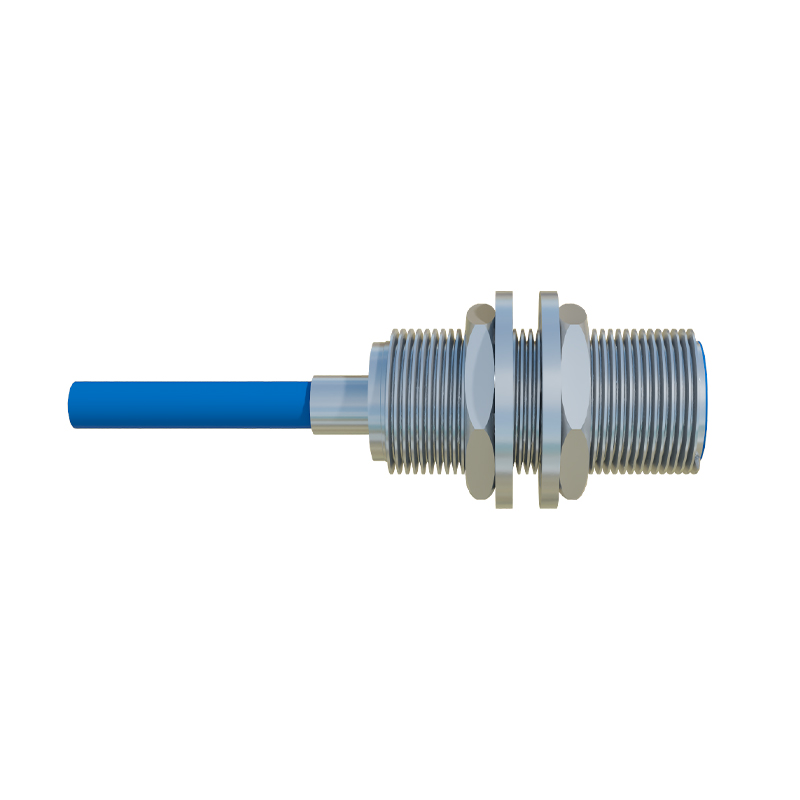
Applications of three-wire proximity sensors span across diverse industries, including manufacturing, automotive, packaging, and robotics. They are used for position sensing, object counting, limit switching, and safety interlocks. Their non-contact nature minimizes wear and tear, ensuring longevity and reducing maintenance costs. In conveyor systems, these sensors detect items on the belt, enabling automated sorting and quality control. In machine tools, they provide precise positioning feedback, enhancing accuracy and efficiency.
When selecting a three-wire proximity sensor, engineers should consider factors like sensing range, material compatibility, environmental conditions (e.g., temperature, humidity), and response time. For harsh environments, models with IP67 or higher ratings offer protection against dust and water ingress. Regular testing and calibration are recommended to maintain performance, using tools like multimeters or oscilloscopes to monitor output signals.
In summary, three-wire proximity switch sensors are indispensable components in modern electrical systems, offering robust and contactless detection solutions. By understanding their operation and proper implementation, engineers can optimize automation processes, improve safety, and boost productivity. As technology advances, innovations in sensor design continue to expand their capabilities, making them even more versatile for future industrial challenges.