Arduino laser positioning sensors represent a significant advancement in precision measurement and automation technology. These sensors utilize laser beams to detect the position, distance, or displacement of objects with high accuracy, making them indispensable in industrial automation, robotics, and research applications. As an electrical engineer, understanding the principles, integration, and optimization of these sensors with Arduino microcontrollers is crucial for developing efficient and reliable systems.
The core technology behind Arduino-compatible laser positioning sensors typically involves time-of-flight (ToF), triangulation, or phase-shift methods. Time-of-flight sensors calculate distance by measuring the time it takes for a laser pulse to reflect off a target and return to the sensor. Triangulation-based sensors use a laser emitter and a receiver positioned at a known angle to determine distance through geometric calculations. Phase-shift sensors analyze the phase difference between emitted and reflected laser waves. Each method offers distinct advantages in terms of range, resolution, and environmental robustness, allowing engineers to select the appropriate sensor based on specific project requirements, such as measuring distances from a few millimeters to several meters with sub-millimeter precision.
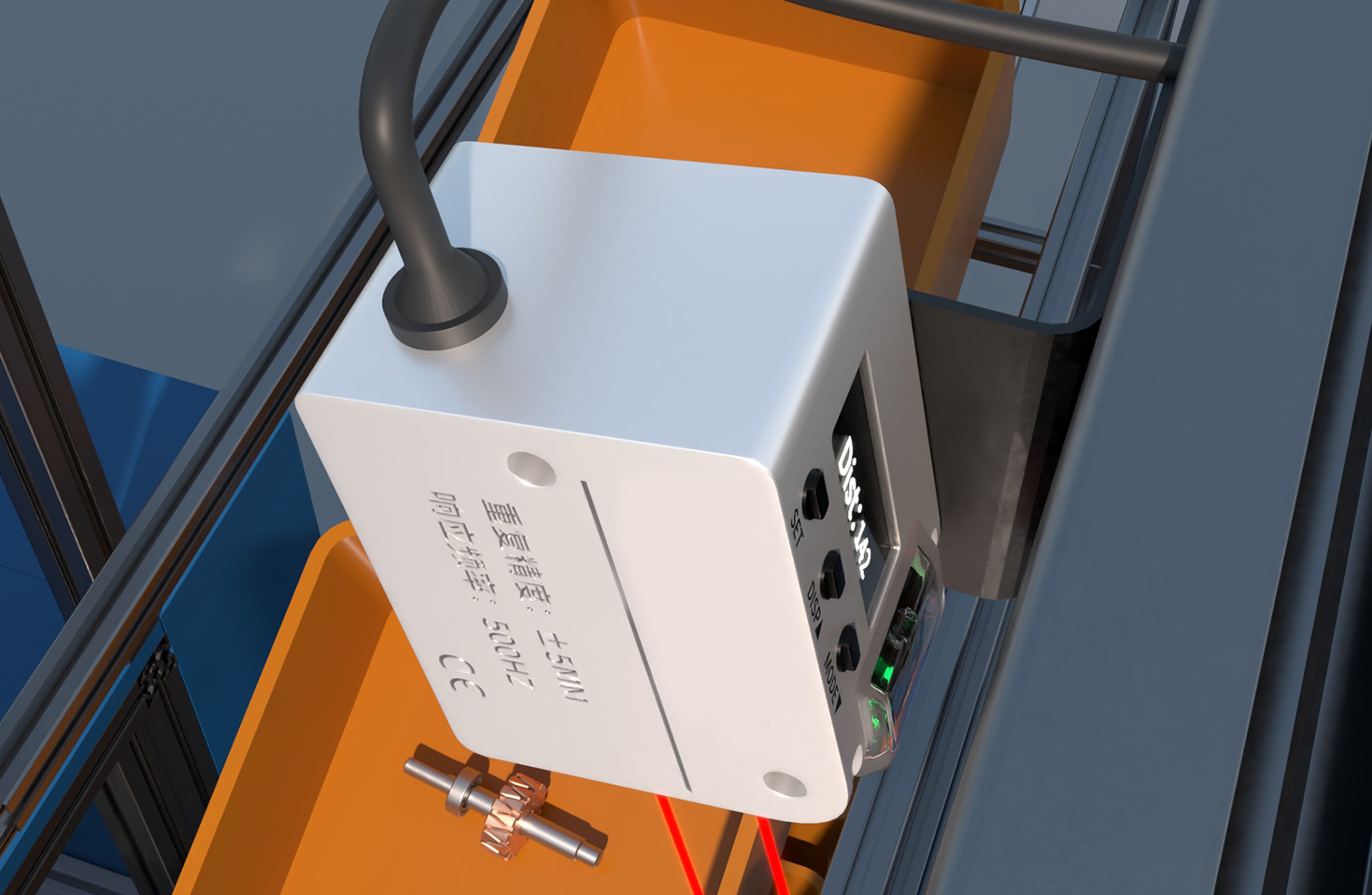
Integrating a laser positioning sensor with an Arduino board involves both hardware and software considerations. On the hardware side, engineers must ensure proper power supply management, as most laser sensors operate at 3.3V or 5V DC, compatible with Arduino's output levels. Signal conditioning circuits may be necessary to interface analog or digital outputs from the sensor to Arduino's input pins, avoiding noise interference that could compromise accuracy. Common communication protocols include I2C, SPI, or UART, which facilitate seamless data exchange between the sensor and microcontroller. For instance, sensors like the VL53L0X ToF laser range finder use I2C, allowing straightforward connection to Arduino's SDA and SCL pins. Engineers should also consider mechanical mounting and alignment to ensure the laser beam targets the object correctly, minimizing errors due to oblique angles or environmental factors like ambient light.
Software implementation focuses on programming the Arduino to read, process, and utilize sensor data effectively. Libraries provided by manufacturers, such as the Adafruit_VL53L0X for ToF sensors, simplify initialization and data acquisition. A typical code structure includes initializing the sensor, setting measurement parameters (e.g., timing budget or precision mode), and reading distance values in a loop. Engineers can enhance functionality by implementing filtering algorithms, like moving averages or Kalman filters, to smooth out noise and improve reliability in dynamic environments. Additionally, data can be output via serial communication for monitoring or integrated into control systems for real-time applications, such as guiding robotic arms or automating quality inspections.

In industrial settings, Arduino laser positioning sensors are deployed for tasks like object detection, level monitoring, and precision alignment. Their non-contact nature reduces wear and tear, while high-speed response times support rapid automation cycles. However, challenges such as interference from reflective surfaces, temperature variations, or dust require mitigation strategies, such as using sensors with built-in compensation features or enclosing them in protective housings. Engineers must also adhere to safety standards, as laser emissions can pose risks; selecting Class 1 or Class 2 laser sensors ensures eye safety in most environments.
Future trends in this field include the development of miniaturized sensors with lower power consumption and enhanced connectivity options, such as IoT integration via Wi-Fi or Bluetooth modules. Advances in machine learning may enable smarter sensors capable of adaptive calibration and anomaly detection. For engineers, staying updated with these innovations through platforms like Arduino's official documentation and community forums is essential for leveraging laser positioning technology in cutting-edge projects.
Overall, Arduino laser positioning sensors offer a versatile and cost-effective solution for precision measurement. By mastering their integration and application, electrical engineers can drive advancements in automation, contributing to more efficient and intelligent systems across industries.
