In the realm of industrial automation and control systems, proximity sensors are indispensable components. They provide non-contact detection of objects, enabling precise, reliable, and maintenance-free operation in countless applications. However, selecting the right sensor for a specific task hinges on a thorough understanding of its specifications. This guide delves into the key parameters that define a proximity sensor's performance and suitability, empowering engineers to make informed decisions.
The core principle of operation is the primary differentiator. Inductive sensors detect metallic objects (typically ferrous metals like steel) by generating an electromagnetic field. The presence of a metal target within this field induces eddy currents, causing a change in the sensor's oscillation amplitude, which triggers the output switch. Capacitive sensors, on the other hand, can detect both metallic and non-metallic materials (plastics, wood, liquids, powders) by sensing changes in capacitance caused by the target object entering an electrostatic field. Ultrasonic sensors use sound waves to measure distance or detect objects, making them suitable for a wide range of materials and challenging environments with dust or vapor. Photoelectric sensors utilize a light beam (visible, infrared, or laser) and are excellent for long-range detection and sensing small objects.
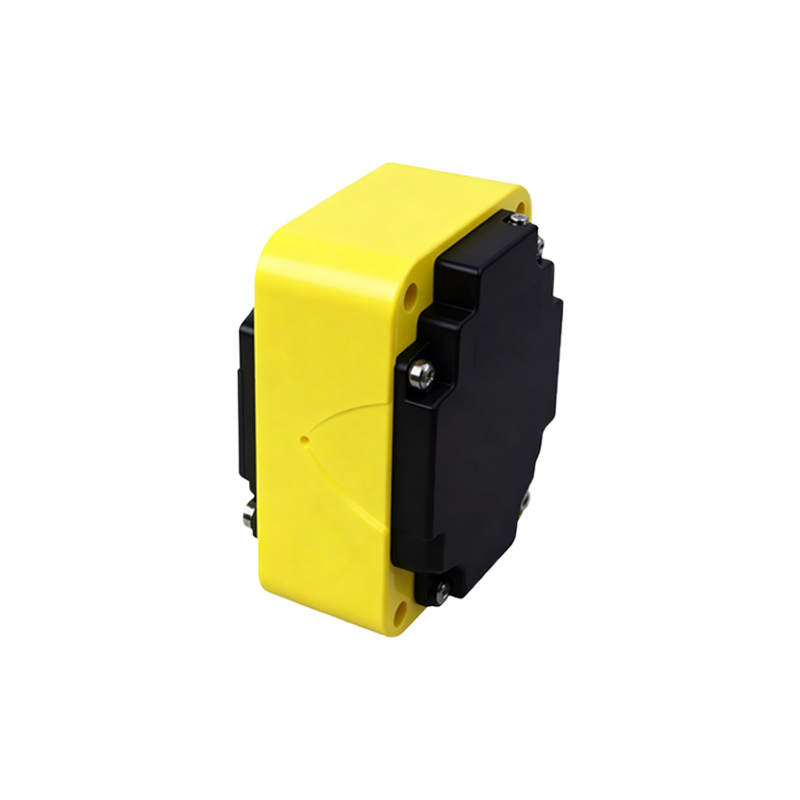
Once the technology is chosen, the critical specifications come into play. The sensing distance is paramount. This is the nominal operating distance (Sn) at which a standard target will reliably trigger the sensor under defined conditions. It is not the maximum possible distance. Engineers must always consider the assured operating distance (Sa), which is typically 0 to 81% of Sn, accounting for factors like supply voltage and temperature tolerances. Never design with the nominal sensing distance as the actual working gap.
The hysteresis is a crucial specification for stable operation. It is the difference between the switch-on point (as the target approaches) and the switch-off point (as the target moves away). This prevents rapid, chattering switching if the target hovers at the exact trigger point, such as due to vibration. A sensor with appropriate hysteresis ensures a clean, single output transition.
Repeat accuracy defines the sensor's precision. It is the variation in the switch-on point across multiple repeated approaches under identical conditions. For high-precision positioning applications, a low repeat accuracy value (e.g., ±0.01mm) is essential.
Response time and switching frequency determine how fast a sensor can react. Response time is the delay between the target entering the sensing field and the output signal change. Switching frequency is the maximum number of on/off cycles per second the sensor can handle. These are critical for high-speed production lines or detecting fast-moving objects.
Output configuration is a fundamental electrical specification. Common types include Normally Open (NO), Normally Closed (NC), and Analog (4-20mA, 0-10V). Solid-state (PNP or NDC sourcing) and NPN (sinking) transistor outputs are standard for DC sensors. The choice depends on the PLC or controller input module. The rated operating voltage and current consumption must match the available power supply. Pay close attention to the load current specification to ensure the sensor can drive the connected device (e.g., a relay coil or PLC input) without damage.
Environmental ratings are non-negotiable for reliability. The Ingress Protection (IP) rating (e.g., IP67, IP69K) indicates the level of protection against dust and water. An IP67 sensor can withstand temporary immersion, vital for washdown areas. Temperature range specifies the ambient operating and storage limits. For inductive sensors, the temperature drift specification indicates how much the sensing distance may change with temperature fluctuations.
Other vital specs include short-circuit and reverse polarity protection for electrical robustness, EMC (Electromagnetic Compatibility) compliance to ensure operation in electrically noisy environments, and for inductive sensors, the correction factors for different metals (e.g., aluminum, brass) which reduce the effective sensing distance compared to mild steel.
Understanding these specifications is not an academic exercise; it is the foundation of robust system design. A sensor selected with adequate margin in sensing distance, appropriate environmental sealing, and compatible electrical characteristics will deliver years of trouble-free service. Always consult the manufacturer's detailed datasheet, as specifications can vary significantly between models and brands. By meticulously matching these parameters to the application's mechanical, electrical, and environmental demands, engineers can optimize performance, enhance safety, and ensure the longevity of their automated systems.