In the realm of industrial automation and quality control, the ability to accurately measure color is paramount. Laser sensors have emerged as a sophisticated solution for this task, offering high precision, speed, and reliability. Unlike traditional color measurement methods that rely on broad-spectrum light sources, laser sensors utilize monochromatic, coherent light to analyze the spectral reflectance or absorbance characteristics of a material. This article delves into the principles, technologies, and applications of laser-based color measurement in industrial settings.
The fundamental principle behind laser color sensing involves the interaction between laser light and the surface of an object. When a laser beam, typically from a diode laser emitting at a specific wavelength, strikes a surface, several phenomena occur: reflection, absorption, and scattering. The color of an object is perceived based on which wavelengths of light are reflected and which are absorbed. A laser sensor is designed to detect the intensity of the reflected light at its specific wavelength. However, to determine color—which requires information across multiple wavelengths—advanced laser sensors employ various techniques.
One common method is the use of multiple laser diodes emitting at different wavelengths, such as red, green, and blue (RGB), analogous to the human eye's photoreceptors. These lasers sequentially or simultaneously illuminate the target. Photodetectors then measure the reflected intensity at each wavelength. By comparing these intensities, the sensor can construct a color profile. For instance, an object that reflects most of the red laser light while absorbing blue and green would appear red. The sensor quantifies this through algorithms that translate the reflectance data into standardized color spaces like CIE L*a*b* or RGB values, enabling precise color differentiation and matching.
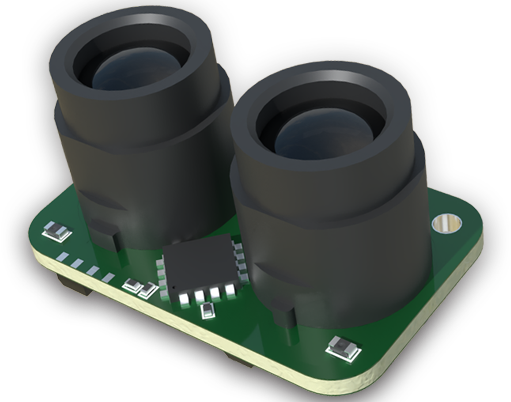
Another sophisticated approach involves tunable lasers or laser spectroscopy. Tunable lasers can vary their output wavelength across a range. By scanning through wavelengths and measuring reflectance at each point, the sensor can generate a detailed spectral reflectance curve. This curve is a fingerprint of the material's color properties, allowing for extremely accurate identification and measurement, even for subtle shades or under varying ambient light conditions. Laser-induced breakdown spectroscopy (LIBS) is an advanced variant where a high-power pulsed laser ablates a tiny portion of the material, creating a plasma whose emitted light spectrum is analyzed to determine elemental composition, which correlates strongly with color.
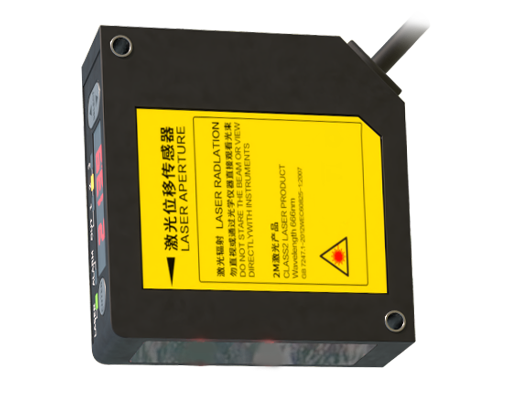
The advantages of laser sensors for color measurement are significant. They offer high spatial resolution due to the focused laser beam, allowing measurement on small areas or specific features of a product. Their coherence and directionality minimize interference from ambient light, making them suitable for harsh industrial environments. Speed is another critical benefit; laser-based systems can perform measurements in milliseconds, facilitating real-time inspection on high-speed production lines, such as in printing, textile manufacturing, or food processing.
In practical applications, laser color sensors are indispensable. In the automotive industry, they ensure paint consistency and quality across vehicle bodies. In pharmaceuticals, they verify the correct color coding of pills and packaging, crucial for safety. In recycling plants, laser sensors sort materials like plastics by color rapidly and accurately. The food industry uses them to assess the ripeness, quality, or browning of products like fruits, baked goods, and snacks based on color metrics.

However, challenges exist. The cost of high-precision laser sensor systems can be higher than simpler colorimeters. Surface properties like gloss, texture, or transparency can affect readings, requiring careful sensor calibration and sometimes complementary techniques. Maintenance, such as keeping lenses clean, is essential for consistent performance.
Future trends point towards miniaturization, integration with artificial intelligence for adaptive learning and defect recognition, and the development of hyperspectral imaging lasers that capture data across hundreds of wavelengths for unparalleled material analysis.
In conclusion, laser sensors represent a powerful technology for industrial color measurement. By leveraging the unique properties of laser light, they provide accurate, fast, and reliable color data that drives quality assurance, efficiency, and automation across diverse sectors. As technology advances, their capabilities will only expand, further solidifying their role in smart manufacturing and precision control.