In the realm of industrial automation and control systems, proximity sensors are indispensable components for non-contact detection. Among the various configurations, the Normally Open (NO) type is a fundamental and widely adopted design. Understanding why many proximity sensors are designed as NO devices requires an examination of safety principles, circuit logic, and practical application requirements.
At its core, the term "Normally Open" refers to the state of the sensor's output switching element when the sensor is not activated—that is, when no target is within its sensing range. In this inactive state, the electrical circuit is open, meaning no current flows through the output. When a target enters the sensing field, the sensor activates and closes the circuit, allowing current to flow. This design is intrinsically linked to the concept of "fail-safe" operation, a cornerstone of control system engineering.
Safety is a paramount concern. In many critical applications, such as emergency stop circuits, safety gates, or machine guarding, it is imperative that a fault condition (like a wire break or power loss) results in a safe state—typically, the cessation of machine motion or operation. An NO sensor naturally supports this principle. If the sensor fails, the circuit remains or returns to an open state, which can be easily interpreted by the controller as a "stop" or "unsafe" signal. This contrasts with a Normally Closed (NC) configuration, where a wire break in an inactive state might falsely indicate that everything is safe, creating a potentially hazardous situation.
The logic alignment with control systems further explains the prevalence of NO sensors. Programmable Logic Controllers (PLCs) and other industrial controllers are often programmed using positive logic, where an active input (receiving voltage/current) is interpreted as a logical "1" or TRUE condition. An NO sensor's behavior—offering no signal when idle and providing a signal when activated—maps perfectly onto this logic. When the sensor detects an object, it closes the circuit, sending a signal to the PLC input module, which reads it as an active condition. This intuitive "action equals signal" relationship simplifies programming and troubleshooting.
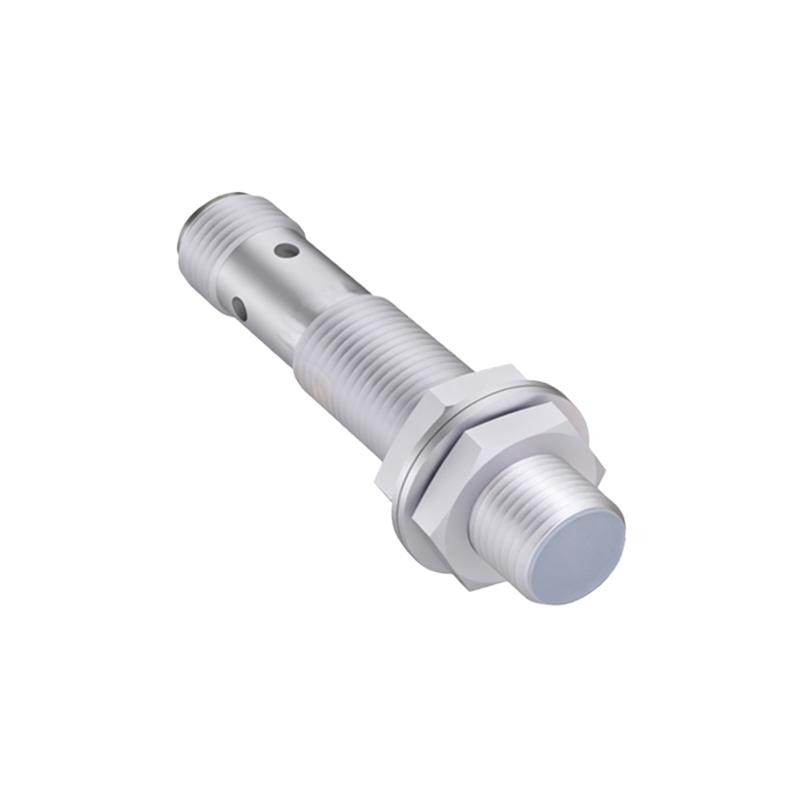
From a practical wiring and diagnostic standpoint, NO sensors offer advantages. In a standard 3-wire DC sensor (with Brown/+V, Blue/0V, and Black/Output wires), the NO output is high-impedance when inactive. This makes it easier to test with a multimeter. Furthermore, in many control panel designs, an active signal (a lit indicator lamp) is more immediately recognizable to an operator than the absence of one. An NO sensor causing a lamp to illuminate upon detection provides clear, positive feedback.
It is crucial to distinguish between the sensor's output type and its physical sensing technology (inductive, capacitive, photoelectric). An inductive proximity sensor, for instance, detects metallic objects. Its solid-state switching element (like an NPN or PNP transistor) is configured to be either NO or NC. The choice is independent of the sensing principle but deeply tied to the required circuit behavior.
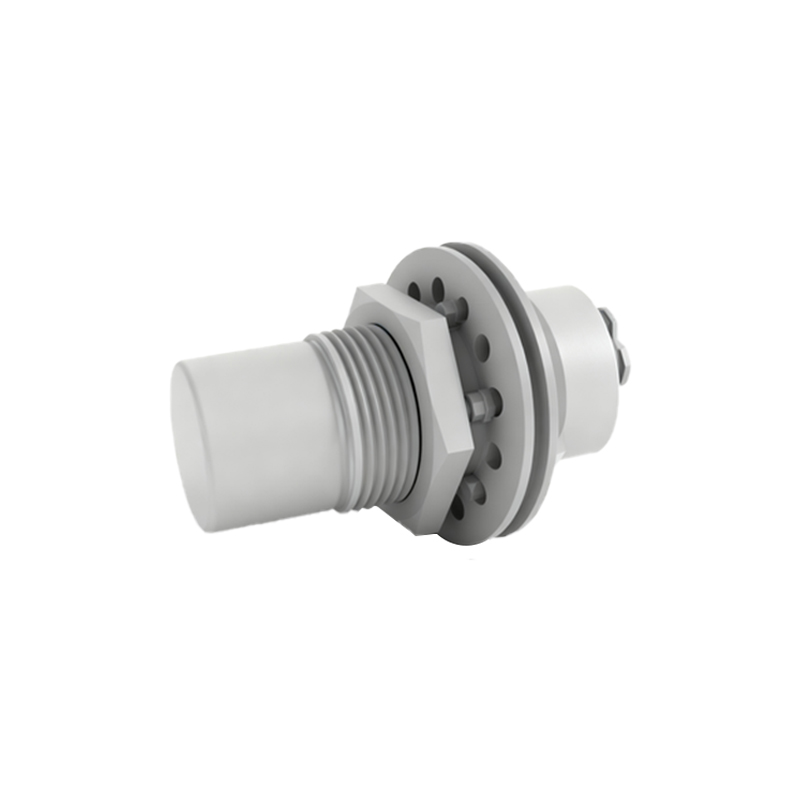
The dominance of the NO configuration is not absolute. NC sensors are essential in complementary safety circuits, often used in tandem with NO sensors to create redundant monitoring systems. For example, a safety interlock might use one NO and one NC sensor in series to detect both the presence of a guard and its proper closure, ensuring that any single fault is detected.
In conclusion, the prevalence of Normally Open proximity sensors is a deliberate engineering choice rooted in fail-safe design philosophy. It aligns safety, control logic, and operational clarity. By defaulting to an open circuit, they ensure that energy is only expended—and a signal is only present—when a specific, intended condition is met. This provides a clear, reliable, and inherently safer foundation for countless automated processes, from simple part presence detection to complex safety-critical systems. Understanding this "why" is key for engineers and technicians to design, implement, and maintain robust and safe control architectures.