In the realm of industrial automation and precision measurement, photoelectric laser distance sensors have emerged as indispensable tools. These sophisticated devices leverage the fundamental properties of light to deliver non-contact, high-accuracy distance measurements, revolutionizing processes across manufacturing, robotics, logistics, and beyond. Unlike traditional contact-based methods, laser sensors provide rapid, reliable data without physical interaction, minimizing wear and enabling measurements on delicate, hot, or moving surfaces.
The core operating principle of most industrial laser distance sensors is based on either time-of-flight (ToF) or triangulation. Time-of-flight sensors calculate distance by measuring the time interval between the emission of a laser pulse and the reception of its reflection. This method is highly effective for longer ranges, typically from a few centimeters up to several hundred meters, with accuracy in the millimeter to centimeter range. It is widely used in applications like vehicle detection, bulk material level monitoring, and large-scale dimensioning.
Laser triangulation sensors, on the other hand, are the champions of short-range, high-precision measurement. A laser diode projects a visible or invisible spot onto the target surface. The reflected light is focused onto a position-sensitive detector (PSD) or a CMOS/CCD array. As the target distance changes, the position of the light spot on the detector shifts. Using trigonometric calculations, the sensor's processor determines the exact distance. This technology excels in applications requiring micron-level resolution, such as checking part thickness, monitoring vibration, or controlling robotic pick-and-place operations.

Key performance parameters define a sensor's suitability for a given task. Measurement range specifies the minimum and maximum distances over which the sensor can operate reliably. Resolution indicates the smallest detectable change in distance, while accuracy defines how close the measured value is to the true value. Repeatability is critical in industrial settings, referring to the sensor's ability to produce the same result under unchanged conditions. Furthermore, response time—the speed at which a sensor can take and output a measurement—is vital for high-speed production lines. Environmental factors like ambient light, temperature fluctuations, and the target's surface properties (color, reflectivity, texture) significantly impact performance. Modern sensors incorporate advanced features to compensate for these variables, including background suppression, multiple echo processing, and intelligent signal filtering.

The applications for photoelectric laser distance sensors are vast and continually expanding. In factory automation, they are used for precise positioning of robotic arms, conveyor belt monitoring, and fill-level control in containers. In the automotive industry, they ensure proper gap and flush dimensions between body panels. In electronics assembly, they verify component placement height on circuit boards. Logistics and warehousing benefit from pallet dimensioning and automated guided vehicle (AGV) navigation. Furthermore, they play a crucial role in safety systems, such as perimeter guarding and intrusion detection.
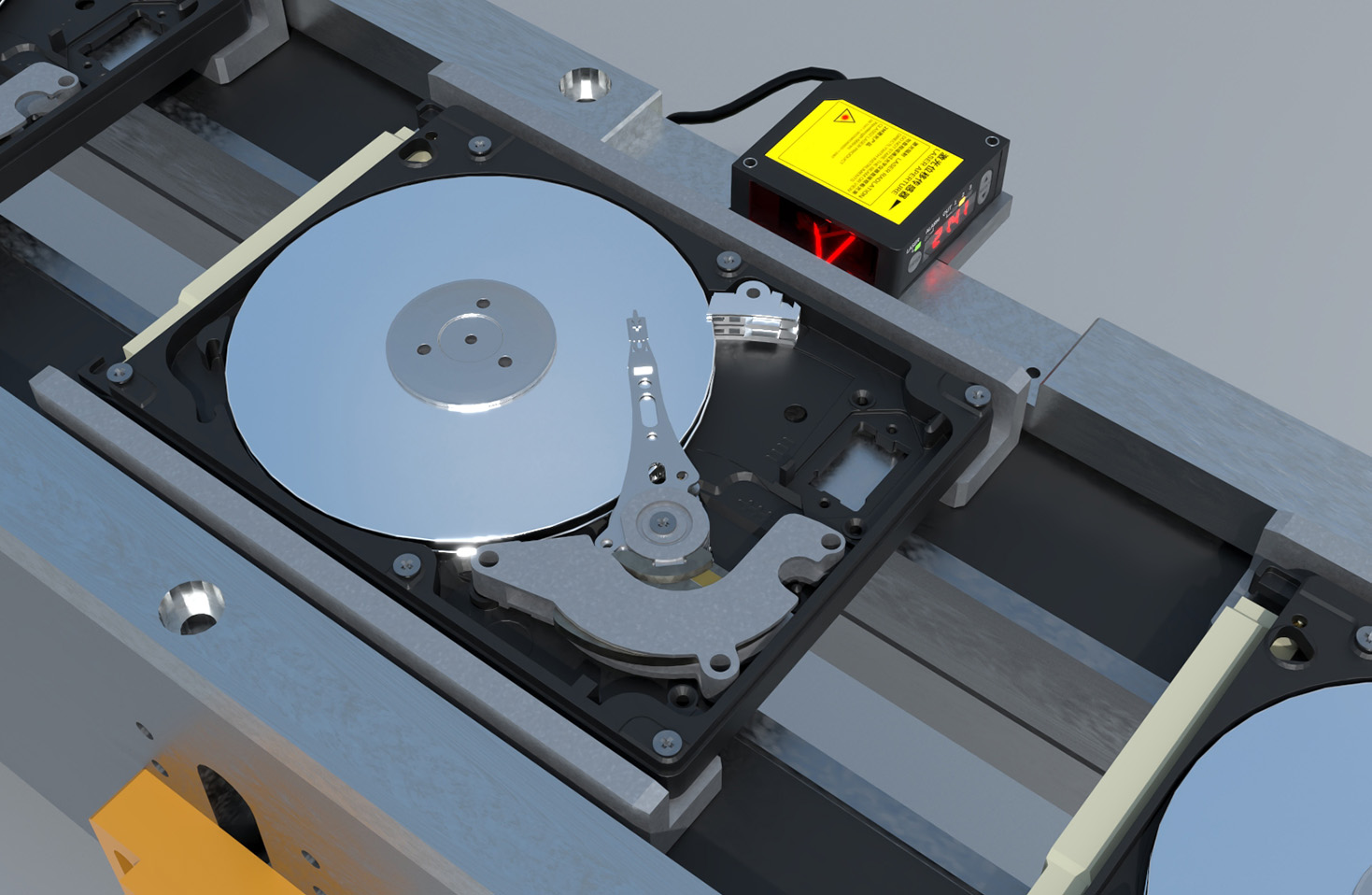
Selecting the right laser distance sensor requires a careful analysis of the application needs. Engineers must first define the required measurement range, accuracy, and response speed. The target characteristics—its size, material, surface finish, and possible movement—must be evaluated. Harsh environments may necessitate sensors with high Ingress Protection (IP) ratings, robust housings, and extended temperature ranges. The output signal type (analog voltage/current, digital IO-Link, Ethernet-based protocols like PROFINET or EtherNet/IP) must be compatible with the existing control system. Finally, considerations around mounting constraints, ease of configuration, and long-term maintenance support are essential for successful integration.
Looking ahead, the evolution of photoelectric laser distance sensors is geared towards greater miniaturization, enhanced intelligence, and improved robustness. The integration of embedded processors allows for more sophisticated onboard data processing and condition monitoring. The adoption of blue laser technology offers advantages for measuring on challenging surfaces like shiny metals or dark materials, as the shorter wavelength provides a smaller, more precise spot and better absorption. As Industry 4.0 and smart factory concepts mature, these sensors will increasingly function as intelligent data nodes, feeding rich measurement data into digital twins and predictive maintenance algorithms.
In conclusion, photoelectric laser distance sensors are a cornerstone of modern industrial measurement. Their ability to provide fast, accurate, and reliable distance data without contact makes them a versatile solution for countless automation challenges. By understanding their operating principles, key specifications, and application fit, engineers and system integrators can harness their full potential to optimize processes, ensure quality, and drive innovation in an increasingly automated world.