In the realm of precision sensing and automation, Laser Time-of-Flight (LTOF) sensors have emerged as a pivotal technology, particularly for applications demanding high-accuracy ranging and autofocus capabilities. Unlike traditional contrast-detection or phase-detection autofocus systems, LTOF sensors operate on a fundamentally different principle: they measure the time it takes for a modulated laser pulse to travel to a target object and back to the sensor. This direct time-of-flight measurement enables rapid, precise, and consistent distance calculations, independent of ambient lighting conditions or surface texture of the target.
The core architecture of an LTOF sensor system typically comprises a laser diode emitter, a specialized sensor (often a Single-Photon Avalanche Diode or SPAD array), and sophisticated timing circuitry. The laser diode emits short, controlled pulses of infrared light. These pulses reflect off the target object and are captured by the SPAD array receiver. The timing circuitry, with picosecond-level precision, calculates the exact round-trip time delay (Δt). Using the constant speed of light (c), the distance (d) to the object is derived from the fundamental equation: d = (c * Δt) / 2. This process occurs millions of times per second, generating a dense, real-time depth map of the scene.
One of the most prominent applications of LTOF technology is in advanced autofocus systems for cameras, including those in smartphones, DSLRs, and industrial machine vision systems. Here, LTOF sensors provide a decisive advantage. They can instantly determine the subject distance, allowing the lens mechanism to move directly to the correct focal position without the "hunting" behavior common in other methods. This results in significantly faster focus lock, especially in low-light scenarios where other systems struggle. Furthermore, LTOF data can be used for portrait mode effects, augmented reality (AR) scaling, and gesture recognition by creating a depth layer of the image.
Beyond consumer electronics, LTOF sensors are revolutionizing industrial automation. They are deployed in robotics for obstacle detection, navigation, and bin-picking tasks, where understanding the 3D geometry of objects is crucial. In logistics, they facilitate precise volume measurement of packages for automated sorting and storage. For human-machine interfaces (HMI) and security, LTOF enables touchless gesture control and presence detection with high reliability. Their immunity to ambient light interference makes them robust for use in challenging factory environments.
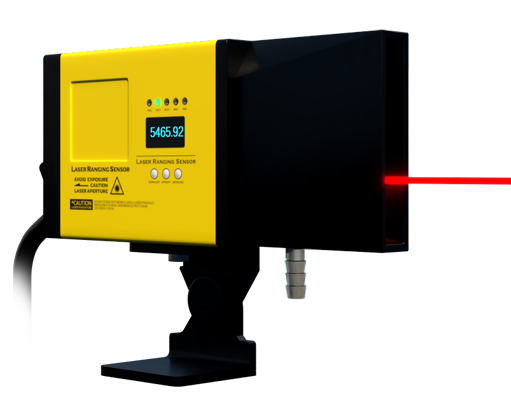
When evaluating LTOF sensors, several key performance parameters are critical. Range and Accuracy: The maximum measurable distance and the precision of each measurement (often down to millimeter level) define the sensor's scope. Field of View (FoV): This determines the angular area the sensor can cover. A wider FoV is beneficial for applications like gesture control, while a narrower one may suit long-range focusing. Frame Rate: High-speed measurement capability is essential for tracking moving objects or dynamic scenes. Power Consumption: Particularly for mobile devices, low power operation is a major design consideration. Multi-Target Capability: Advanced LTOF systems can resolve multiple distances within a single pulse, distinguishing between foreground and background objects.

However, the implementation of LTOF technology is not without challenges. Designing circuitry capable of picosecond timing resolution requires expertise and can increase cost. The performance can be affected by extremely bright sunlight or highly reflective surfaces that may saturate the sensor. Additionally, for very short ranges (a few centimeters), the time-of-flight becomes extremely short to measure accurately, though system-level calibrations and algorithms often compensate for this.

Looking forward, the evolution of LTOF sensors points towards higher integration, lower cost, and enhanced performance. The development of solid-state, scanner-less LTOF systems using VCSEL (Vertical-Cavity Surface-Emitting Laser) arrays and larger SPAD arrays is making the technology more compact and power-efficient. Sensor fusion, where LTOF data is combined with inputs from RGB cameras, IMUs, and other sensors, will unlock more sophisticated applications in autonomous vehicles, advanced robotics, and smart IoT devices.
In conclusion, LTOF laser time-of-flight sensors represent a significant leap forward in active optical ranging. By providing direct, fast, and accurate distance measurements, they have become an indispensable component in modern autofocus systems and are rapidly expanding into broader industrial and commercial landscapes. As the technology continues to mature, its role in enabling machines to perceive and interact with the physical world in three dimensions will only become more profound and widespread.