In the demanding world of industrial automation and heavy machinery, hydraulic cylinders are the workhorses of linear motion. Their reliable, powerful operation is fundamental to countless processes, from injection molding and metal stamping to construction equipment and material handling. However, ensuring precise control and real-time feedback of the piston rod's position within these cylinders is a critical challenge. This is where proximity sensors, specifically engineered for the harsh hydraulic environment, become indispensable. These non-contact sensing devices provide the vital data needed for automation, safety, and efficiency.
Unlike traditional limit switches with mechanical contacts, proximity sensors operate by detecting the presence or absence of a metallic target—typically the piston rod itself or a dedicated target ring—without physical contact. This non-contact principle eliminates wear and tear, dramatically increases operational life, and provides exceptionally fast response times. Within hydraulic cylinders, the primary function is end-of-stroke detection or intermediate position feedback, enabling programmable logic controllers (PLCs) to sequence operations accurately.
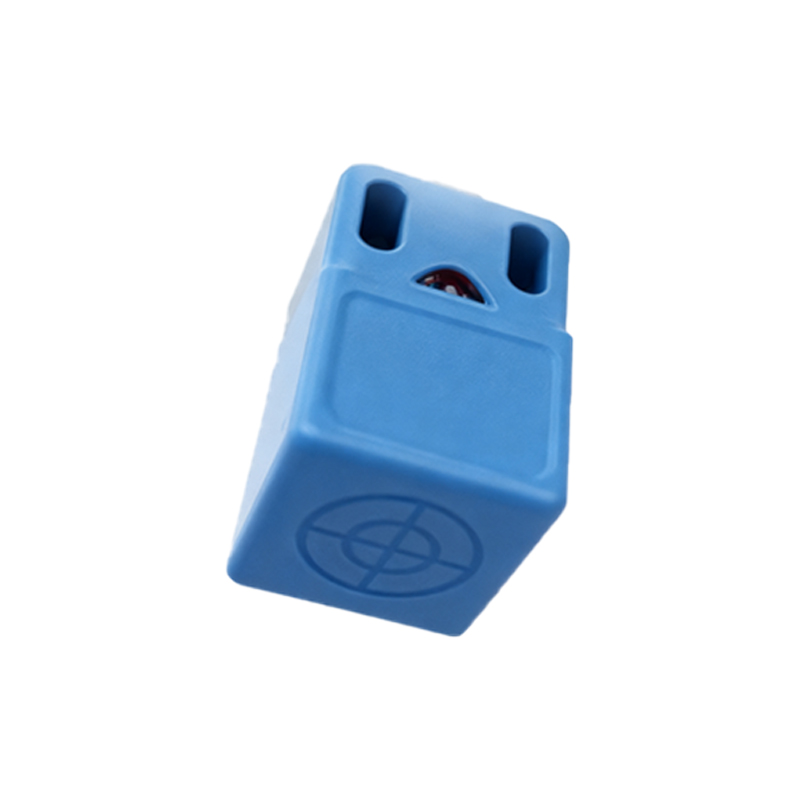
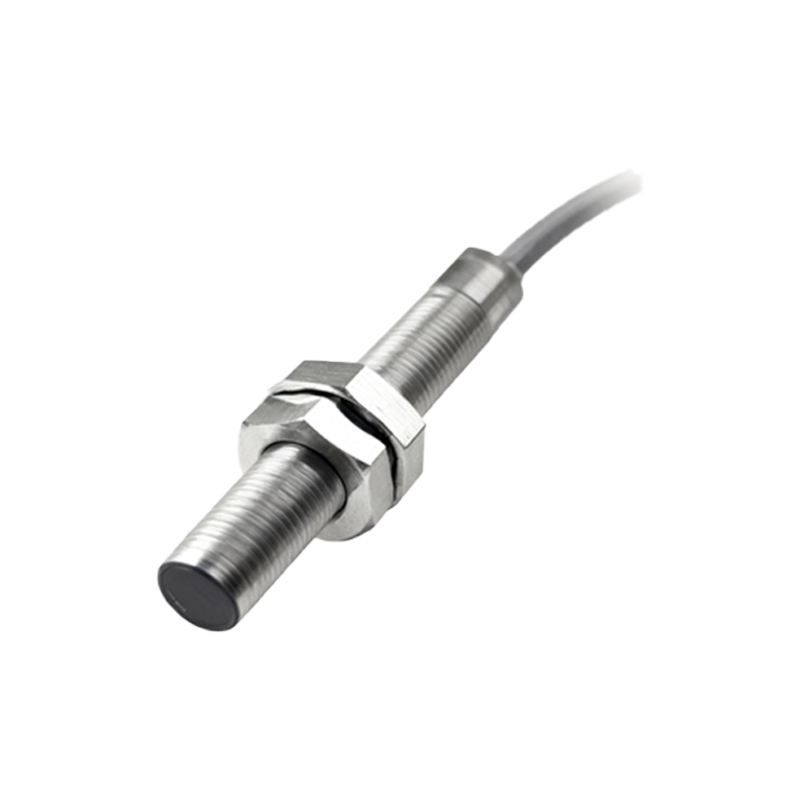
Several sensing technologies are employed, each with distinct advantages. Inductive proximity sensors are the most common choice. They generate an electromagnetic field and detect the eddy current losses induced in a metallic target. For hydraulic applications, they are prized for their robustness, resistance to dirt, oil, and coolant, and their ability to detect ferrous metals like steel piston rods through non-metallic cylinder barrel materials. Cylindrical threaded designs (e.g., M8, M12, M18) are standard, allowing for direct installation into a tapped port on the cylinder body. Magnetic field sensors, often referred to as reed switches or Hall-effect sensors, detect the magnetic field from a permanent magnet embedded in the piston. They are particularly useful when sensing through thick, non-magnetic stainless-steel cylinder walls where inductive sensors may fail. Capacitive sensors, which detect changes in capacitance, are less common in pure hydraulic fluid environments but can be used for specific non-metallic target applications.
The integration of these sensors into hydraulic cylinder design requires careful engineering. Key considerations include:
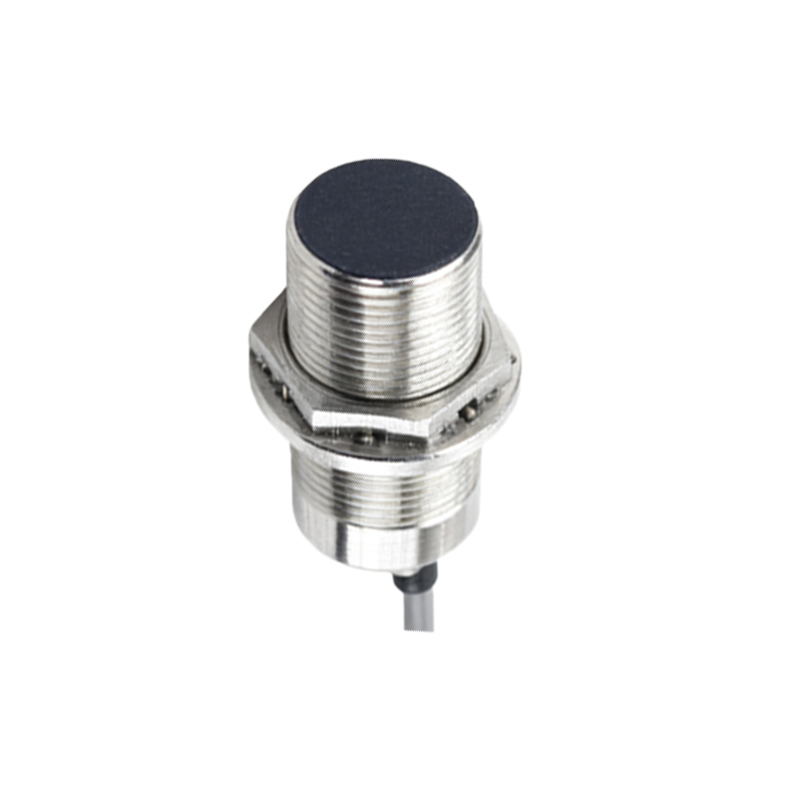
Pressure Rating: The sensor and its sealing (typically O-rings) must withstand the system's maximum operating pressure, which can exceed 300 bar. IP67, IP68, and IP69K ratings are standard for immersion and high-pressure washdown resistance.
Media Compatibility: All wetted materials must be compatible with standard hydraulic fluids (mineral oil, HFA, HFB, HFC, etc.) and resistant to degradation.
Temperature Range: Operational stability must be maintained across the cylinder's full temperature spectrum, often from -25°C to +100°C.
Electrical Output: Common outputs include DC PNP/NPN (3-wire), NAMUR (intrinsically safe for hazardous areas), and analog (4-20mA or 0-10V) for continuous position measurement. IO-Link is becoming increasingly prevalent, offering digital smart sensor capabilities for parameterization, diagnostics, and process data.
Target Material and Size: The sensor's sensing distance (snap point) is calibrated for specific metals (e.g., mild steel). Using a different material requires a correction factor. The target must be of sufficient size to ensure reliable switching.
The benefits of integrating proximity sensors are substantial. They enable precise positional control, allowing for complex, automated sequences. They enhance machine safety by providing definitive confirmation that a cylinder is fully retracted or extended before initiating the next machine cycle. This prevents collisions and dangerous malfunctions. Furthermore, they contribute to predictive maintenance. By monitoring cycle times or detecting deviations in response signals, potential issues like sluggish movement due to internal leakage or contamination can be flagged early, preventing unplanned downtime.
A critical application is in proportional valve-controlled systems. Here, continuous analog feedback from a sensor enables closed-loop control, allowing the piston to be positioned with high accuracy anywhere along its stroke, not just at the ends. This is essential in applications like press brake bending or tension control.
Installation and maintenance, while straightforward, demand attention. Sensors must be correctly torqued to achieve proper sealing without damaging the housing. Electrical connections must be secure and protected from strain and vibration. During troubleshooting, technicians should verify power supply, check for metal swarf accumulation on the sensing face (which can cause false signals), and use a multimeter or PLC diagnostics to monitor the output signal.
In conclusion, proximity sensors are far from mere add-ons; they are critical enablers of modern, intelligent hydraulic systems. By providing reliable, non-contact position feedback, they transform a basic force-generation component into a precisely controllable and diagnosable element of the Industrial Internet of Things (IIoT). Selecting the correct sensor type, with appropriate pressure, temperature, and output ratings,