Laser sensor displacement control represents a cornerstone technology in modern precision manufacturing and industrial automation. At its core, this technology utilizes the coherent properties of laser light to measure minute changes in distance or position with exceptional accuracy and speed. The fundamental principle involves projecting a focused laser beam onto a target surface. The sensor then analyzes the reflected light, using techniques such as triangulation, time-of-flight, or interferometry to calculate the exact displacement. Unlike contact-based measurement methods, laser sensors operate without physical touch, eliminating wear and enabling measurements on delicate, hot, or fast-moving objects. This non-contact nature is a primary driver for its widespread adoption.
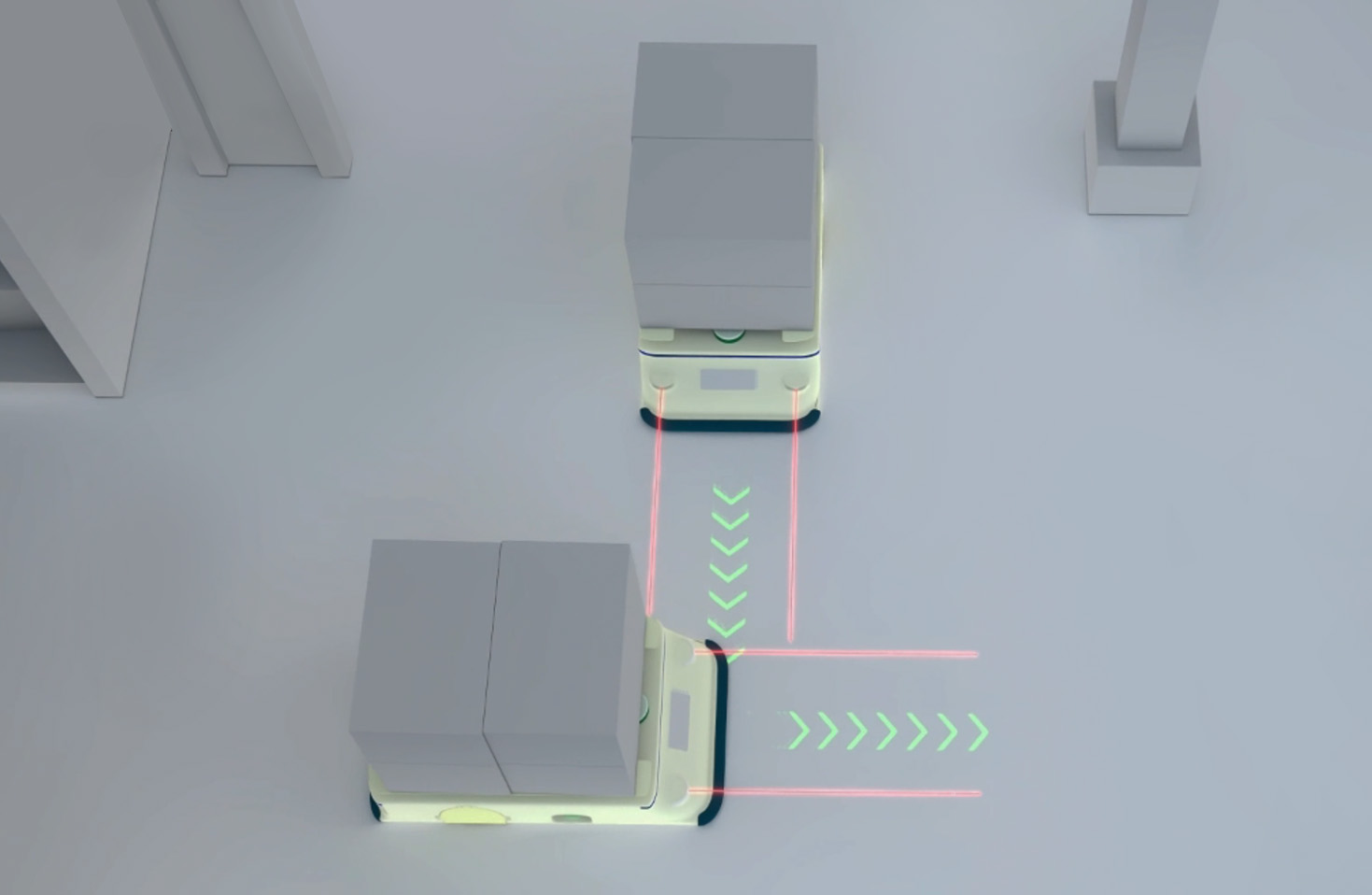
The implementation of a displacement control system extends far beyond simple measurement. It involves a closed-loop control architecture where the laser sensor acts as the "eyes" of the system. The sensor continuously feeds high-resolution positional data to a controller—often a Programmable Logic Controller (PLC) or a dedicated motion controller. This controller compares the real-time sensor data against a predefined setpoint or trajectory. If a deviation is detected, the controller generates a corrective signal that is sent to an actuator, such as a servo motor, piezoelectric stage, or hydraulic valve. The actuator then adjusts the position of the target object or the tool, thereby closing the loop. This process occurs at kHz frequencies, allowing for real-time, dynamic correction of position errors during high-speed operations.
Key performance parameters define the capability of these systems. Resolution, often down to the nanometer range, determines the smallest detectable change. Sampling speed, critical for dynamic processes, can exceed 100 kHz. Linearity error specifies the deviation from a perfect straight-line response over the measurement range. Furthermore, environmental factors like ambient light, temperature fluctuations, and surface characteristics (color, reflectivity, texture) must be carefully managed. Advanced sensors incorporate algorithms to compensate for these variables, ensuring stable and reliable data.
The applications of laser-based displacement control are vast and transformative. In semiconductor manufacturing, it is indispensable for wafer alignment, lithography stage positioning, and wire bonding, where sub-micron accuracy is mandatory. In automotive assembly, robots equipped with laser sensors perform precise seam tracking for welding and apply adhesives with consistent bead geometry. In the realm of precision machining, it enables real-time tool wear compensation and in-process inspection, dramatically reducing scrap rates. Emerging fields like additive manufacturing (3D printing) use it for layer height monitoring and distortion correction, while pharmaceutical packaging lines rely on it for fill-level verification and cap placement.
System integration is a critical phase that dictates ultimate success. Engineers must select a sensor with an appropriate measurement range, spot size, and stand-off distance for the specific task. The choice of controller and its communication protocol (e.g., EtherCAT, PROFINET, analog voltage) must ensure deterministic, low-latency data transfer. Mechanical design must minimize vibration and thermal drift, which can introduce noise into measurements. Software plays an equally vital role, providing interfaces for parameter setting, data logging, and system diagnostics. A well-integrated system seamlessly blends high-speed sensing, robust control logic, and precise actuation.
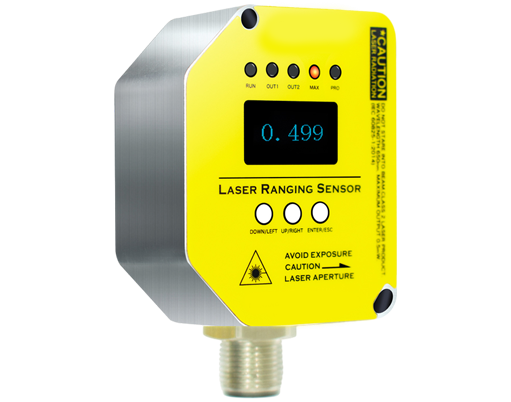
Looking ahead, the convergence of laser displacement sensing with Industrial Internet of Things (IIoT) platforms and artificial intelligence is setting new frontiers. Smart sensors with embedded edge computing can now perform preliminary data analysis, predict maintenance needs, and self-optimize their parameters. AI algorithms can learn complex process behaviors, enabling adaptive control strategies that go beyond traditional PID loops, further pushing the boundaries of precision, efficiency, and autonomy in industrial systems. This evolution ensures that laser displacement control will remain a pivotal enabler for the next generation of advanced manufacturing and quality assurance.
