Selecting the right inductive proximity sensor is critical for ensuring reliable operation in industrial automation, machinery, and control systems. These non-contact sensors detect metallic objects without physical contact, making them ideal for harsh environments where durability and precision are required. The selection process involves evaluating several key parameters to match the sensor's capabilities with the application's demands.
First, consider the sensing distance, often referred to as the nominal sensing range. This indicates the maximum distance at which the sensor can reliably detect a standard target, typically a square of mild steel. It's essential to choose a sensor with a range that accommodates the target's position and any potential variations in the application. For instance, if the target may shift slightly, a sensor with a slightly larger range than the minimum required can provide a safety margin. Always account for real-world factors like temperature fluctuations, which can affect the sensing distance, and refer to the manufacturer's derating curves if operating outside standard conditions.
The target material is another crucial factor. Inductive sensors are primarily designed to detect ferrous metals like iron and steel. However, they can also sense non-ferrous metals such as aluminum, brass, or copper, but with a reduced effective sensing range. This reduction is often expressed as a correction factor. For example, a sensor with a 10mm range for steel might only achieve 3-4mm for aluminum. Ensure the sensor's specifications list correction factors for the specific metals in your application. Additionally, the target's size, shape, and orientation matter. A target smaller than the sensor's active face or oriented at an angle may require a shorter mounting distance or a specialized sensor design.
Environmental conditions dictate the required housing material and protection rating. Common housing materials include nickel-plated brass, stainless steel, or PBT plastic. For corrosive environments, such as those in chemical processing or food and beverage industries, stainless steel housings (e.g., 303 or 316 stainless) are preferred. The Ingress Protection (IP) rating indicates resistance to dust and liquids. An IP67 rating is standard for most industrial settings, allowing temporary immersion, while IP69K is needed for high-pressure washdown applications. Temperature ranges must also be compatible; standard sensors typically operate from -25°C to +70°C, with extended ranges available for extreme conditions.
Electrical characteristics must align with the control system. Key specifications include the operating voltage (e.g., 10-30V DC or 20-250V AC), output type (PNP/NPN for DC, or NO/NC contacts), and output current. PNP (sourcing) and NPN (sinking) outputs are common in DC sensors and must match the PLC or controller input type. The output current should be sufficient to drive the connected load, such as a relay or PLC input module, without exceeding the sensor's maximum rating. Consider whether a normally open (NO) or normally closed (NC) configuration is needed based on the safety and logic requirements of the circuit.
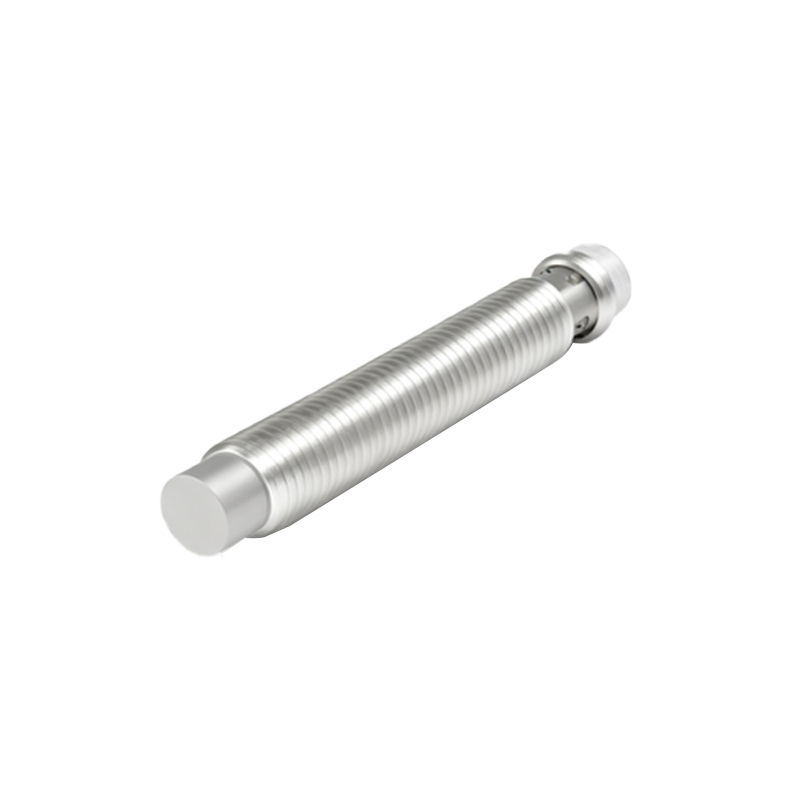
Physical dimensions and mounting style are practical considerations. Cylindrical sensors (e.g., M8, M12, M18, M30 threaded barrels) are widely used and easy to install in drilled holes. Rectangular or block-style sensors offer alternative form factors for space-constrained applications. The mounting method—flush, non-flush, or partially flush—affects the sensing range. Non-flush mountable sensors offer longer ranges but require clearance around the sensing face, while flush-mountable types can be embedded in metal without interference from surrounding material.
Additional features can enhance functionality. Short-circuit and overload protection safeguards the sensor and connected equipment from electrical faults. LED status indicators provide visual confirmation of operation and diagnostics. For applications with high electromagnetic interference (EMI), models with enhanced noise immunity are advisable. In high-speed counting or positioning tasks, consider the sensor's switching frequency—the maximum number of on/off cycles per second. A higher frequency ensures accurate detection of fast-moving targets.
Finally, always consult the manufacturer's datasheets for detailed specifications and application notes. Real-world testing with the actual target and under expected operating conditions is recommended to validate performance. By systematically evaluating sensing distance, target material, environment, electrical needs, physical constraints, and special features, engineers can select an inductive proximity sensor that delivers long-term reliability, accuracy, and efficiency, minimizing downtime and maintenance costs in automated systems.