Determining the optimal number of laser sensors for an industrial system is a critical engineering decision that balances performance, cost, and reliability. Unlike a simple component count, this calculation hinges on a systematic analysis of the application's specific requirements. The core principle is that the quantity must satisfy the functional need without introducing unnecessary complexity or expense.
The first and most fundamental factor is the measurement task and coverage area. A single point measurement, such as checking the presence or height of an object on a conveyor, often requires only one sensor. However, for profiling or contour mapping—like verifying the dimensional accuracy of a machined part—a linear array or multiple sensors positioned at strategic points are necessary. For large-area monitoring, such as intrusion detection in a warehouse or ensuring operator safety around robotic cells, a network of sensors creating a light curtain or a scanning LiDAR system is essential. The physical size of the target zone directly dictates the minimum sensor count to achieve complete coverage without blind spots.
Next, consider accuracy and resolution requirements. High-precision applications, such as semiconductor wafer alignment or micrometer-level thickness gauging, may demand multiple sensors to perform triangulation or differential measurements, compensating for potential errors from a single point of view. Redundancy through multiple sensors can also be used to average readings, reducing noise and improving overall measurement certainty. In dynamic environments with vibration or thermal drift, additional sensors can provide reference points to correct for systemic errors.
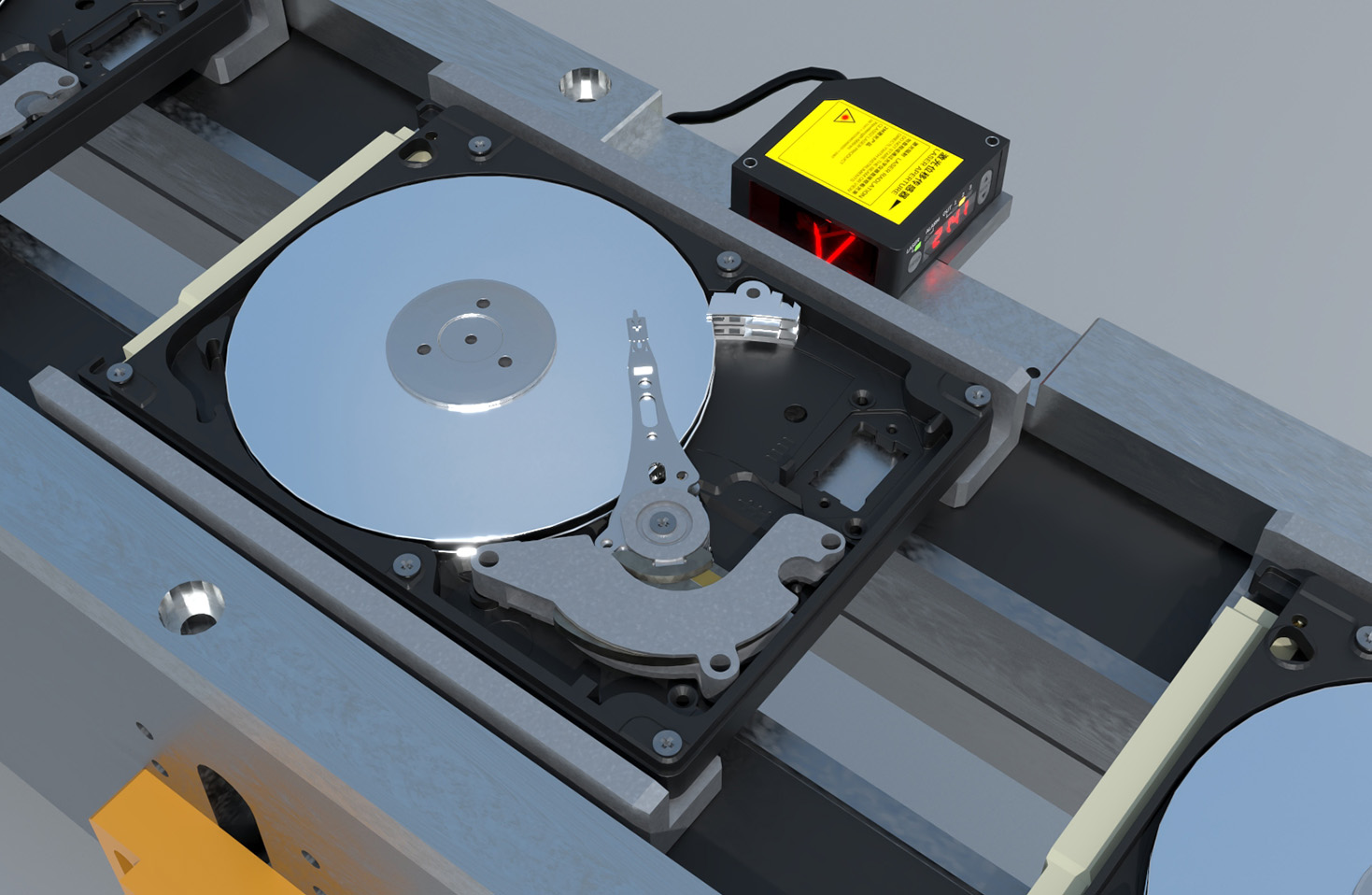
Process speed and sampling rate are equally decisive. A fast-moving production line might require multiple sensors positioned along the path to capture sufficient data points for a reliable measurement, as a single sensor's sampling frequency may be inadequate. Alternatively, for high-speed object counting or sorting, synchronized pairs of sensors (e.g., a break-beam setup) are often more reliable than a single reflective sensor, ensuring no missed counts even at extreme velocities.
Environmental constraints and robustness play a major role. Harsh environments with dust, steam, or intense ambient light can interfere with laser signals. In such cases, it might be more effective to use several lower-powered or differently angled sensors to ensure at least one maintains a clear line of sight, rather than relying on a single, potentially compromised unit. Redundancy here is a design feature for fault tolerance, ensuring the system remains operational even if one sensor's performance degrades temporarily.
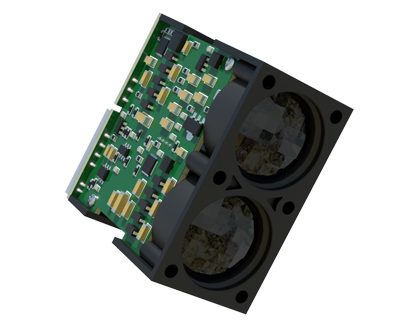
Finally, system architecture and integration influence the count. Modern industrial networks (like IO-Link or PROFINET) allow for the seamless integration of multiple smart sensors. The decision may involve choosing between a few sophisticated, multi-function sensors versus a greater number of simpler, dedicated units. Centralized versus distributed control philosophies also affect this choice. A distributed system might employ several simpler sensors with local preprocessing, while a centralized system might gather raw data from many points to a single controller.
A practical methodology involves these steps:
1. Define the Primary Objective: What exact data must be captured (position, presence, profile, speed)?
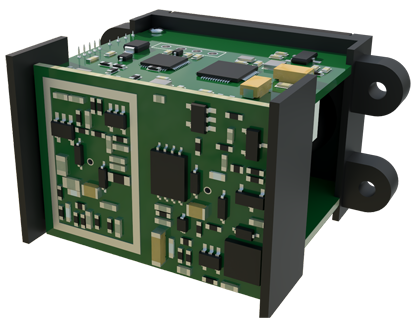
2. Map the Physical Geometry: Diagram the target, its path, and the required coverage zone.
3. Specify Performance Parameters: Determine necessary accuracy, resolution, and response time.
4. Assess Environmental Factors: Account for obstacles, interference sources, and ambient conditions.
5. Evaluate Redundancy Needs: Decide on the level of fault tolerance and data verification required.
6. Model and Simulate: Use CAD layouts and sensor datasheets to model sightlines and coverage before physical installation.
In conclusion, there is no universal formula. A simple pick-and-place robot may need only two sensors (one for part presence, one for bin emptying), while a complex coordinate measuring machine (CMM) or autonomous guided vehicle (AGV) might integrate dozens of laser sensors, LiDAR, and time-of-flight cameras. The key is to start from the application's fundamental need and let that drive the specification, avoiding both under-sensing, which risks system failure, and over-sensing, which incurs unnecessary capital and maintenance costs. Always consult sensor manufacturer application engineers during the design phase; their expertise can help optimize the type, placement, and quantity for maximum efficiency and ROI.