Laser sensors have become indispensable tools in modern industrial automation, offering unparalleled precision for distance measurement, object detection, and positioning tasks. A fundamental parameter defining their performance is the sensing distance, which refers to the maximum range at which a sensor can reliably detect a target. This distance is not a single fixed value but a complex characteristic influenced by a confluence of factors. Understanding these factors is crucial for engineers and system integrators to select the appropriate sensor for a given application, ensuring optimal performance, reliability, and cost-effectiveness.
The core principle behind laser distance sensing typically involves time-of-flight (ToF) or triangulation methods. In ToF sensors, the distance is calculated by measuring the time it takes for a laser pulse to travel to the target and back. Triangulation sensors, often used for shorter, high-precision ranges, project a laser spot onto the target, and the reflected light is focused onto a position-sensitive detector; the spot's position on this detector correlates directly to the distance. The specified sensing distance in a datasheet is determined under ideal, standardized conditions known as reference conditions.
Several key factors directly impact the effective sensing distance in real-world scenarios. The first is target properties. The color, surface finish, and material of the target significantly affect the amount of laser light reflected back to the sensor. A clean, white, matte surface provides optimal diffuse reflection, maximizing range. In contrast, dark, black, or highly polished surfaces absorb or specularly reflect the beam, drastically reducing the effective sensing distance. Manufacturers often provide reduction factors for different colors and materials. The size and shape of the target also matter; a small or angled target may not reflect sufficient light.
Environmental conditions pose another major challenge. Ambient light, especially strong sunlight containing infrared components, can flood the sensor's receiver, creating noise and reducing the signal-to-noise ratio. This can shorten the practical sensing distance or cause false readings. Contaminants like dust, fog, steam, or oil mist in the air can scatter and attenuate the laser beam, reducing its intensity both ways. Many industrial-grade sensors incorporate background suppression technologies or use modulated laser light to mitigate ambient light interference.

Sensor-specific parameters are equally critical. The output power of the laser diode is a primary determinant; a higher-power laser can maintain a detectable signal over a longer distance. However, laser power is strictly regulated by safety classes (e.g., Class 1, Class 2) for eye safety. The quality and size of the receiving lens (aperture) determine how much reflected light can be collected. Advanced optics and sensitive photodetectors enhance long-range capability. The sensor's electronic design, including its ability to filter noise and process weak signals, defines its resolution and stability at the limits of its range.
For precise applications, understanding the concept of the "reference plane" is essential. The sensing distance is usually specified relative to a standard white, diffuse target (e.g., Kodak White). If the actual target has lower reflectivity, the usable distance decreases. Engineers must apply the correction factor from the datasheet. For instance, if a sensor has a 10m range on a white target and a 0.1 factor for black felt, its effective range for black felt is only 1m.
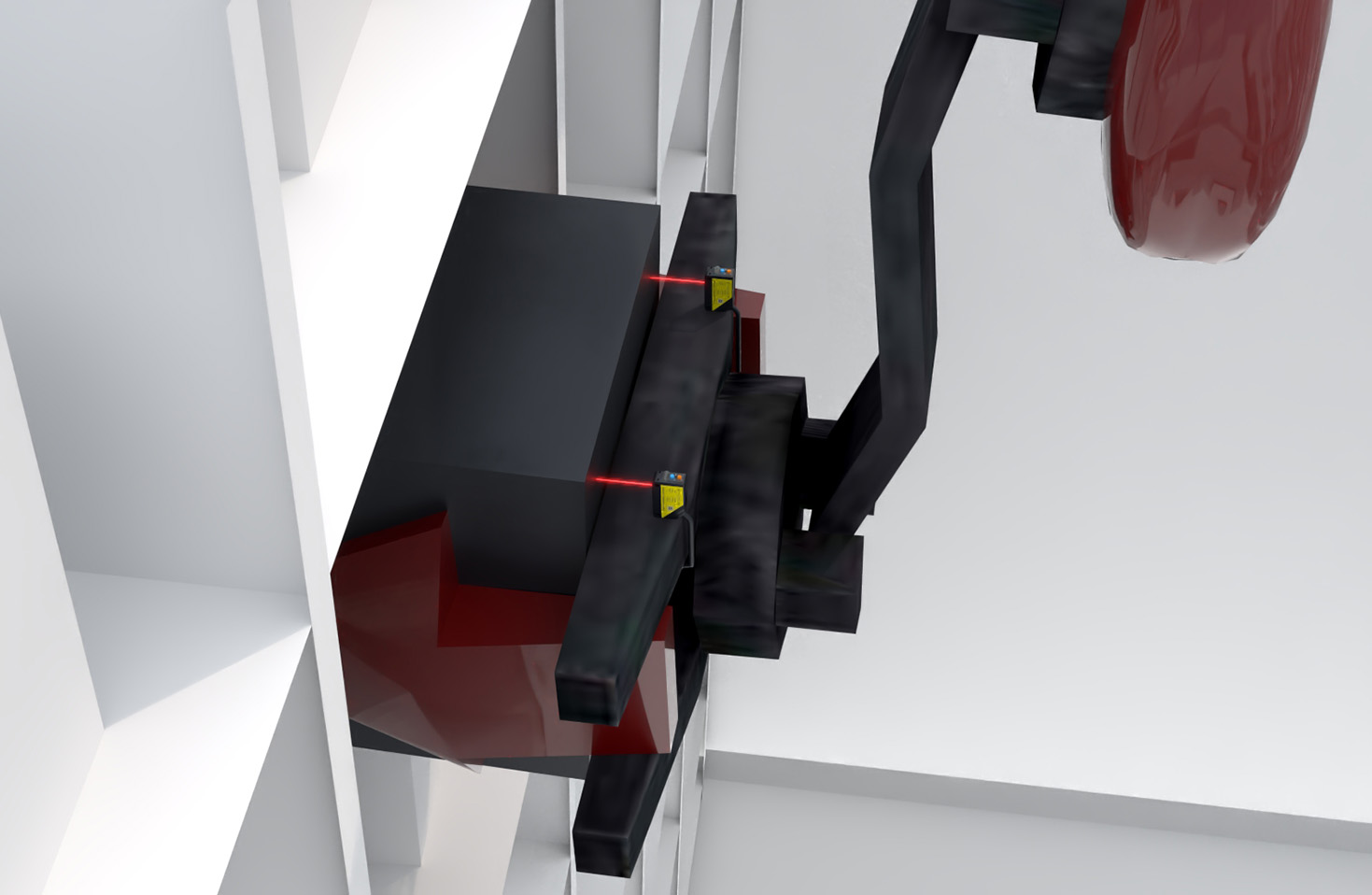
Applications dictate the required sensing distance and performance. In logistics, for automated guided vehicles (AGVs), long-range sensors (up to tens of meters) are used for navigation and obstacle detection. In robotics for bin picking, medium-range sensors with high accuracy are needed for precise positioning. On assembly lines, short-range sensors verify part presence or measure tiny dimensions. Choosing a sensor with excessive range for a short-distance task can be unnecessarily costly and sometimes less stable due to higher sensitivity to environmental noise.
In conclusion, the laser sensor sensing distance is a dynamic specification. Successful implementation requires a holistic analysis beyond the datasheet number. Engineers must carefully evaluate the target characteristics, the operating environment, and the specific sensor technology. By accounting for reflectivity, ambient conditions, and required precision, one can ensure that the laser sensor delivers reliable, accurate, and consistent performance, forming a robust foundation for advanced automation systems. Proper selection and installation mitigate common pitfalls, maximizing the return on investment in sensing technology.