Turbidity measurement is a critical parameter in numerous industrial processes, from water treatment and beverage production to pharmaceutical manufacturing and chemical processing. The laser turbidity sensor represents a significant technological advancement over traditional nephelometric or optical methods, offering superior accuracy, stability, and reliability. This article delves into the operational principles, key advantages, and diverse applications of modern laser turbidity sensors in industrial settings.
At its core, a laser turbidity sensor operates on the principle of light scattering. It emits a highly focused, coherent beam of laser light into the medium being measured. When this light encounters suspended particles—such as silt, microorganisms, or chemical precipitates—the particles scatter the light in all directions. The sensor typically employs a sophisticated optical system to detect the intensity of this scattered light at a specific angle, often 90 degrees, which is most sensitive to particle concentration. Some advanced models also incorporate backscatter or forward-scatter detection for an extended measurement range or to handle different particle sizes. The detected light signal is then processed by an onboard microprocessor, which correlates the scattering intensity to turbidity units, such as Nephelometric Turbidity Units (NTU) or Formazin Nephelometric Units (FNU).
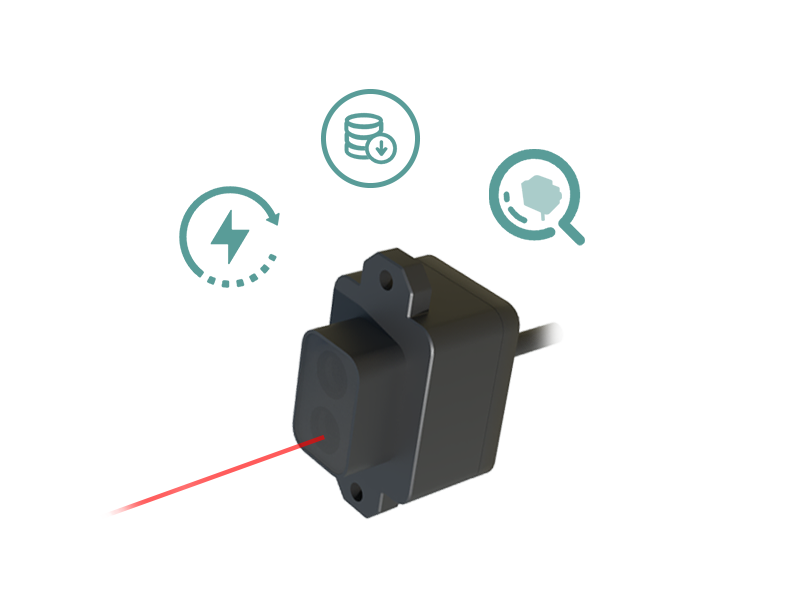
The advantages of laser-based technology are manifold. First and foremost is precision. The coherent nature of laser light minimizes interference from ambient light and provides a stable, intense light source, resulting in highly repeatable measurements with very low detection limits, often down to 0.01 NTU. This is crucial for applications like ultrapure water monitoring. Secondly, laser sensors exhibit exceptional long-term stability. They are less prone to drift caused by fouling or aging of the light source compared to conventional LED-based sensors, reducing maintenance frequency and calibration needs. The focused beam is also less susceptible to errors from color absorption in the sample, providing a measurement that is more specific to suspended solids alone.
Furthermore, modern laser turbidity sensors are designed for robustness. They often feature rugged, sanitary housings made of stainless steel or other corrosion-resistant materials, allowing for direct immersion (in-line) or bypass (on-line) installation in demanding process environments. Integrated self-cleaning mechanisms, such as mechanical wipers or air blast systems, help maintain optical clarity and ensure continuous, reliable operation even in challenging fluids prone to coating or buildup.
The industrial applications for these sensors are extensive. In water and wastewater treatment, they are indispensable for monitoring influent quality, controlling chemical dosing in clarification processes, and ensuring effluent compliance. In the food and beverage industry, laser turbidity sensors guarantee the clarity of products like beer, wine, juices, and bottled water. They monitor filter performance and detect unwanted haze or particulate contamination. The pharmaceutical industry relies on them for monitoring water-for-injection (WFI) and pure steam condensate, where even minute particulate levels can be critical. Other applications include monitoring coolant purity in power plants, detecting leaks in heat exchangers via condensate quality, and controlling processes in the pulp and paper and chemical manufacturing sectors.
When selecting a laser turbidity sensor, engineers must consider several factors: the required measurement range (from near-zero to high turbidity), the process pressure and temperature, the chemical compatibility of wetted materials, the necessary output signals (4-20mA, digital protocols like Modbus, Profibus), and any certifications required for the industry (e.g., 3-A, EHEDG for food, or SIL for safety systems). Proper installation is also key; ensuring a representative sample flow across the sensor window and minimizing air bubbles are essential for accurate readings.
In conclusion, the laser turbidity sensor is a sophisticated instrument that has become a cornerstone of modern industrial process control and quality assurance. Its unparalleled accuracy, stability, and durability make it the preferred choice for critical turbidity measurements across a wide spectrum of industries. As sensor technology continues to evolve with features like digital twin integration and advanced diagnostics, its role in enabling efficient, compliant, and automated industrial operations will only grow more significant.