In the realm of industrial automation and control systems, proximity switches stand as fundamental components for non-contact object detection. Among the various configurations, the three-wire SLCK proximity sensor represents a prevalent and highly reliable standard. This article delves into the technical intricacies, operational principles, application considerations, and advantages of the three-wire SLCK proximity switch, providing a comprehensive guide for engineers and technicians.
Fundamentally, a proximity switch is a sensor that detects the presence or absence of an object without physical contact. The "SLCK" designation, while not a universal standard acronym, is commonly encountered in industry catalogs and often refers to a specific series or model family featuring a particular housing style, sensing distance, and electrical characteristics. The "three-wire" configuration is critical, distinguishing it from two-wire variants by offering superior performance and stability.
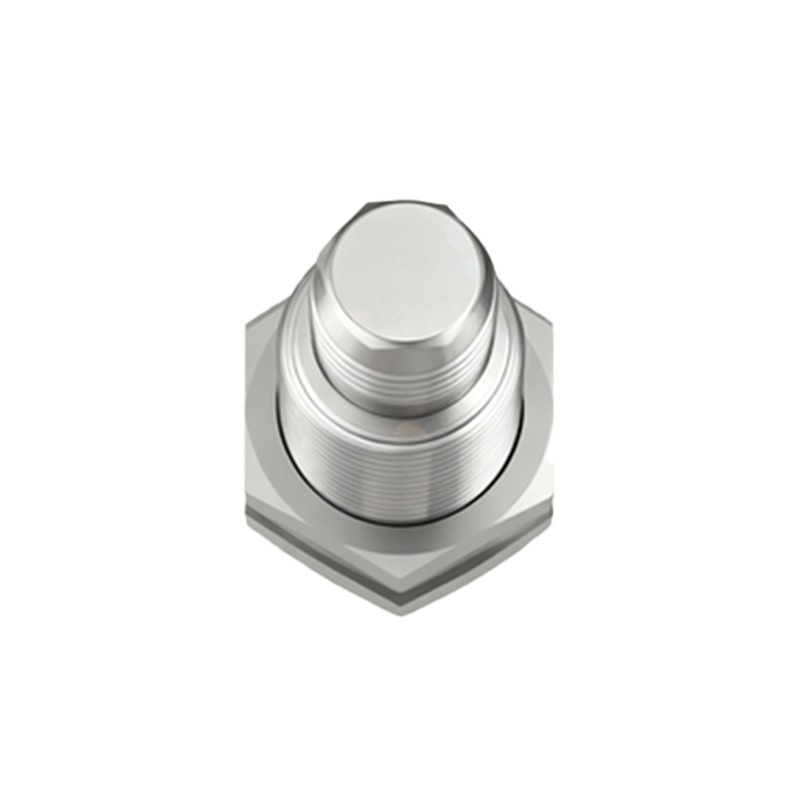
The core of a three-wire SLCK proximity switch typically utilizes an inductive sensing principle for detecting metallic targets. It consists of a coil, an oscillator, a trigger circuit, and a solid-state switching element. When the sensor is powered, the oscillator generates a high-frequency electromagnetic field at the active face. When a metallic object enters this field, eddy currents are induced in the target, causing a dampening or loading of the oscillator's amplitude. This change is detected by the trigger circuit, which subsequently commands the output switch to change state.
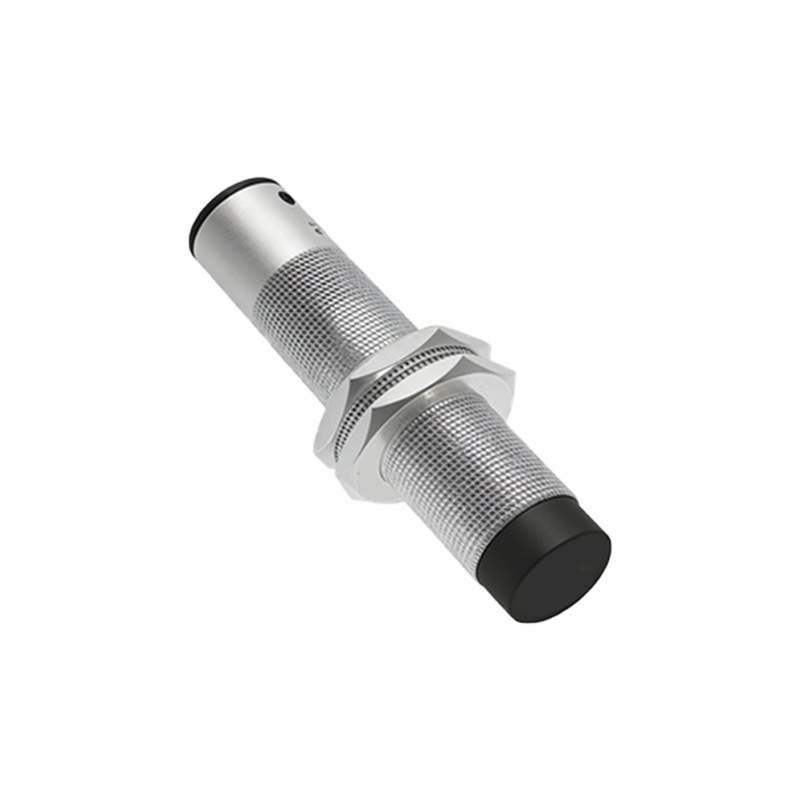
The three wires are designated as follows: Brown wire (+V, typically 10-30V DC), Blue wire (0V or Common), and Black wire (Output). This configuration separates the power supply lines (Brown and Blue) from the output signal line (Black), which is a hallmark of its design. The output is typically a transistor, either NPN (sinking) or PNP (sourcing). In an NPN configuration, the black wire connects the load to ground (0V) when active. In a PNP configuration, the black wire supplies positive voltage to the load when active. This clear separation eliminates leakage current issues common in two-wire sensors and allows for direct interfacing with programmable logic controller (PLC) inputs, counters, and other low-power control devices.
Key technical specifications define the SLCK series' application suitability. The sensing distance, or "Sn," is a rated value for standard targets (usually mild steel). Factors like target material, size, and shape influence the actual sensing range. For non-ferrous metals, the effective sensing distance is reduced. The housing material, often nickel-plated brass or stainless steel in SLCK models, provides robustness against mechanical impact, coolant, and oil, making them ideal for harsh industrial environments like machine tools, material handling, and automotive assembly lines.
Electrical characteristics are paramount. The operating voltage range, typically 10-30V DC, offers flexibility. The output current rating, often around 200mA, defines the maximum load the switch can control directly. A critical feature is the short-circuit and reverse polarity protection commonly built into these devices, enhancing system durability. The response frequency, indicating how quickly the sensor can detect objects passing by, is crucial for high-speed counting or positioning applications.
Installation and wiring require attention. Maintaining the proper clearance around the sensor head is essential to prevent false triggering from surrounding metal (side or flush mounting specifications). The wiring must be correct: Brown to positive DC, Blue to negative DC, and Black to the load. For an NPN sensor, the load is connected between the Black wire and positive supply; for a PNP, between Black wire and ground. Shielding or twisted-pair cables are recommended for long runs in electrically noisy environments to prevent electromagnetic interference (EMI) from causing erratic operation.
The advantages of the three-wire SLCK design are significant. Compared to two-wire sensors, they exhibit minimal residual current (leakage) when off, ensuring reliable switching of sensitive PLC inputs. They offer faster switching speeds and higher precision. The dedicated output line provides a clean, digital signal. Their rugged construction ensures longevity in demanding conditions. When selecting an SLCK sensor, engineers must consider the target material, required sensing distance, environmental factors (IP rating for ingress protection), output type (NPN/PNP) to match the control system, and electrical requirements.
In conclusion, the three-wire SLCK inductive proximity switch is a workhorse of industrial sensing. Its robust three-wire design provides a reliable, precise, and durable solution for countless automation tasks. Understanding its operating principles, specifications, and correct implementation is essential for designing and maintaining efficient, fault-resistant control systems. As technology evolves, these sensors continue to integrate advanced features like IO-Link connectivity, but the fundamental reliability of the three-wire SLCK architecture ensures its enduring relevance on the factory floor.