In industrial automation, laser sensors are widely employed for precision positioning due to their high accuracy, fast response, and non-contact measurement capabilities. However, engineers often encounter challenges with positioning inaccuracy, which can disrupt production lines, reduce product quality, and increase operational costs. Understanding the root causes and implementing effective solutions is crucial for maintaining system reliability.
One primary factor contributing to laser sensor inaccuracy is environmental interference. Industrial settings typically involve dust, smoke, vibrations, and temperature fluctuations. Dust particles or smoke can scatter the laser beam, leading to erroneous distance readings. Vibrations from machinery may cause sensor misalignment, while temperature changes can affect the sensor's electronic components and the wavelength of the laser, altering measurement results. To mitigate these issues, it is recommended to install protective enclosures, use sensors with built-in environmental compensation, and ensure stable mounting structures. Regular maintenance, such as cleaning lenses and checking alignment, is also essential.
Another common cause is improper sensor selection or configuration. Laser sensors come in various types, including time-of-flight, triangulation, and confocal sensors, each suited for specific applications. Using an inappropriate sensor for a given task—for example, selecting a sensor with inadequate resolution or range—can result in positioning errors. Additionally, incorrect parameter settings, such as sampling rate or filtering options, may lead to data inaccuracies. Engineers should carefully assess application requirements, consult manufacturer specifications, and perform thorough testing during installation. Calibration against known reference points is vital to ensure accuracy over time.
Signal processing and data interpretation also play a significant role. Noise in the signal can distort measurements, especially in high-speed operations. Implementing advanced filtering algorithms, such as moving averages or Kalman filters, can help reduce noise and enhance signal clarity. Furthermore, integrating sensors with robust software that includes error-checking and real-time adjustment features can improve positioning precision. In networked systems, communication delays or data packet loss might introduce latency, affecting synchronization. Using high-speed interfaces like Ethernet/IP or PROFINET, along with error-correction protocols, can address these concerns.
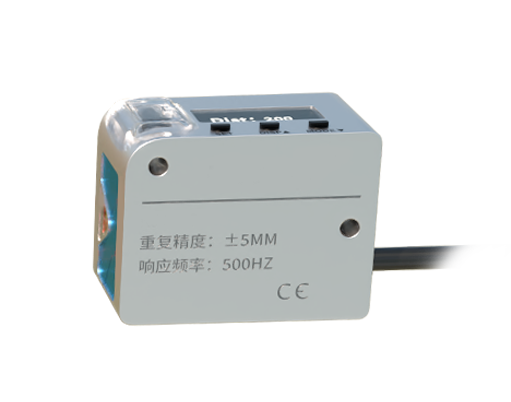
Mechanical factors should not be overlooked. Wear and tear on moving parts, such as guide rails or actuators, can cause positional drift. Regular inspection and lubrication of mechanical components are necessary to prevent degradation. Additionally, ensuring proper installation—such as avoiding angular misalignment or securing mounting brackets—can minimize inaccuracies. In some cases, combining laser sensors with complementary technologies, like vision systems or encoders, provides redundancy and improves overall system robustness.
Human error during operation or maintenance is another potential source of inaccuracy. Inadequate training may lead to incorrect handling or calibration procedures. Providing comprehensive training for personnel and establishing clear standard operating procedures (SOPs) can reduce such risks. Documentation of maintenance logs and performance audits also aids in tracking issues and implementing corrective actions promptly.
In conclusion, addressing laser sensor positioning inaccuracy requires a holistic approach. By considering environmental, technical, mechanical, and human factors, engineers can enhance sensor performance. Proactive measures, including proper selection, calibration, maintenance, and integration, are key to achieving reliable and accurate positioning in industrial applications. As technology advances, emerging solutions like AI-based error correction and enhanced sensor materials may offer further improvements, but foundational best practices remain indispensable for operational excellence.