In modern industrial automation and precision measurement, laser multi-parameter sensors have emerged as pivotal tools, offering unparalleled accuracy, speed, and versatility. These advanced devices integrate multiple sensing capabilities—such as distance, displacement, velocity, vibration, and profile measurement—into a single compact unit, leveraging laser technology to deliver non-contact, high-resolution data across diverse environments. Unlike traditional single-function sensors, laser multi-parameter sensors provide a holistic solution for complex monitoring tasks, reducing system complexity and enhancing operational efficiency.
The core technology behind these sensors typically involves laser triangulation, time-of-flight (ToF), or interferometric principles. For instance, laser triangulation sensors project a laser beam onto a target surface, and a receiver detects the reflected light's position to calculate distance or displacement with micron-level precision. This method is ideal for applications requiring high-resolution measurements, such as surface inspection, thickness gauging, or alignment in manufacturing lines. Meanwhile, ToF-based sensors measure the round-trip time of a laser pulse to determine distance, excelling in long-range applications like level monitoring in silos or vehicle detection in logistics. By combining these techniques, multi-parameter sensors can simultaneously track multiple variables, such as monitoring a rotating shaft's vibration while measuring its rotational speed, all without physical contact that could introduce wear or inaccuracies.
Key advantages of laser multi-parameter sensors include their robustness in harsh industrial settings. Many models are designed with IP67 or higher ratings, ensuring resistance to dust, moisture, and temperature fluctuations. This durability makes them suitable for sectors like automotive manufacturing, where they inspect weld seams or measure component dimensions on fast-moving assembly lines. In the aerospace industry, these sensors verify turbine blade profiles and monitor engine vibrations during testing, contributing to safety and performance optimization. Additionally, in renewable energy, they assist in solar panel alignment and wind turbine blade inspection, supporting sustainable infrastructure development.

Integration with Industry 4.0 frameworks is another significant benefit. Laser multi-parameter sensors often feature digital interfaces (e.g., Ethernet/IP, PROFINET, IO-Link) that enable seamless connectivity to PLCs, SCADA systems, or cloud platforms. This connectivity facilitates real-time data analytics, predictive maintenance, and automated control loops. For example, in a smart factory, a sensor might continuously measure product dimensions on a conveyor belt, sending data to a central system that adjusts machinery parameters instantly to correct deviations, minimizing waste and downtime. The ability to monitor multiple parameters concurrently also reduces the need for multiple sensor installations, lowering costs and simplifying calibration processes.
When selecting a laser multi-parameter sensor, engineers should consider factors like measurement range, resolution, sampling rate, and environmental compatibility. For high-speed applications, such as monitoring paper web tension in printing, a sensor with a fast sampling rate (e.g., 10 kHz or higher) is essential to capture rapid changes. In contrast, applications involving reflective or dark surfaces may require sensors with adaptive laser power or specialized optics to ensure reliable readings. Calibration and alignment are critical too; proper setup ensures accuracy, and many modern sensors include auto-calibration features or software tools for easy configuration.
Looking ahead, advancements in laser diode technology, miniaturization, and AI-driven data processing are set to expand the capabilities of these sensors. Emerging trends include the integration of hyperspectral imaging for material analysis and enhanced wireless connectivity for IoT deployments. As industries strive for greater precision and automation, laser multi-parameter sensors will continue to play a vital role in driving innovation, from quality control in electronics manufacturing to robotic guidance in agriculture.
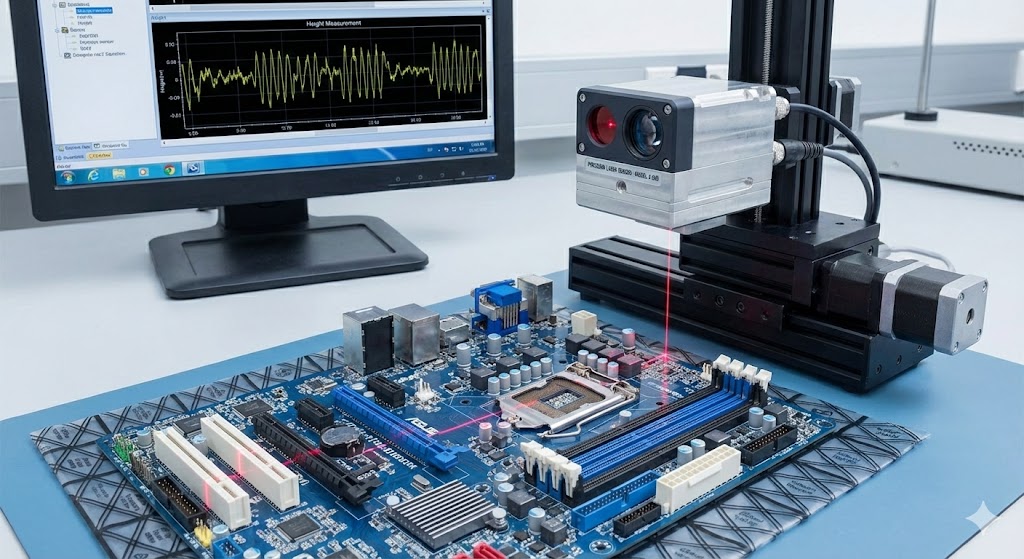
In summary, laser multi-parameter sensors represent a convergence of optical engineering and digital intelligence, offering a powerful means to optimize industrial processes. By delivering comprehensive, real-time insights into multiple physical parameters, they empower engineers to achieve higher productivity, improved product quality, and reduced operational risks, solidifying their status as indispensable tools in the modern technological landscape.