In the realm of precision measurement and industrial automation, CCD laser displacement sensors have established themselves as indispensable tools. These devices offer non-contact, high-speed, and highly accurate measurement capabilities, making them vital across numerous sectors from manufacturing to research and development. Understanding their core technology, operational principles, and key application areas is essential for engineers and technicians seeking to leverage their full potential.
At its heart, a CCD laser displacement sensor operates on the principle of optical triangulation. The sensor projects a focused laser beam onto the target surface. The diffusely reflected light from this point is then collected by a receiving lens and imaged onto a Charge-Coupled Device (CCD) array. The CCD is a light-sensitive integrated circuit that converts the optical signal into an electrical one. The fundamental measurement principle is straightforward: if the target's distance changes, the position of the laser spot on the CCD array shifts correspondingly. By precisely calculating this positional shift on the CCD, the sensor's internal processor can determine the exact displacement or distance to the target with remarkable accuracy. This method allows for measurements that are immune to the wear and tear associated with contact probes and are unaffected by the target's material in most cases, provided it is not perfectly specular.
The advantages of using CCD-based laser sensors are numerous. They provide exceptional resolution, often down to the sub-micron level, and can achieve high sampling rates, making them suitable for dynamic measurements on moving objects. Their non-contact nature prevents damage to both the sensor and delicate target surfaces. Furthermore, modern sensors are designed to be robust, withstanding industrial environments featuring vibration, dust, and varying temperatures. Many models incorporate advanced features like automatic background suppression, which filters out ambient light, and multi-peak detection, which can handle measurements on transparent or complex surfaces.
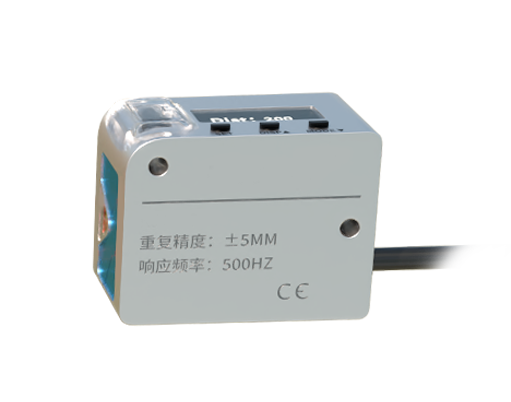
The applications for CCD laser displacement sensors are vast and varied. In the automotive industry, they are used for precise gap and flush measurement between body panels, thickness inspection of brake pads, and vibration analysis of components. In electronics manufacturing, they ensure the coplanarity of chip leads, measure solder paste height, and inspect surface mount technology (SMT) components. Within the realm of metal processing, these sensors monitor thickness during rolling processes, control robot positioning for welding, and measure the wear of cutting tools. They also play a critical role in quality control for products like paper, films, and rubber, where consistent thickness is paramount.
Selecting the right CCD laser displacement sensor requires careful consideration of several parameters. The measurement range defines the minimum and maximum distances over which the sensor can operate accurately. The stand-off distance is the optimal working distance from the sensor head to the target. Resolution indicates the smallest detectable change in distance, while linearity reflects the accuracy across the entire measurement range. The spot size of the laser is crucial for measuring small features or edges. Sampling speed must be matched to the target's velocity. Finally, environmental factors such as ambient light, temperature stability, and the presence of dust or coolant must be accounted for, often necessitating sensors with appropriate ingress protection (IP) ratings.
When integrating these sensors, best practices involve meticulous mounting to minimize vibration, ensuring a stable power supply, and calibrating the sensor using a master sample of known dimensions. Proper alignment of the laser beam perpendicular to the target surface is critical for optimal performance. For challenging surfaces like transparent glass or shiny metals, using sensors with specialized algorithms or applying a matte coating to the target can improve results.
In conclusion, CCD laser displacement sensors represent a mature yet continually evolving technology that provides a critical link between physical dimensions and digital control systems. Their ability to deliver fast, precise, and reliable non-contact measurements makes them a cornerstone of modern automated inspection and process control. By thoroughly understanding their operating principles and carefully matching sensor specifications to the application's requirements, engineers can unlock significant improvements in product quality, manufacturing efficiency, and operational reliability.