In the rapidly evolving landscape of industrial automation, consumer electronics, and robotics, micro proximity sensors have emerged as indispensable components. These miniature devices detect the presence or absence of objects within a defined range without physical contact, enabling precise control and feedback in space-constrained applications. Understanding the various models and their specifications is crucial for engineers, designers, and procurement specialists to optimize system performance and reliability.
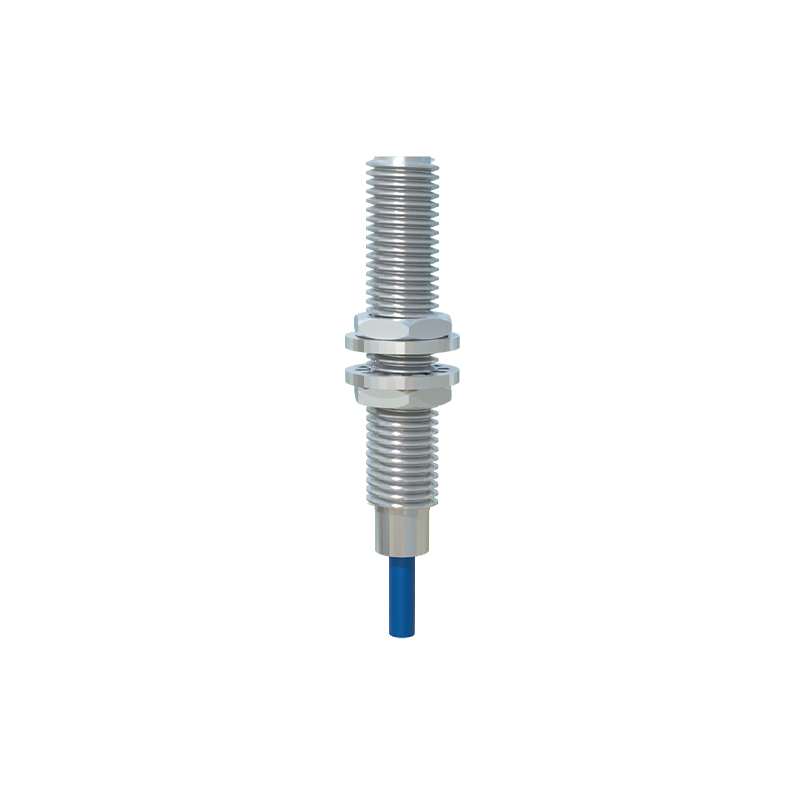
The core technology behind micro proximity sensors primarily falls into three categories: inductive, capacitive, and photoelectric. Each type operates on distinct physical principles, making them suitable for different materials and environmental conditions. Inductive models, for instance, excel at detecting metallic objects. They generate an electromagnetic field and sense changes caused by eddy currents induced in a metal target. Common series in this category include cylindrical M8 and M12 threaded housings, as well as rectangular or block-style models, with sensing distances typically ranging from 1 to 15 millimeters. Key specifications to evaluate are the sensing distance, switching frequency, output type (PNP/NPN, NO/NC), and housing material, often nickel-plated brass or stainless steel for durability.
Capacitive micro proximity sensors, on the other hand, can detect both metallic and non-metallic materials, such as liquids, plastics, or glass. They function by measuring changes in capacitance between the sensor's electrode and the target. These models are frequently deployed in level detection, material handling, and packaging industries. Their compact form factors, sometimes as small as 3mm in diameter, allow integration into tight spaces. When selecting a capacitive model, considerations extend to the dielectric constant of the target material, the required sensitivity adjustment, and resilience to environmental contaminants like dust or moisture.
Photoelectric micro sensors utilize a light beam, typically infrared or laser, to detect objects. They are subdivided into through-beam, retro-reflective, and diffuse-reflective models. The through-beam type, with separate emitter and receiver units, offers the longest and most reliable sensing range for its size, often up to several meters even in micro formats. Diffuse-reflective models, where the emitter and receiver are in a single housing, detect objects by reflecting light off the target's surface. These are ideal for detecting small components on assembly lines. Critical parameters include light source type, response time, which can be in the microsecond range, and built-in features like background suppression to ignore distant objects.
Beyond the core technology, the selection of a micro proximity sensor model hinges on several application-specific factors. Electrical characteristics are paramount. Operating voltage ranges (commonly 10-30V DC or 90-250V AC), current consumption, and output configurations must match the control system. The physical installation constraints dictate the housing style—threaded barrel, slot-style, or surface-mount. Environmental robustness, indicated by IP (Ingress Protection) ratings like IP67 or IP69K, ensures reliable operation in the presence of water, oils, or washdowns. Temperature tolerance is another vital spec, with industrial models often rated from -25°C to +70°C.
Leading manufacturers offer extensive series with nuanced differences. For example, some product lines emphasize ultra-miniaturization for wearable devices or medical tools, with sub-millimeter sensing gaps. Others focus on high-speed response for semiconductor manufacturing or high-temperature resistance for automotive engine compartments. It is advisable to consult detailed datasheets that provide precise graphs for sensing distance versus target material and size, temperature drift, and repeatability accuracy.
In practice, successful implementation requires careful attention to installation and wiring. Even the most capable sensor can underperform if mounted incorrectly. Factors such as flank sensitivity in inductive sensors, mutual interference when mounting multiple sensors closely, and the use of correct shielding in electrically noisy environments are essential. Regular maintenance, though minimal for solid-state devices, involves checking for lens contamination in photoelectric sensors or buildup on capacitive sensor faces.
The future trajectory for micro proximity sensor models points toward increased intelligence and connectivity. Integration of IO-Link communication allows for parameter setting, real-time diagnostics, and condition monitoring directly from the controller. Furthermore, advancements in MEMS (Micro-Electro-Mechanical Systems) technology are pushing the boundaries of miniaturization and power efficiency, opening new avenues in IoT devices and mobile robotics.
Ultimately, navigating the vast array of micro proximity sensor models is a systematic process. By clearly defining the target material, required sensing distance, environmental conditions, electrical interface, and physical size limits, one can effectively filter available options. Partnering with reputable suppliers and leveraging their technical support for sample testing in the actual application environment remains the best strategy to ensure long-term operational success and system integrity.