In the realm of industrial automation and precision measurement, the 20-meter laser sensor stands as a pivotal technology, enabling non-contact, high-accuracy detection over considerable distances. This article delves into the operational principles, diverse applications, and critical factors for selecting the right sensor for specific needs.
Laser sensors operating at a 20-meter range typically utilize time-of-flight (ToF) or phase-shift measurement principles. ToF sensors calculate distance by measuring the time interval between the emission of a laser pulse and the reception of its reflection. This method is highly effective for long ranges and varying surface types, offering robust performance in dynamic environments. Phase-shift sensors, on the other hand, modulate the laser beam's intensity and compare the phase difference between the emitted and reflected signals. This approach provides exceptional precision, often down to millimeter-level accuracy, making it suitable for applications demanding fine resolution. Both technologies rely on high-quality laser diodes and advanced photodetectors to ensure reliable signal processing over the 20-meter span.
The applications of 20-meter laser sensors are vast and transformative across multiple industries. In logistics and warehousing, these sensors facilitate automated inventory management by accurately measuring stockpile heights in large storage facilities, optimizing space utilization and enhancing safety. Within the construction sector, they are employed for terrain mapping, structural alignment, and monitoring deformation in bridges or buildings, contributing to project efficiency and structural integrity. Manufacturing lines benefit from their ability to perform precise dimensional checks on large components, such as vehicle frames or wind turbine blades, ensuring compliance with stringent quality standards. Additionally, in agricultural automation, these sensors enable precise monitoring of crop growth and automated guidance for machinery over extensive fields, promoting sustainable farming practices. Environmental monitoring also leverages this technology for measuring water levels, snow depth, or forest canopy heights, aiding in resource management and climate research.
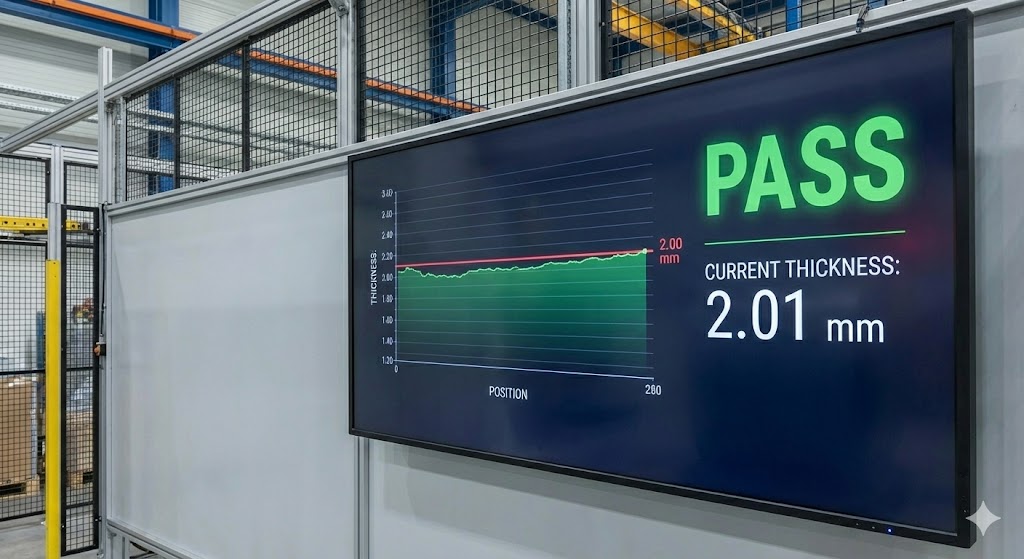
Selecting an appropriate 20-meter laser sensor requires careful consideration of several technical parameters. Measurement accuracy and resolution are paramount; for instance, applications like aerospace component inspection may necessitate sub-millimeter precision, whereas bulk material monitoring might tolerate centimeter-level variance. The sensor's response time is crucial in high-speed processes, such as on conveyor belts, where rapid detection ensures seamless operation. Environmental robustness is another key factor—sensors must often withstand harsh conditions, including temperature extremes, dust, moisture, or vibration. Industrial-grade models typically feature IP67 or higher ingress protection ratings and robust housings to endure such challenges. Connectivity options, such as analog outputs (e.g., 4-20 mA, 0-10 V), digital interfaces (e.g., RS-485, Ethernet), or industrial protocols (e.g., PROFINET, EtherCAT), should align with existing control systems for seamless integration. Additionally, user-friendly software for configuration and diagnostics can significantly reduce setup time and maintenance efforts.
Innovations in laser sensor technology continue to expand their capabilities. Modern 20-meter sensors increasingly incorporate intelligent features like background suppression, which filters out irrelevant reflections, and multi-echo processing, allowing measurement through obscurations like fog or dust. Integration with IoT platforms enables real-time data analytics and predictive maintenance, reducing downtime and operational costs. As industries embrace Industry 4.0, these sensors are becoming integral to smart factories and automated ecosystems, driving efficiency and innovation.
In summary, the 20-meter laser sensor is a versatile and powerful tool that enhances precision, safety, and productivity across diverse fields. By understanding its working mechanisms, applications, and selection criteria, engineers and technicians can effectively harness its potential to solve complex measurement challenges and advance technological frontiers.